Wang Meng, Frasch S Courtney, Li Guiying, Feng Dechun, Gao Bin, Xu Liangguo, Ir Diana, Frank Daniel N, Bratton Donna L, Ju Cynthia
Skaggs School of Pharmacy and Pharmaceutical Sciences University of Colorado Anschutz Medical Campus Aurora CO.
Department of Pediatrics National Jewish Health Denver CO.
Hepatol Commun. 2017 Aug 11;1(8):765-779. doi: 10.1002/hep4.1078. eCollection 2017 Oct.
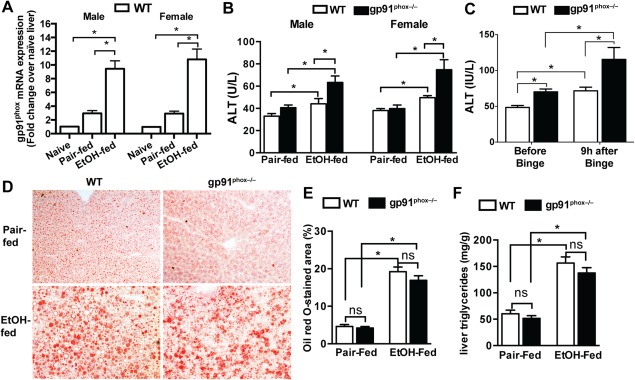
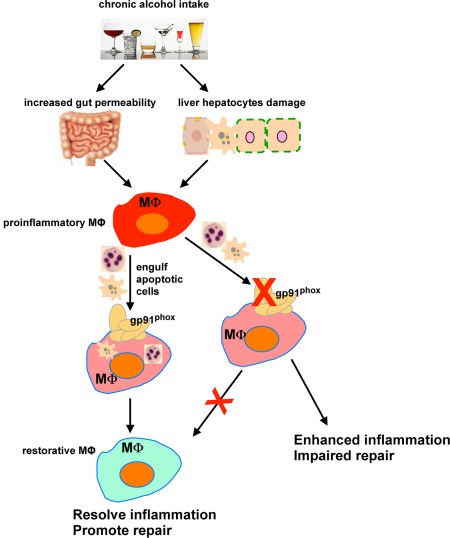
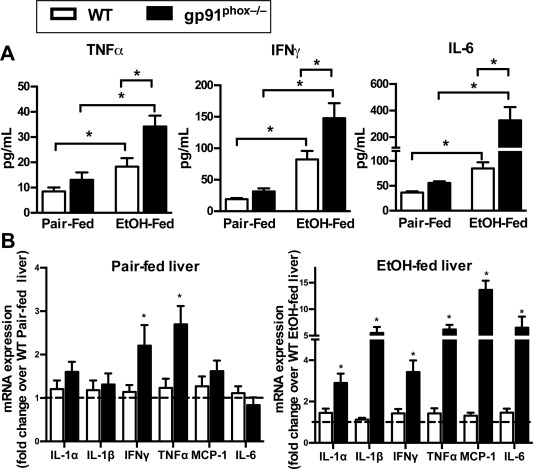
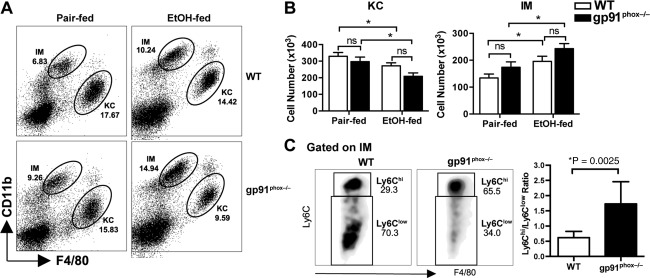
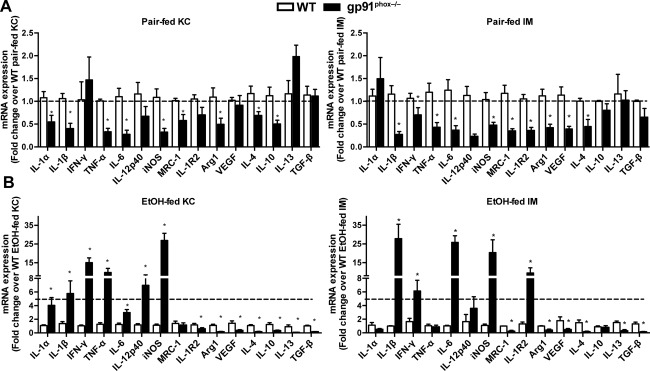
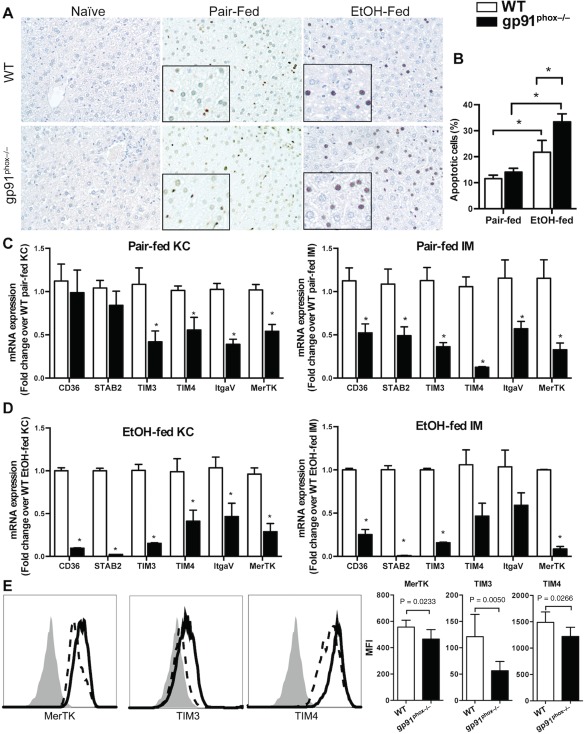
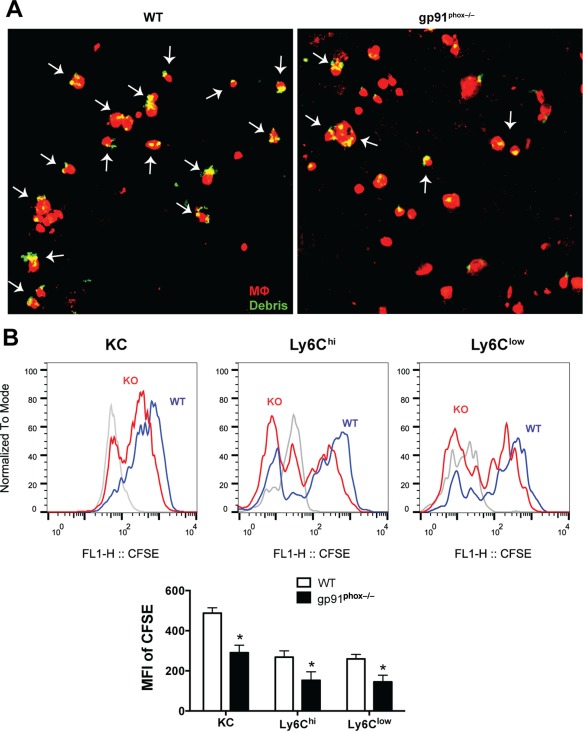
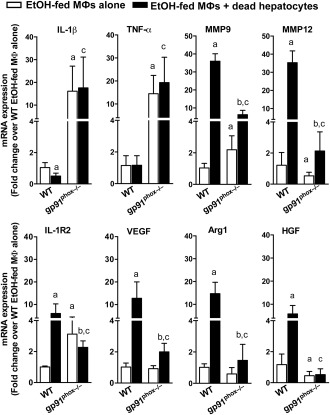
Hepatic macrophages (Ms) are important in the development and progression of alcoholic liver disease (ALD). This study investigates the role of gp91 (nicotinamide adenine dinucleotide phosphate oxidase 2) in the severity of ALD and specifically in regulating hepatic M efferocytic capability and the subsequent reprogramming associated with resolution of inflammation. After 4 weeks of ethanol feeding, more severe ALD developed in gp91 mice than in wild-type (WT) C57Bl/6J mice, evidenced by increased liver injury and inflammation. This phenomenon was not sex dependent, and thus the majority of experiments were performed with female mice. While total hepatic M numbers did not differ between genotypes, hepatic infiltrating Ms (IMs) were slightly more numerous in gp91 mice, and both IMs and resident Kupffer cells displayed enhanced proinflammatory and reduced tissue-restorative programming compared with these cells from WT mice. The ratio of proinflammatory IMs with higher expression of Ly6C (Ly6C) to anti-inflammatory IMs with lower expression of Ly6C (Ly6C) was significantly higher in gp91 mice compared to WT mice. Greater numbers of apoptotic cells accumulated in the liver of gp91 mice compared to WT mice, and receptors for binding and engulfing apoptotic cells were expressed at much lower levels on both Kupffer cells and IMs of gp91 mice. Interactions with apoptotic cells (binding and engulfment) were significantly fewer for gp91 Ms than for WT Ms, resulting in diminished expression of tissue restorative mediators by hepatic Ms of gp91 mice. : gp91 plays a critical role in the differentiation of proinflammatory hepatic Ms to a tissue-restorative phenotype, likely through programming for efferocytosis, and thereby lessens the severity of ALD. These findings enhance our understanding of the tissue environmental cues that regulate M phenotypes. This knowledge could help in designing M-targeting strategies to prevent and treat ALD. ( 2017;1:765-779).
肝巨噬细胞(Ms)在酒精性肝病(ALD)的发生和发展中起重要作用。本研究调查了gp91(烟酰胺腺嘌呤二核苷酸磷酸氧化酶2)在ALD严重程度中的作用,特别是在调节肝脏Ms的噬菌能力以及随后与炎症消退相关的重编程方面的作用。乙醇喂养4周后,gp91小鼠比野生型(WT)C57Bl/6J小鼠发生更严重的ALD,表现为肝损伤和炎症增加。这种现象不依赖性别,因此大多数实验使用雌性小鼠进行。虽然不同基因型的肝脏Ms总数没有差异,但gp91小鼠肝脏浸润性Ms(IMs)略多,与WT小鼠的这些细胞相比,IMs和常驻库普弗细胞均表现出促炎增强和组织修复程序减少。与WT小鼠相比,gp91小鼠中Ly6C表达较高的促炎性IMs与Ly6C表达较低的抗炎性IMs的比例显著更高。与WT小鼠相比,gp91小鼠肝脏中积累的凋亡细胞数量更多,gp91小鼠的库普弗细胞和IMs上结合和吞噬凋亡细胞的受体表达水平均低得多。gp91 Ms与凋亡细胞的相互作用(结合和吞噬)明显少于WT Ms,导致gp91小鼠肝脏Ms的组织修复介质表达减少。gp91在促炎性肝脏Ms向组织修复表型的分化中起关键作用,可能是通过噬菌作用的编程,从而减轻ALD的严重程度。这些发现增进了我们对调节Ms表型的组织环境线索的理解。这些知识有助于设计针对Ms的策略来预防和治疗ALD。(2017;1:765 - 779)