Centre for Liver and Gastrointestinal Research, Institute of Immunology and Immunotherapy, Medical School, University of Birmingham, Birmingham, United Kingdom.
NIHR Birmingham Biomedical Research Centre, University Hospitals Birmingham NHS Foundation Trust and University of Birmingham, Birmingham, United Kingdom.
Front Immunol. 2019 Apr 24;10:893. doi: 10.3389/fimmu.2019.00893. eCollection 2019.
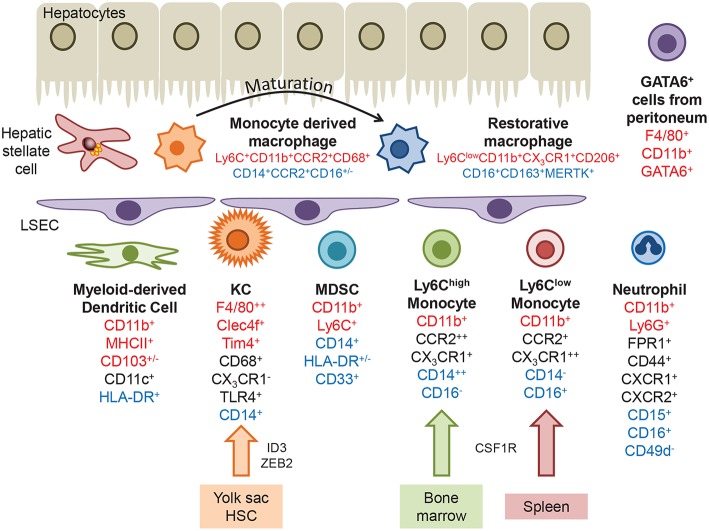
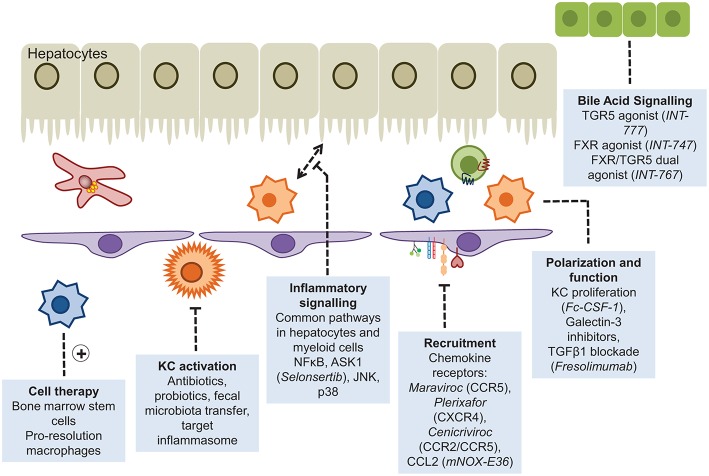
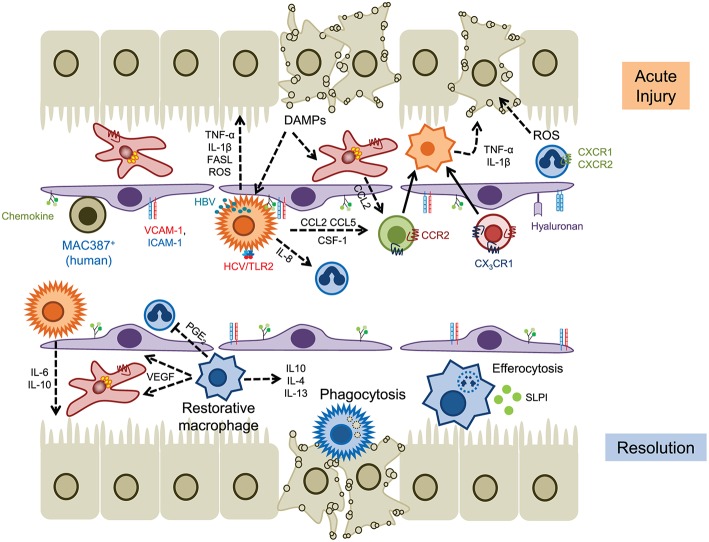
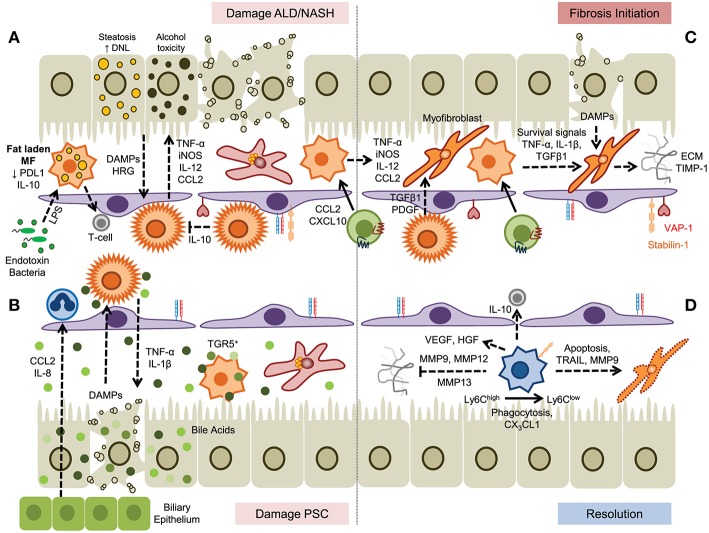
Control of homeostasis and rapid response to tissue damage in the liver is orchestrated by crosstalk between resident and infiltrating inflammatory cells. A crucial role for myeloid cells during hepatic injury and repair has emerged where resident Kupffer cells, circulating monocytes, macrophages, dendritic cells and neutrophils control local tissue inflammation and regenerative function to maintain tissue architecture. Studies in humans and rodents have revealed a heterogeneous population of myeloid cells that respond to the local environment by either promoting regeneration or driving the inflammatory processes that can lead to hepatitis, fibrogenesis, and the development of cirrhosis and malignancy. Such plasticity of myeloid cell responses presents unique challenges for therapeutic intervention strategies and a greater understanding of the underlying mechanisms is needed. Here we review the role of myeloid cells in the establishment and progression of liver disease and highlight key pathways that have become the focus for current and future therapeutic strategies.
肝脏中稳态的控制和对组织损伤的快速反应是由驻留细胞和浸润性炎症细胞之间的串扰协调的。髓系细胞在肝损伤和修复中起着至关重要的作用,驻留的枯否细胞、循环单核细胞、巨噬细胞、树突状细胞和中性粒细胞控制局部组织炎症和再生功能,以维持组织结构。在人类和啮齿动物中的研究揭示了一群异质性的髓系细胞,它们通过促进再生或驱动炎症过程来响应局部环境,这些过程可导致肝炎、纤维化以及肝硬化和恶性肿瘤的发展。髓系细胞反应的这种可塑性给治疗干预策略带来了独特的挑战,需要更好地了解潜在机制。在这里,我们综述了髓系细胞在肝病的发生和发展中的作用,并强调了当前和未来治疗策略的重点关键途径。