Department of Medicine, University of Florida, Gainesville, Florida; Center of Excellence for Poultry Science, University of Arkansas, Fayetteville, Arkansas.
Department of Bioinformatics and Genomics, University of North Carolina at Charlotte, Charlotte, North Carolina.
Gastroenterology. 2018 May;154(6):1751-1763.e2. doi: 10.1053/j.gastro.2018.01.042. Epub 2018 Feb 1.
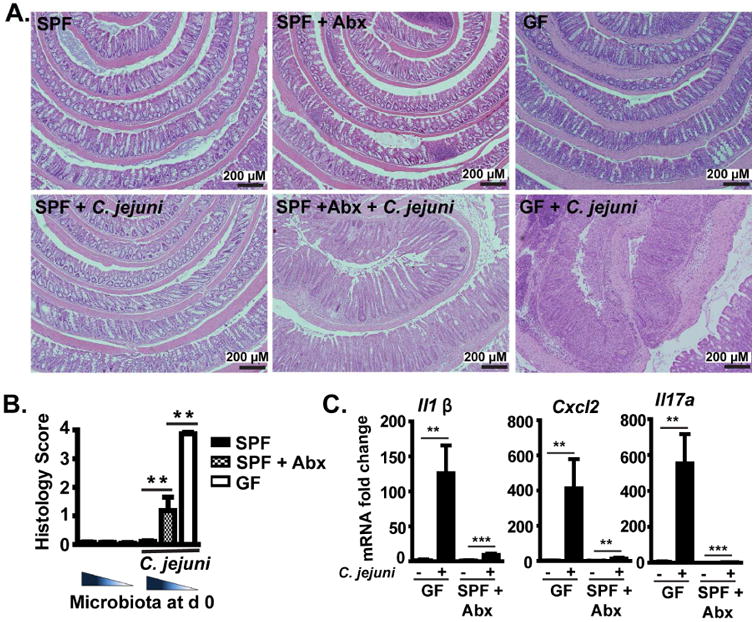
BACKGROUND & AIMS: Campylobacter jejuni, a prevalent foodborne bacterial pathogen, exploits the host innate response to induce colitis. Little is known about the roles of microbiota in C jejuni-induced intestinal inflammation. We investigated interactions between microbiota and intestinal cells during C jejuni infection of mice.
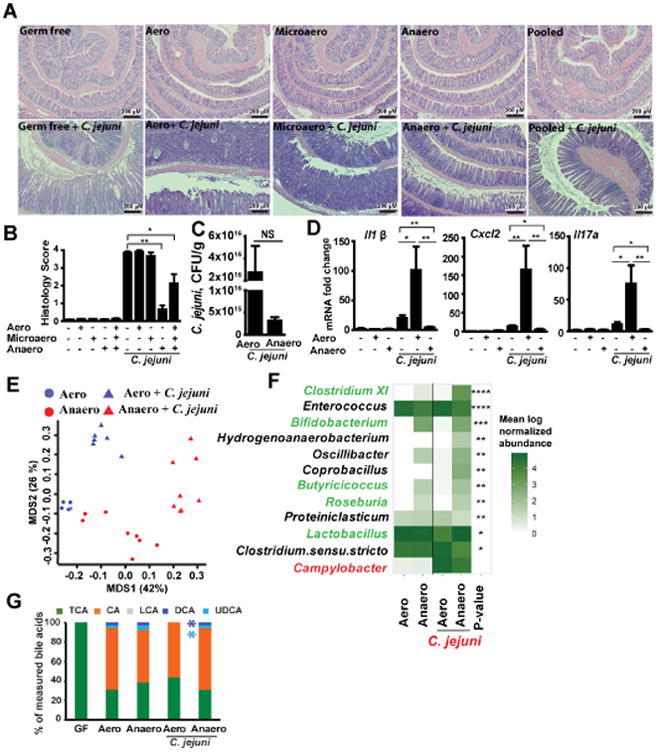
Germ-free C57BL/6 Il10 mice were colonized with conventional microbiota and infected with a single dose of C jejuni (10 colony-forming units/mouse) via gavage. Conventional microbiota were cultured under aerobic, microaerobic, or anaerobic conditions and orally transplanted into germ-free Il10 mice. Colon tissues were collected from mice and analyzed by histology, real-time polymerase chain reaction, and immunoblotting. Fecal microbiota and bile acids were analyzed with 16S sequencing and high-performance liquid chromatography with mass spectrometry, respectively.
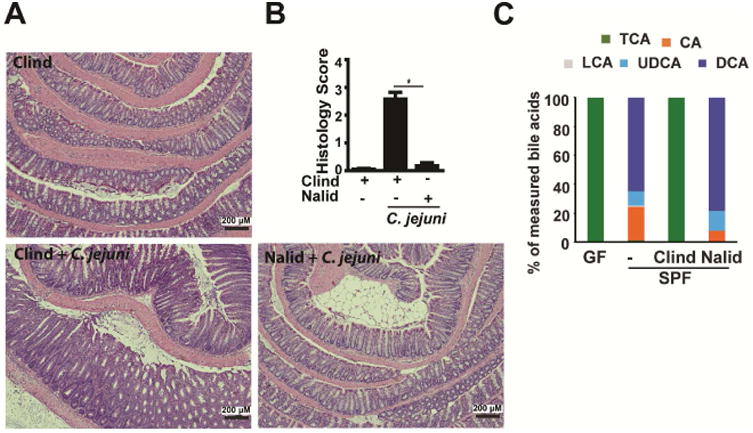
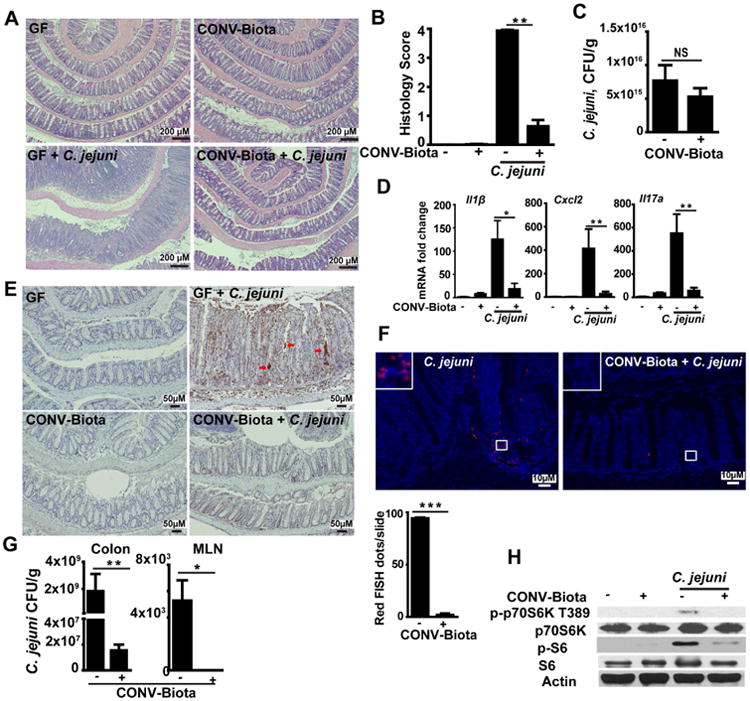
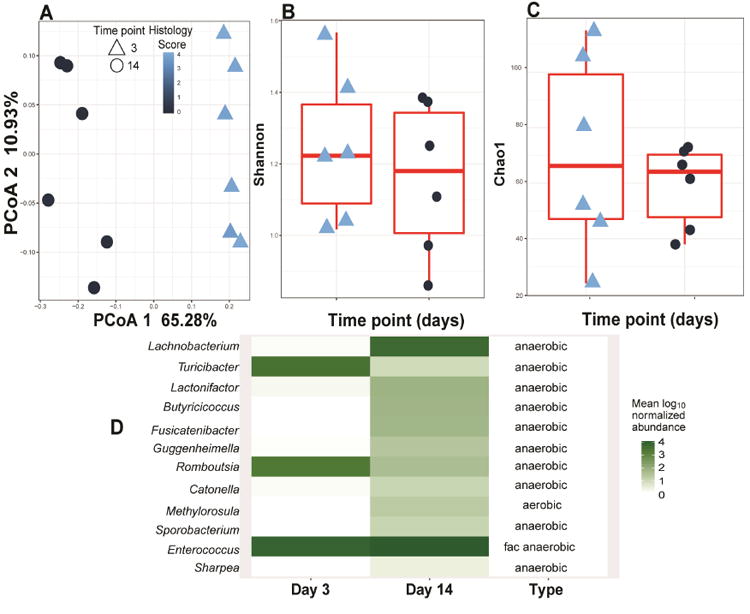
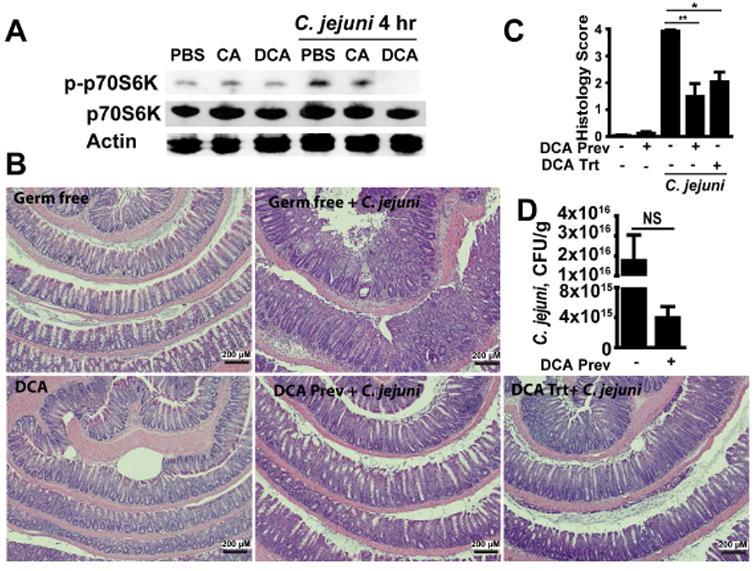
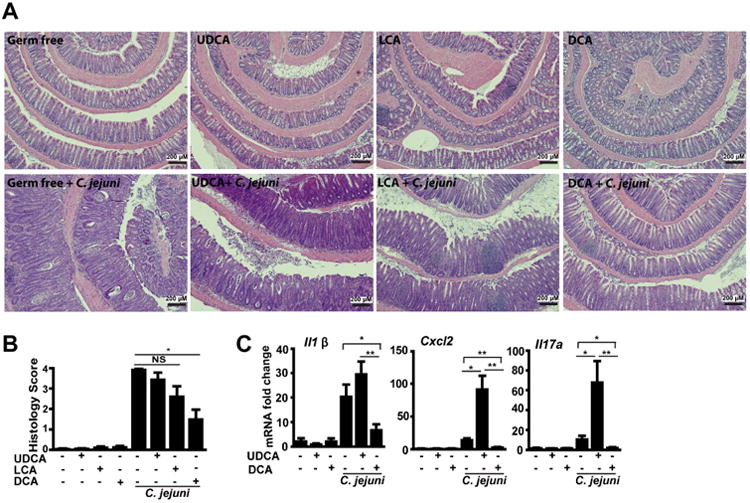
Introduction of conventional microbiota reduced C jejuni-induced colitis in previously germ-free Il10 mice, independent of fecal load of C jejuni, accompanied by reduced activation of mammalian target of rapamycin. Microbiota transplantation and 16S ribosomal DNA sequencing experiments showed that Clostridium XI, Bifidobacterium, and Lactobacillus were enriched in fecal samples from mice colonized with microbiota cultured in anaerobic conditions (which reduce colitis) compared with mice fed microbiota cultured under aerobic conditions (susceptible to colitis). Oral administration to mice of microbiota-derived secondary bile acid sodium deoxycholate, but not ursodeoxycholic acid or lithocholic acid, reduced C jejuni-induced colitis. Depletion of secondary bile acid-producing bacteria with antibiotics that kill anaerobic bacteria (clindamycin) promoted C jejuni-induced colitis in specific pathogen-free Il10 mice compared with the nonspecific antibiotic nalidixic acid; colitis induction by antibiotics was associated with reduced level of luminal deoxycholate.
We identified a mechanism by which the microbiota controls susceptibility to C jejuni infection in mice, via bacteria-derived secondary bile acids.
空肠弯曲菌是一种普遍存在的食源性细菌病原体,它利用宿主固有反应引发结肠炎。然而,关于微生物群在空肠弯曲菌诱导的肠道炎症中的作用知之甚少。本研究旨在探究微生物群与空肠弯曲菌感染小鼠的肠道细胞之间的相互作用。
无菌 C57BL/6 Il10 小鼠经定植常规微生物群后,通过灌胃感染单剂量空肠弯曲菌(10 个菌落形成单位/只)。常规微生物群在需氧、微需氧或厌氧条件下培养,并经口移植至无菌 Il10 小鼠。采集小鼠结肠组织进行组织学、实时聚合酶链反应和免疫印迹分析。通过 16S 测序和高效液相色谱-质谱联用分析粪便微生物群和胆汁酸。
引入常规微生物群可减轻先前无菌 Il10 小鼠中空肠弯曲菌诱导的结肠炎,且与空肠弯曲菌的粪便负荷无关,同时降低哺乳动物雷帕霉素靶蛋白的激活。微生物群移植和 16S 核糖体 DNA 测序实验表明,与在需氧条件下培养的微生物群相比,在厌氧条件下培养的微生物群(可减轻结肠炎)的粪便样本中,梭菌 XI、双歧杆菌和乳杆菌更为丰富。与熊去氧胆酸或石胆酸相比,向小鼠口服微生物群衍生的次级胆汁酸钠可减轻空肠弯曲菌诱导的结肠炎。与非特异性抗生素萘啶酸相比,用杀死厌氧菌(克林霉素)的抗生素耗尽次级胆汁酸产生菌可促进无特定病原体 Il10 小鼠中空肠弯曲菌诱导的结肠炎;抗生素诱导的结肠炎与腔内脱氧胆酸水平降低有关。
本研究确定了微生物群通过细菌衍生的次级胆汁酸控制小鼠对空肠弯曲菌感染易感性的机制。