Department of Clinical Neuroscience, Centre for Psychiatry Research, Karolinska Institutet, Stockholm, Sweden.
Stockholm Health Care Services, Stockholm County Council, Stockholm, Sweden.
J Clin Psychol. 2018 Jul;74(7):1092-1105. doi: 10.1002/jclp.22589. Epub 2018 Feb 7.
Hoarding disorder (HD) is difficult to treat. In an effort to increase efficacy and engagement in cognitive-behavioral therapy (CBT), we developed and evaluated a novel intervention comprising group CBT combined with between-session Internet-based clinician support for people with HD.
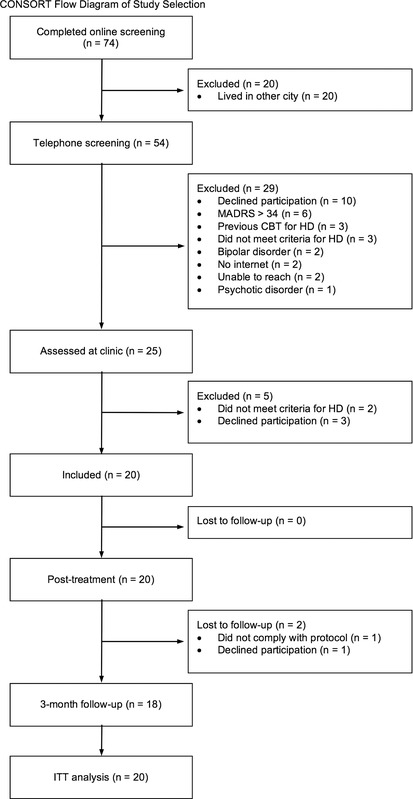
Twenty participants with HD received group CBT combined with an Internet-support system enabling therapist-participant communication between group sessions.
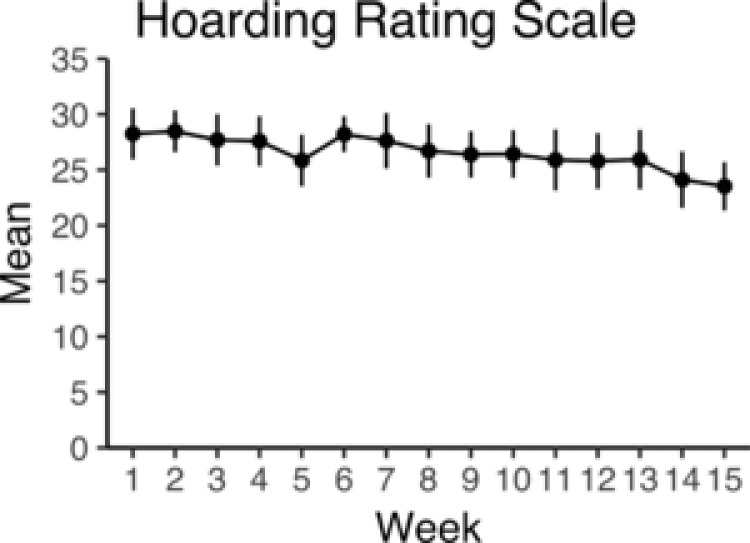
The treatment was associated with a significant reduction on the Saving Inventory-Revised (SI-R) and a large effect size (Cohen's d = 1.57) was found at posttreatment. Treatment gains were maintained at the 3-month follow-up. Group attendance was high and no participants dropped out from treatment prematurely. Between-session motivational support from the therapist was most frequently mentioned as the main strength of the system.
The results of this study support adding Internet-based clinician support to group CBT for HD to increase treatment adherence and, potentially, improve the overall efficacy of CBT.
囤积症(HD)难以治疗。为了提高认知行为疗法(CBT)的疗效和参与度,我们开发并评估了一种新的干预措施,包括团体 CBT 结合团体治疗间隙基于互联网的临床医生支持,以帮助 HD 患者。
20 名 HD 患者接受团体 CBT 结合互联网支持系统,使治疗师和参与者能够在团体治疗间隙进行交流。
治疗后,修订后的储蓄量表(SI-R)显著降低,效应量较大(Cohen's d=1.57)。在 3 个月的随访中,治疗效果得到维持。团体出勤率高,没有参与者提前退出治疗。治疗师在团体治疗间隙提供的动机支持是该系统的主要优势,被最频繁地提及。
这项研究的结果支持在团体 CBT 中增加基于互联网的临床医生支持,以提高治疗依从性,并可能提高 CBT 的整体疗效。