Consitt L A, Clark B C
Leslie Consitt, PhD, Department of Biomedical Sciences, 228 Irvine Hall, Ohio University, Athens, Ohio, 45701, Email:
J Frailty Aging. 2018;7(1):21-27. doi: 10.14283/jfa.2017.33.
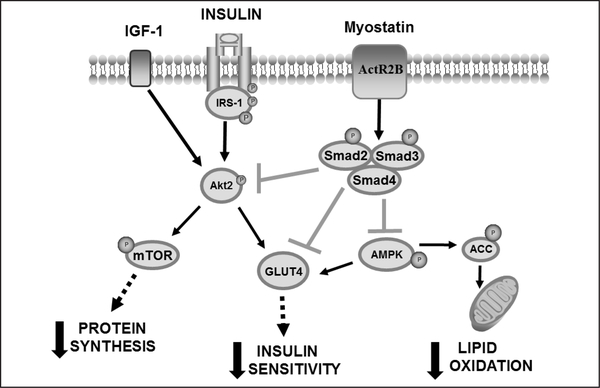
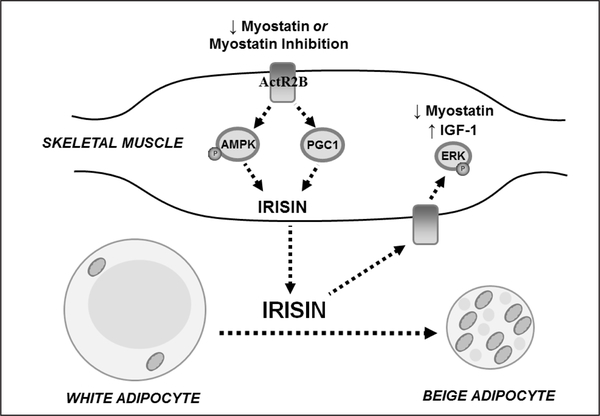
The age-related loss of skeletal muscle (sarcopenia) is a major health concern as it is associated with physical disability, metabolic impairments, and increased mortality. The coexistence of sarcopenia with obesity, termed 'sarcopenic obesity', contributes to skeletal muscle insulin resistance and the development of type 2 diabetes, a disease prevalent with advancing age. Despite this knowledge, the mechanisms contributing to sarcopenic obesity remain poorly understood, preventing the development of targeted therapeutics. This article will discuss the clinical and physiological consequences of sarcopenic obesity and propose myostatin as a potential candidate contributing to this condition. A special emphasis will be placed on examining the role of myostatin signaling in impairing both skeletal muscle growth and insulin signaling. In addition, the role of myostatin in regulating muscle-to fat cross talk, further exacerbating metabolic dysfunction in the elderly, will be highlighted. Lastly, we discuss how this knowledge has implications for the design of myostatin-inhibitor clinical trials.
与年龄相关的骨骼肌流失(肌肉减少症)是一个重大的健康问题,因为它与身体残疾、代谢障碍和死亡率增加有关。肌肉减少症与肥胖并存,即所谓的“肌少症肥胖”,会导致骨骼肌胰岛素抵抗和2型糖尿病的发生,2型糖尿病是一种随着年龄增长而普遍存在的疾病。尽管有这些认识,但导致肌少症肥胖的机制仍知之甚少,这阻碍了靶向治疗药物的开发。本文将讨论肌少症肥胖的临床和生理后果,并提出肌肉生长抑制素是导致这种情况的潜在候选因素。将特别强调研究肌肉生长抑制素信号传导在损害骨骼肌生长和胰岛素信号传导方面的作用。此外,还将突出肌肉生长抑制素在调节肌肉与脂肪相互作用方面的作用,这会进一步加剧老年人的代谢功能障碍。最后,我们将讨论这些知识对肌肉生长抑制素抑制剂临床试验设计的意义。