Department of Parasitology and Tropical Medicine, and Institute of Health Sciences, Gyeongsang National University College of Medicine, Jinju, 52727, Republic of Korea.
BK21Plus Team for Anti-aging Biotechnology and Industry, Department of Convergence Medical Science, Gyeongsang National University, Jinju, 52727, Republic of Korea.
Malar J. 2018 Feb 7;17(1):71. doi: 10.1186/s12936-018-2215-7.
Plasmodium falciparum apical membrane antigen-1 (PfAMA-1) is one of leading blood stage malaria vaccine candidates. However, genetic variation and antigenic diversity identified in global PfAMA-1 are major hurdles in the development of an effective vaccine based on this antigen. In this study, genetic structure and the effect of natural selection of PfAMA-1 among Myanmar P. falciparum isolates were analysed.
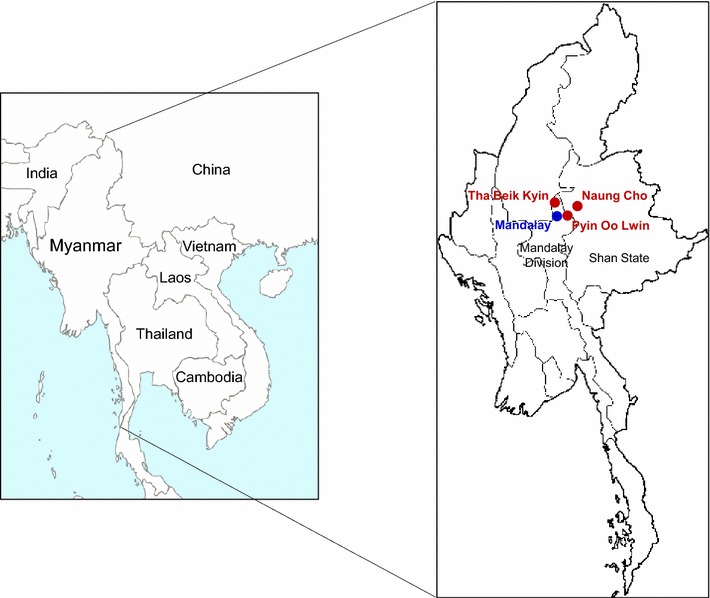
Blood samples were collected from 58 Myanmar patients with falciparum malaria. Full-length PfAMA-1 gene was amplified by polymerase chain reaction and cloned into a TA cloning vector. PfAMA-1 sequence of each isolate was sequenced. Polymorphic characteristics and effect of natural selection were analysed with using DNASTAR, MEGA4, and DnaSP programs. Polymorphic nature and natural selection in 459 global PfAMA-1 were also analysed.
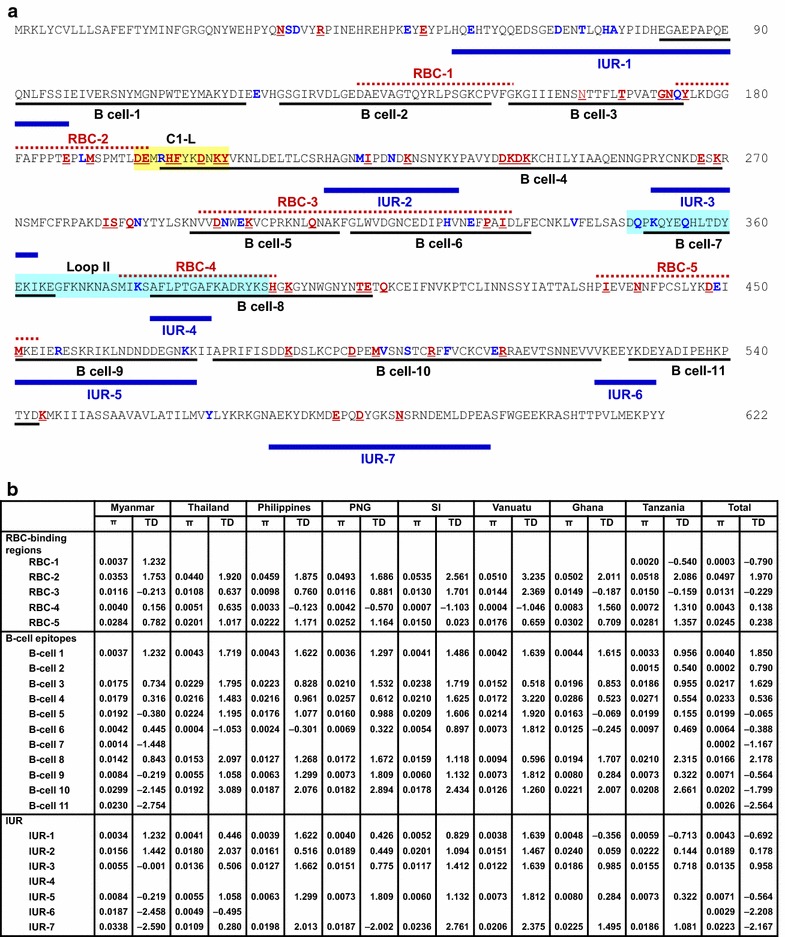
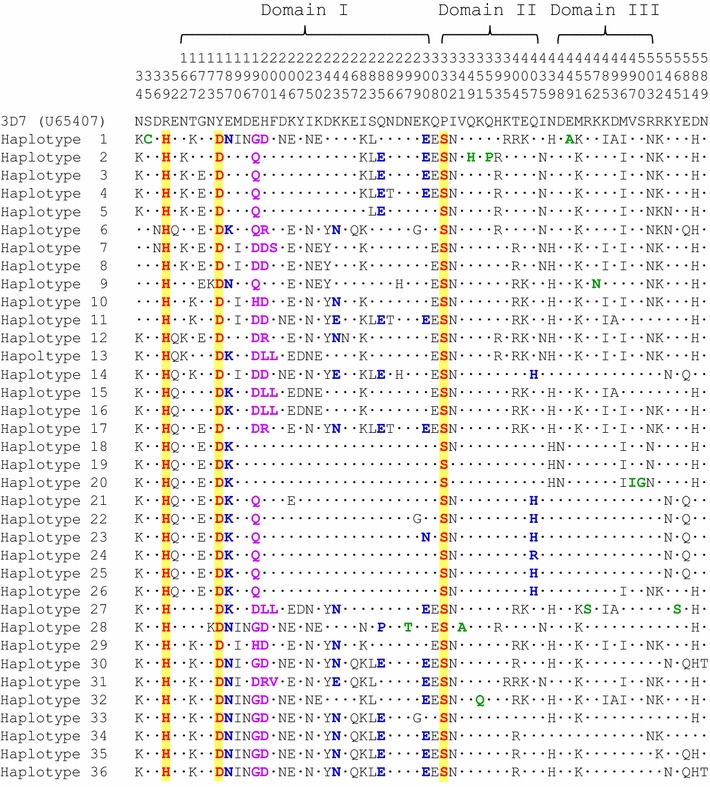
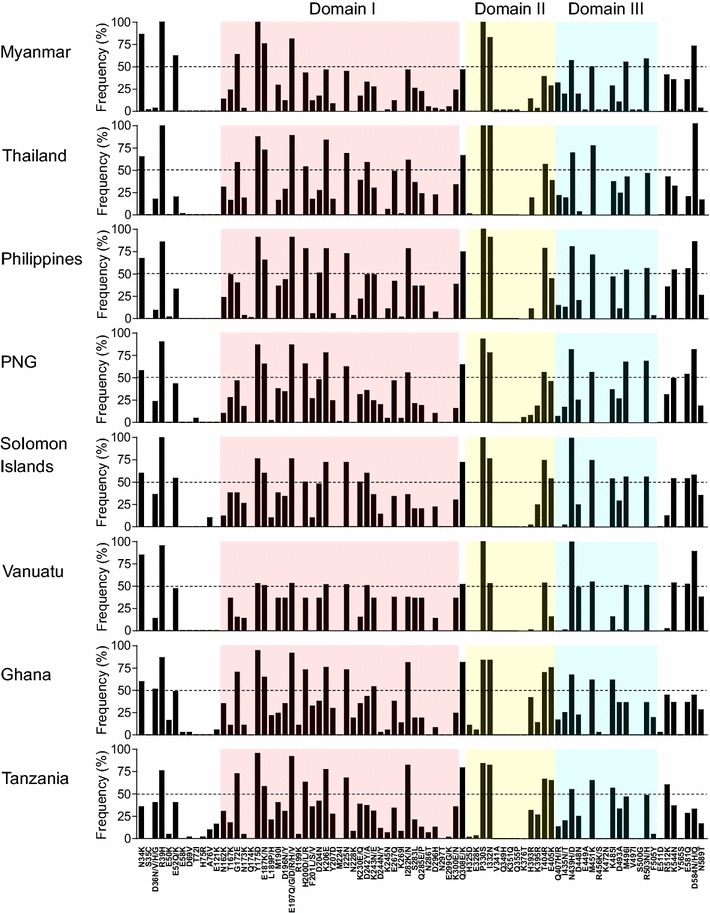
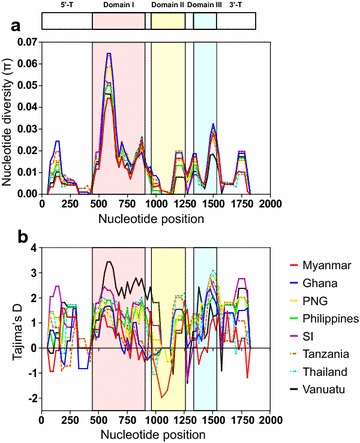
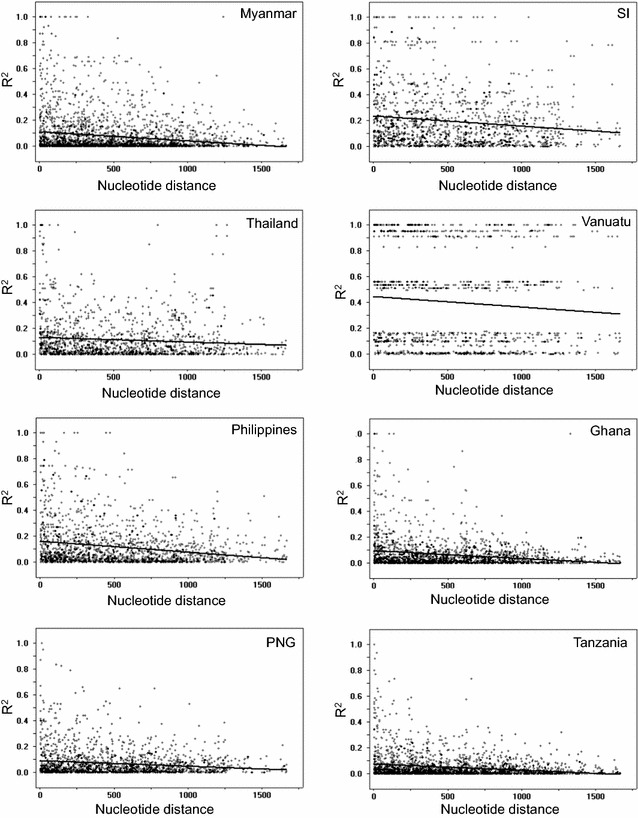
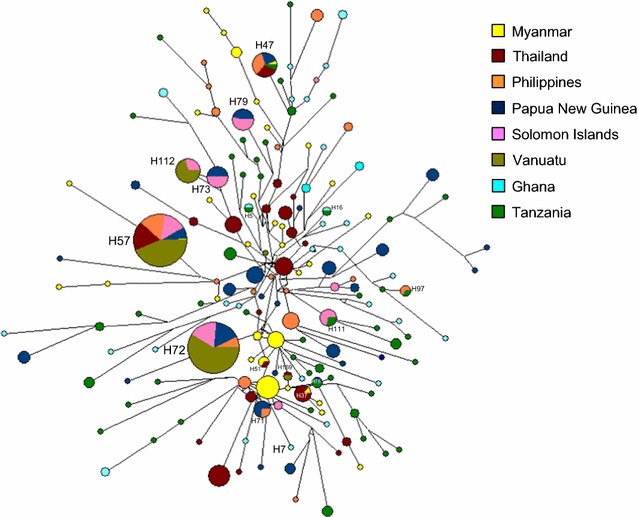
Thirty-seven different haplotypes of PfAMA-1 were identified in 58 Myanmar P. falciparum isolates. Most amino acid changes identified in Myanmar PfAMA-1 were found in domains I and III. Overall patterns of amino acid changes in Myanmar PfAMA-1 were similar to those in global PfAMA-1. However, frequencies of amino acid changes differed by country. Novel amino acid changes in Myanmar PfAMA-1 were also identified. Evidences for natural selection and recombination event were observed in global PfAMA-1. Among 51 commonly identified amino acid changes in global PfAMA-1 sequences, 43 were found in predicted RBC-binding sites, B-cell epitopes, or IUR regions.
Myanmar PfAMA-1 showed similar patterns of nucleotide diversity and amino acid polymorphisms compared to those of global PfAMA-1. Balancing natural selection and intragenic recombination across PfAMA-1 are likely to play major roles in generating genetic diversity in global PfAMA-1. Most common amino acid changes in global PfAMA-1 were located in predicted B-cell epitopes where high levels of nucleotide diversity and balancing natural selection were found. These results highlight the strong selective pressure of host immunity on the PfAMA-1 gene. These results have significant implications in understanding the nature of Myanmar PfAMA-1 along with global PfAMA-1. They also provide useful information for the development of effective malaria vaccine based on this antigen.
恶性疟原虫顶膜蛋白 1(PfAMA-1)是一种主要的血阶段疟疾疫苗候选物。然而,全球 PfAMA-1 中发现的遗传变异和抗原多样性是基于该抗原开发有效疫苗的主要障碍。在这项研究中,分析了缅甸恶性疟原虫分离株中 PfAMA-1 的遗传结构和自然选择的影响。
采集了 58 例来自缅甸的恶性疟患者的血液样本。通过聚合酶链反应扩增全长 PfAMA-1 基因,并克隆到 TA 克隆载体中。对每个分离株的 PfAMA-1 序列进行测序。使用 DNASTAR、MEGA4 和 DnaSP 程序分析多态性特征和自然选择的影响。还分析了全球 459 例 PfAMA-1 的多态性和自然选择。
在 58 例缅甸恶性疟原虫分离株中鉴定出 37 种不同的 PfAMA-1 单倍型。在缅甸 PfAMA-1 中发现的大多数氨基酸变化发生在结构域 I 和 III 中。缅甸 PfAMA-1 的氨基酸变化总体模式与全球 PfAMA-1 相似。然而,氨基酸变化的频率因国家而异。在缅甸 PfAMA-1 中也发现了新的氨基酸变化。在全球 PfAMA-1 中观察到自然选择和重组事件的证据。在全球 PfAMA-1 序列中 51 个常见氨基酸变化中,有 43 个位于预测的 RBC 结合位点、B 细胞表位或 IUR 区域。
与全球 PfAMA-1 相比,缅甸 PfAMA-1 显示出相似的核苷酸多样性和氨基酸多态性模式。PfAMA-1 上的平衡自然选择和基因内重组可能在全球 PfAMA-1 遗传多样性的产生中发挥主要作用。全球 PfAMA-1 中最常见的氨基酸变化位于预测的 B 细胞表位,其中发现了高水平的核苷酸多样性和平衡自然选择。这些结果强调了宿主免疫对 PfAMA-1 基因的强烈选择压力。这些结果对了解缅甸 PfAMA-1 与全球 PfAMA-1 的性质具有重要意义。它们还为基于该抗原开发有效的疟疾疫苗提供了有用信息。