Mineshige Takayuki, Ogihara Kikumi, Kamiie Junichi, Sugahara Go, Chambers James Kenn, Uchida Kazuyuki, Madarame Hiroo, Shirota Kinji
Laboratory of Veterinary Pathology, Azabu University, 1-17-71 Fuchinobe, Chuo-ku, Sagamihara, Kanagawa 252-5201, Japan.
Present address: Marmoset Research Department, Central Institute for Experimental Animals, 3-25-12 Tonomachi, Kawasaki-ku, Kawasaki, Kanagawa 210-0821, Japan.
J Vet Med Sci. 2018 Mar 24;80(3):473-479. doi: 10.1292/jvms.17-0647. Epub 2018 Feb 6.
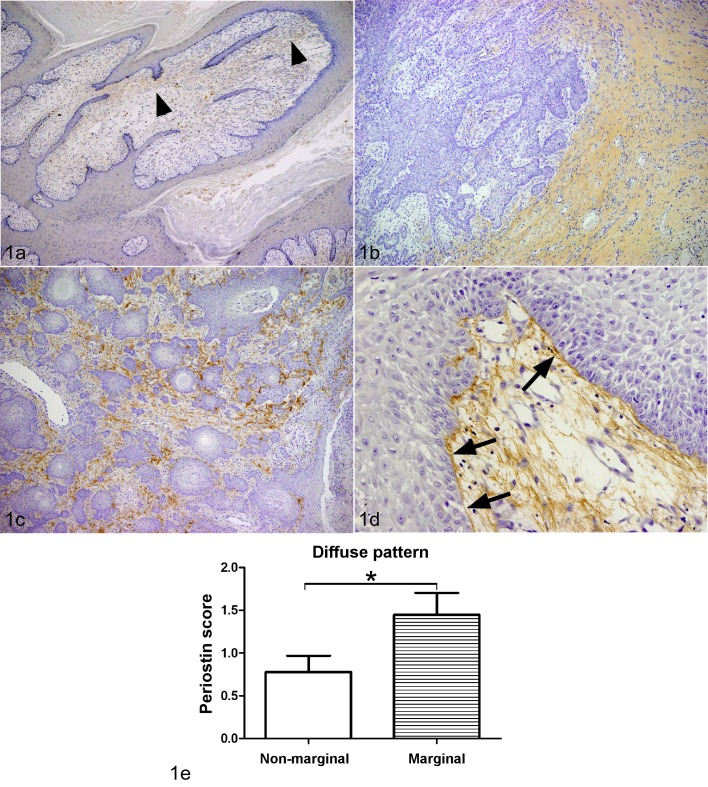
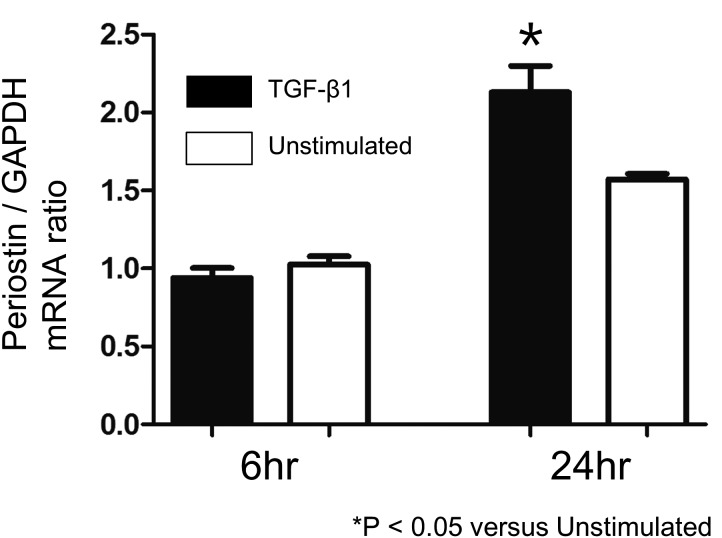
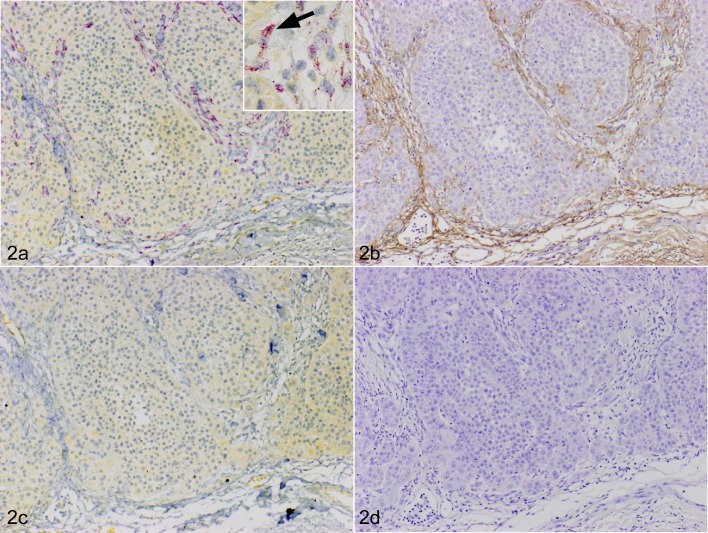
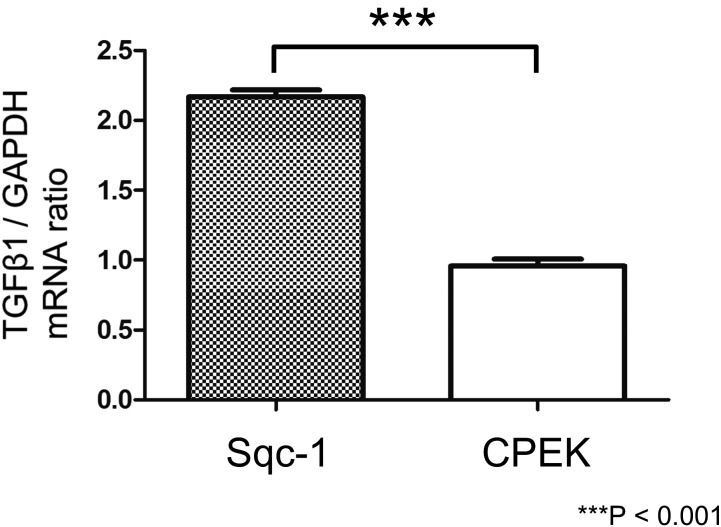
Canine squamous cell carcinoma (SCC) shows highly invasive and locally destructive growth. In animal models and human cancer cases, periostin plays a critical role in the enhancement of cancer growth; however, the mechanism of involvement in canine cancers remains unknown. The aim of this study was to examine the involvement of periostin in the pathophysiology of SCC in dogs. We examined the localization of periostin and periostin-producing cells in 20 SCC and three squamous papilloma specimens. Furthermore, we focused on transforming growth factor (TGF)-β1, which was assumed to be an inducing factor of periostin, using culture cells. By immunohistochemistry, limited periostin expression in the stroma was observed in all squamous papillomas. In SCC, periostin protein diffusely expressed at the tumor invasion front of cancer growth. In situ hybridization revealed that periostin mRNA was expressed in the stromal fibroblasts in SCC. In vitro analysis determined that canine SCC cells expressed significantly higher levels of TGF-β1 mRNA compared with canine keratinocytes. In addition, recombinant TGF-β1 induced secretion of periostin from cultured dermal fibroblasts. These data suggest that periostin produced by stromal fibroblasts may be involved in the pathophysiology of canine SCC. TGF-β1 derived from SCC cells may stimulate fibroblasts to produce periostin.
犬鳞状细胞癌(SCC)表现出高度侵袭性和局部破坏性生长。在动物模型和人类癌症病例中,骨膜蛋白在促进癌症生长中起关键作用;然而,其在犬类癌症中的作用机制尚不清楚。本研究的目的是探讨骨膜蛋白在犬SCC病理生理学中的作用。我们检测了20例SCC和3例鳞状乳头瘤标本中骨膜蛋白及其产生细胞的定位。此外,我们利用培养细胞,聚焦于被认为是骨膜蛋白诱导因子的转化生长因子(TGF)-β1。通过免疫组织化学,在所有鳞状乳头瘤中均观察到基质中骨膜蛋白表达有限。在SCC中,骨膜蛋白在肿瘤生长的侵袭前沿弥漫性表达。原位杂交显示,SCC基质成纤维细胞中表达骨膜蛋白mRNA。体外分析表明,与犬角质形成细胞相比,犬SCC细胞表达的TGF-β1 mRNA水平显著更高。此外,重组TGF-β1可诱导培养的真皮成纤维细胞分泌骨膜蛋白。这些数据表明,基质成纤维细胞产生的骨膜蛋白可能参与犬SCC的病理生理学过程。SCC细胞来源的TGF-β1可能刺激成纤维细胞产生骨膜蛋白。