Xu Tao, Zhu Anyou, Sun Meiqun, Lv Jingzhu, Qian Zhongqing, Wang Xiaojing, Wang Ting, Wang Hongtao
Department of Clinical Laboratory, Bengbu Medical College, Bengbu, Anhui, P. R. China.
Clinical Testing and Diagnose Experimental Center of Bengbu Medical College, Bengbu, Anhui, P. R. China.
Oncotarget. 2017 Dec 5;9(1):96-109. doi: 10.18632/oncotarget.22941. eCollection 2018 Jan 2.
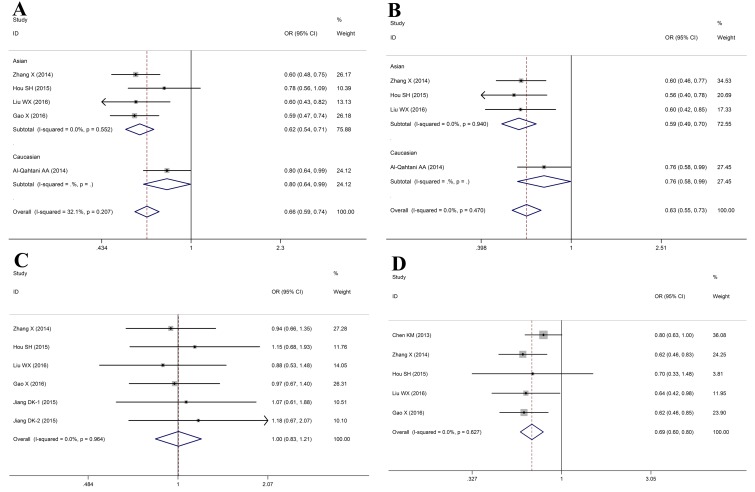
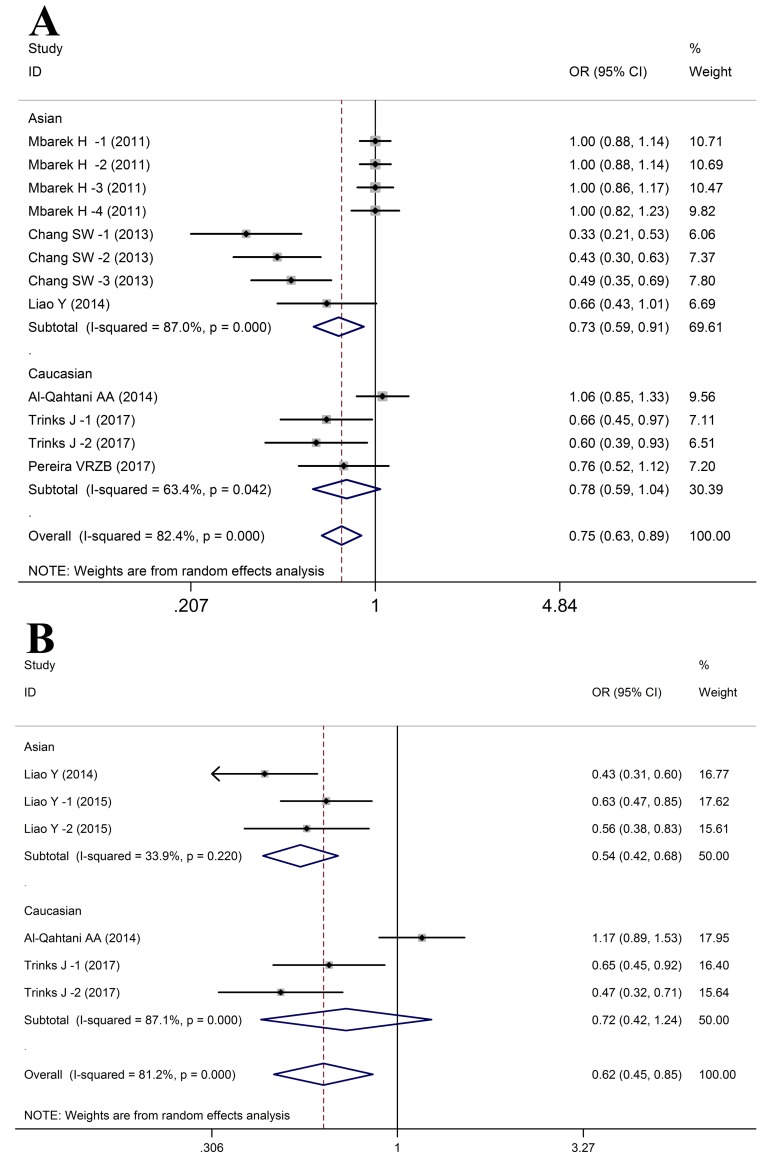
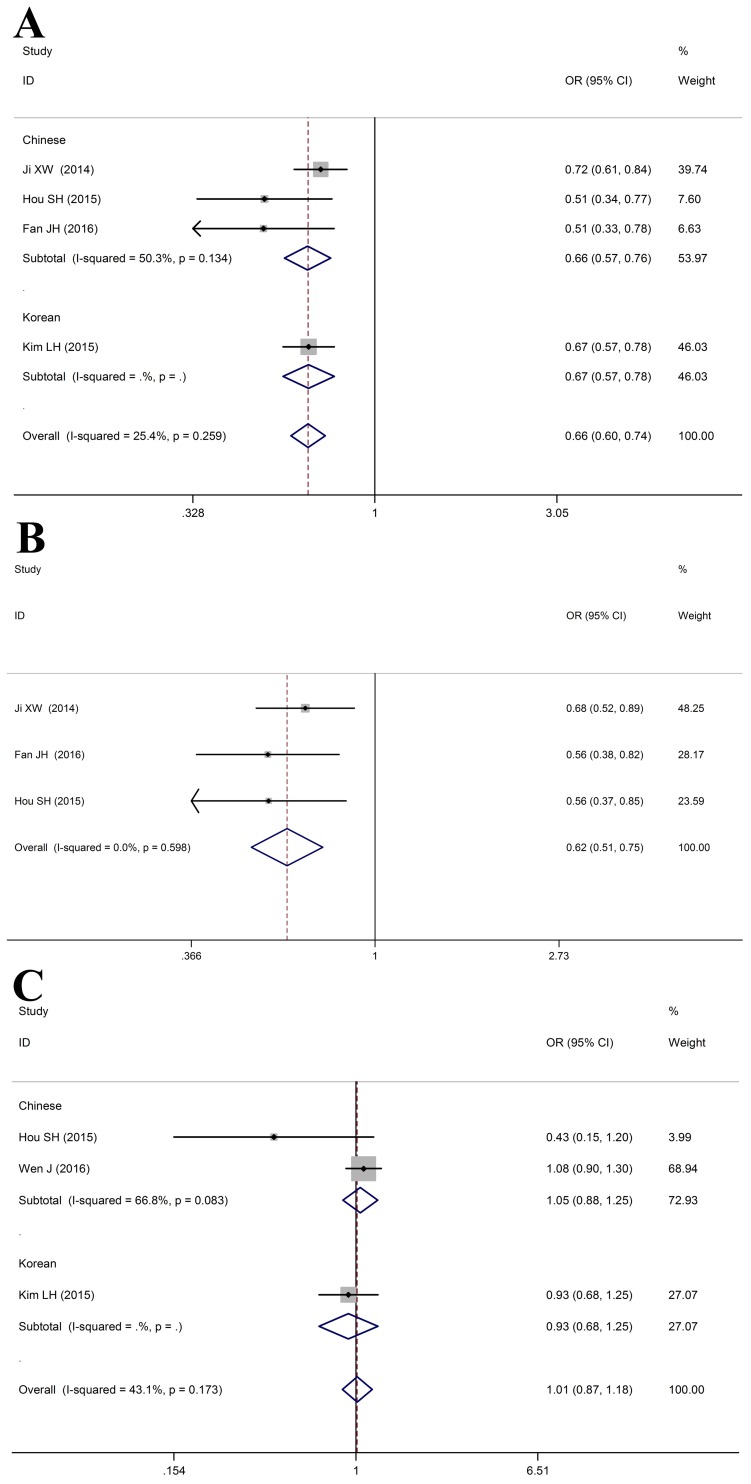
Hepatitis B is one of the most common infectious diseases, which leads to public health problems in the world, especially in Asian counties. In recent years, extensive human genetic association studies have been carried out to identify susceptible genes and genetic polymorphisms to understand the genetic contributions to the disease progression of HBV infection. gene variations have been reported to be associated with HBV infection/clearance, disease progression and the development of hepatitis B-related complications, including liver cirrhosis (LC) and hepatocellular carcinoma (HCC). However, the results are either inconclusive or controversial. Therefore, to derive a more precise estimation of the association, a meta-analysis was performed. Our data revealed that the alleles , and were significantly associated with decreased risk of HBV infection and HBV natural clearance. Logistic regression analyses showed that alleles significantly increased HBV infection clearance, and decreased HBV natural clearance. However, and were not associated with development of cirrhosis. The polymorphisms ( and ) were associated with a decreased HBV-related HCC risk in all genetic models, but increased the risk of HBV-related HCC. In addition, no significant association was observed between polymorphism and HBV-related HCC. These stratified analyses were limited due to relatively modest size of correlational studies. In future, further investigation on a large population and different ethnicities are warranted. Our findings contribute to the personalized care and prognosis in hepatitis B.
乙型肝炎是最常见的传染病之一,它在全球范围内引发公共卫生问题,尤其是在亚洲国家。近年来,已开展了广泛的人类基因关联研究,以确定易感基因和基因多态性,从而了解基因对乙肝病毒(HBV)感染疾病进展的影响。据报道,基因变异与HBV感染/清除、疾病进展以及包括肝硬化(LC)和肝细胞癌(HCC)在内的乙型肝炎相关并发症的发生有关。然而,结果要么尚无定论,要么存在争议。因此,为了更精确地估计这种关联性,我们进行了一项荟萃分析。我们的数据显示,等位基因 、 和 与HBV感染和HBV自然清除风险降低显著相关。逻辑回归分析表明,等位基因 显著增加HBV感染清除率,并降低HBV自然清除率。然而, 和 与肝硬化的发生无关。在所有遗传模型中,多态性( 和 )与HBV相关HCC风险降低有关,但 增加了HBV相关HCC的风险。此外,未观察到 多态性与HBV相关HCC之间存在显著关联。由于相关性研究规模相对较小,这些分层分析存在局限性。未来,有必要对大量人群和不同种族进行进一步研究。我们的研究结果有助于乙型肝炎的个性化治疗和预后评估。