Reiten Malin R, Malachin Giulia, Kommisrud Elisabeth, Østby Gunn C, Waterhouse Karin E, Krogenæs Anette K, Kusnierczyk Anna, Bjørås Magnar, Jalland Clara M O, Nekså Liv Heidi, Røed Susan S, Stenseth Else-Berit, Myromslien Frøydis D, Zeremichael Teklu T, Bakkebø Maren K, Espenes Arild, Tranulis Michael A
Faculty of Veterinary Medicine and Biosciences, Norwegian University of Life Sciences, Oslo, Norway.
Faculty of Education and Natural Sciences, Inland University of Applied Sciences, Hamar, Norway.
Front Mol Biosci. 2018 Jan 24;5:1. doi: 10.3389/fmolb.2018.00001. eCollection 2018.
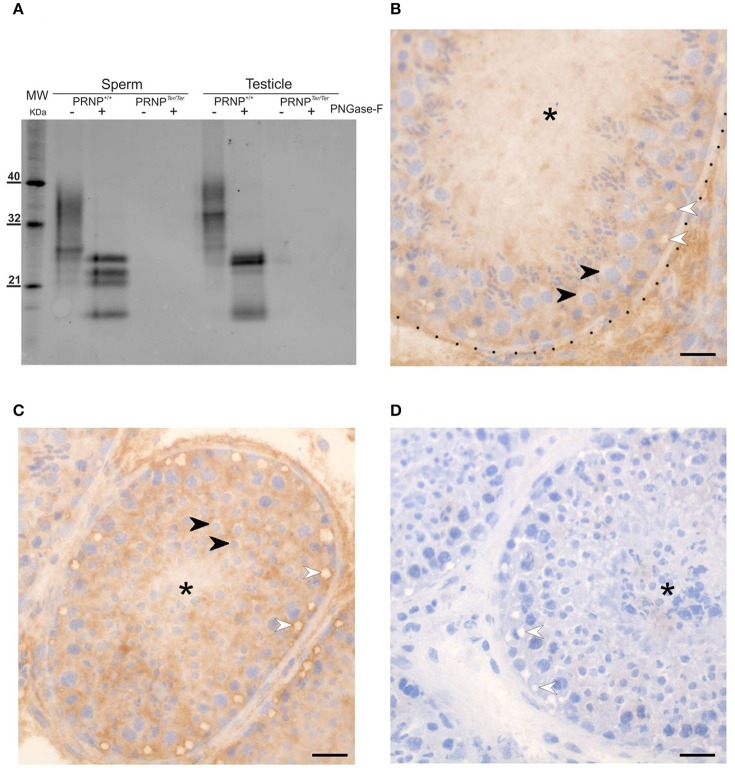
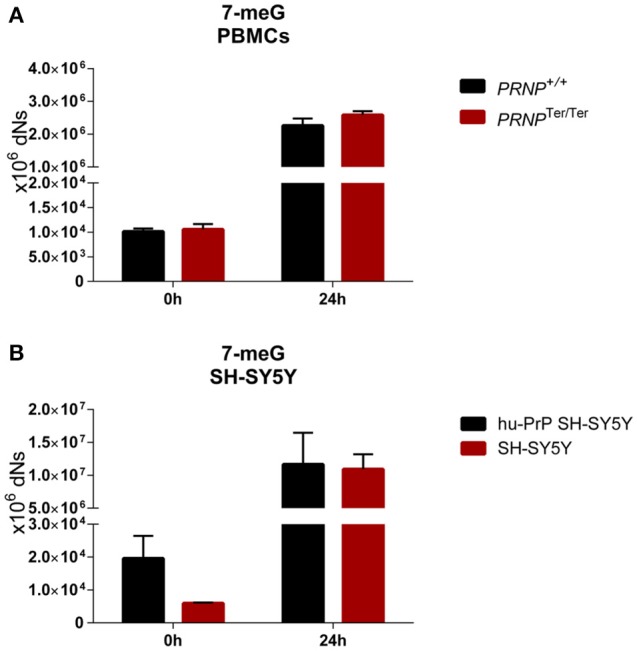
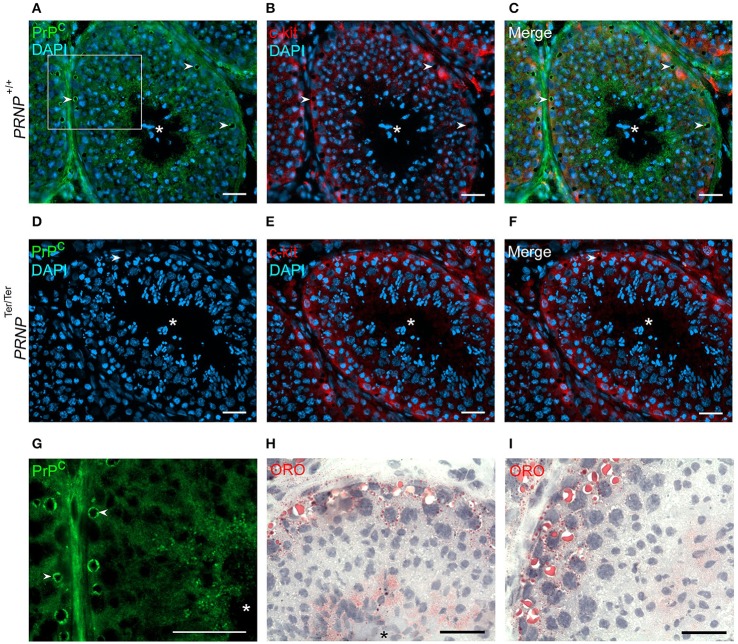
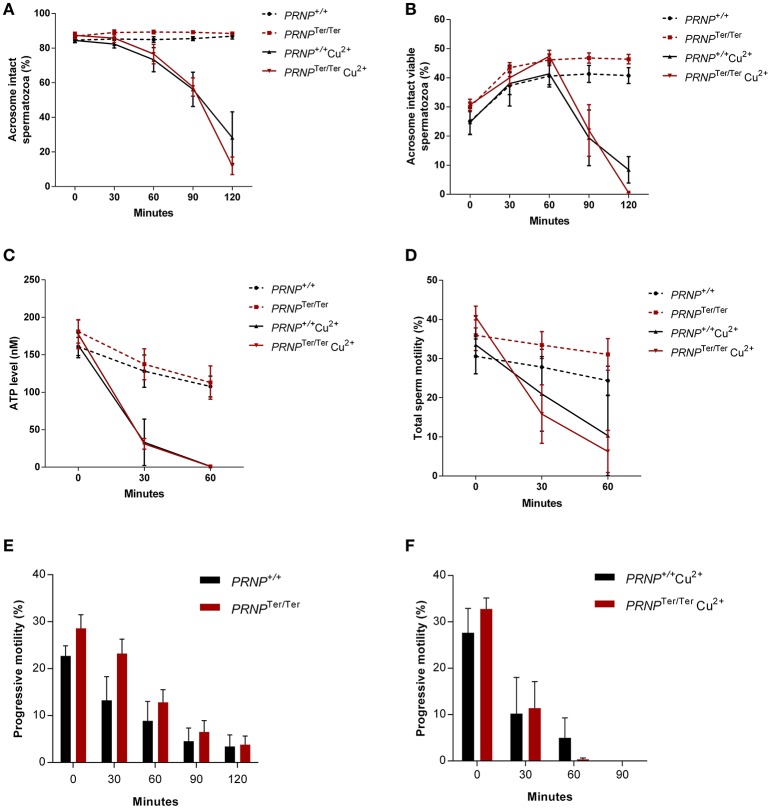
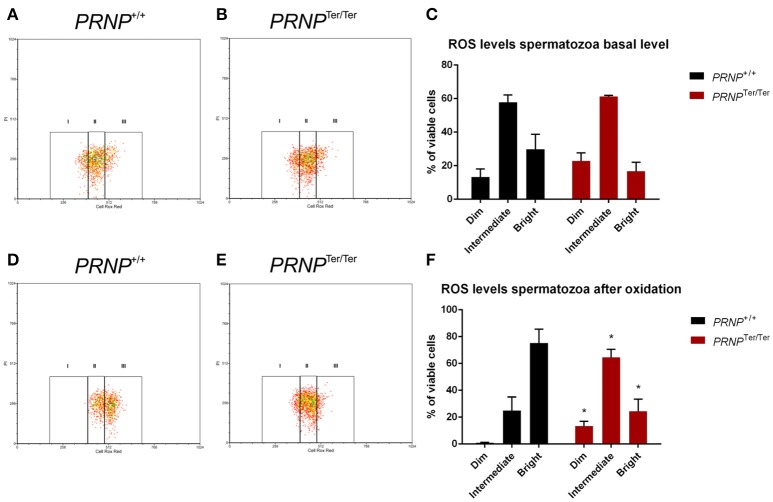
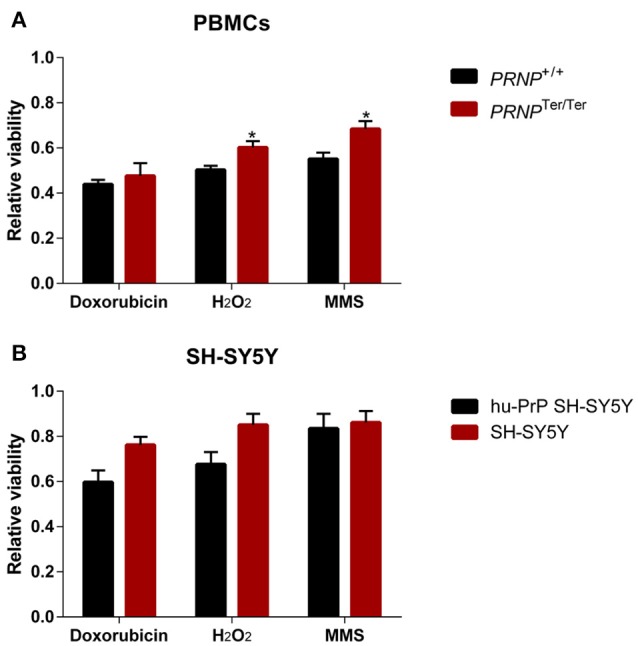
The cellular prion protein PrP is highly expressed in neurons, but also present in non-neuronal tissues, including the testicles and spermatozoa. Most immune cells and their bone marrow precursors also express PrP. Clearly, this protein operates in highly diverse cellular contexts. Investigations into putative stress-protective roles for PrP have resulted in an array of functions, such as inhibition of apoptosis, stimulation of anti-oxidant enzymes, scavenging roles, and a role in nuclear DNA repair. We have studied stress resilience of spermatozoa and peripheral blood mononuclear cells (PBMCs) derived from non-transgenic goats that lack PrP () compared with cells from normal () goats. Spermatozoa were analyzed for freeze tolerance, DNA integrity, viability, motility, ATP levels, and acrosome intactness at rest and after acute stress, induced by Cu ions, as well as levels of reactive oxygen species (ROS) after exposure to FeSO and HO. Surprisingly, PrP-negative spermatozoa reacted similarly to normal spermatozoa in all read-outs. Moreover, exposure of PBMCs to Doxorubicin, HO and methyl methanesulfonate (MMS), revealed no effect of PrP on cellular survival or global accumulation of DNA damage. Similar results were obtained with human neuroblastoma (SH-SY5Y) cell lines stably expressing varying levels of PrP. RNA sequencing of PBMCs ( = 8 of and ) showed that basal level expression of genes encoding DNA repair enzymes, ROS scavenging, and antioxidant enzymes were unaffected by the absence of PrP. Data presented here questions the cytoprotective roles previously attributed to PrP, although not excluding such functions in other cell types or tissues during inflammatory stress.
细胞朊蛋白PrP在神经元中高度表达,但也存在于非神经组织中,包括睾丸和精子。大多数免疫细胞及其骨髓前体细胞也表达PrP。显然,这种蛋白质在高度多样化的细胞环境中发挥作用。对PrP假定的应激保护作用的研究产生了一系列功能,如抑制细胞凋亡、刺激抗氧化酶、清除作用以及在核DNA修复中的作用。我们研究了与正常()山羊细胞相比,缺乏PrP的非转基因山羊的精子和外周血单核细胞(PBMCs)的应激恢复能力。分析了精子在静止状态和由铜离子诱导的急性应激后对冷冻耐受性、DNA完整性、活力、运动性、ATP水平和顶体完整性,以及在暴露于硫酸亚铁和过氧化氢后活性氧(ROS)的水平。令人惊讶的是,在所有检测指标中,PrP阴性精子的反应与正常精子相似。此外,将PBMCs暴露于阿霉素、过氧化氢和甲基磺酸甲酯(MMS)中,结果显示PrP对细胞存活或DNA损伤的总体积累没有影响。在稳定表达不同水平PrP的人神经母细胞瘤(SH-SY5Y)细胞系中也获得了类似的结果。PBMCs(每组8个样本)的RNA测序表明,编码DNA修复酶、ROS清除酶和抗氧化酶的基因的基础水平表达不受PrP缺失的影响。尽管不排除在炎症应激期间PrP在其他细胞类型或组织中具有这种功能,但本文提供的数据对先前归因于PrP的细胞保护作用提出了质疑。