Wu Bin, Zheng Shan, Pedroso Marcelo Monteiro, Guddat Luke W, Chang Siyuan, He Bingfang, Schenk Gerhard
1College of Biotechnology and Pharmaceutical Engineering, Nanjing Tech University, 30 Puzhunan road, Nanjing, 211816 Jiangsu China.
China Jiangsu National Synergetic Innovation Center for Advanced Materials, 30 Puzhunan road, Nanjing, 211816 Jiangsu China.
Biotechnol Biofuels. 2018 Jan 29;11:20. doi: 10.1186/s13068-018-1022-2. eCollection 2018.
Presently, enzymes still constitute a major part of the cost of biofuel production from lignocellulosic biomass. Processive endoglucanases, which possess both endoglucanase and exoglucanase activity, have the potential to reduce the costs of biomass saccharification when used together with commercial cellulases. Therefore, the exploration of new processive endoglucanases has attracted much attention with a view to accelerating the industrialization of biofuels and biochemicals.
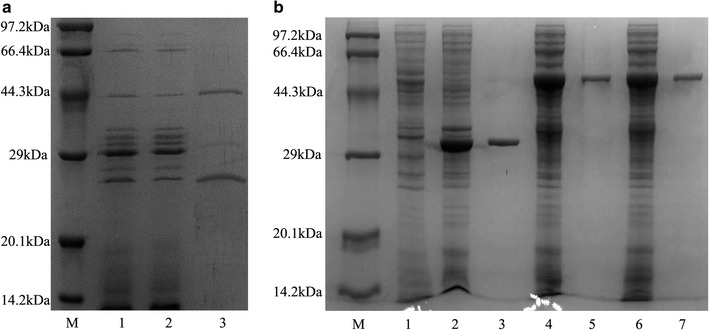
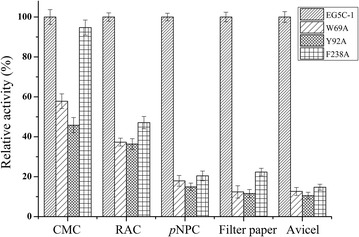
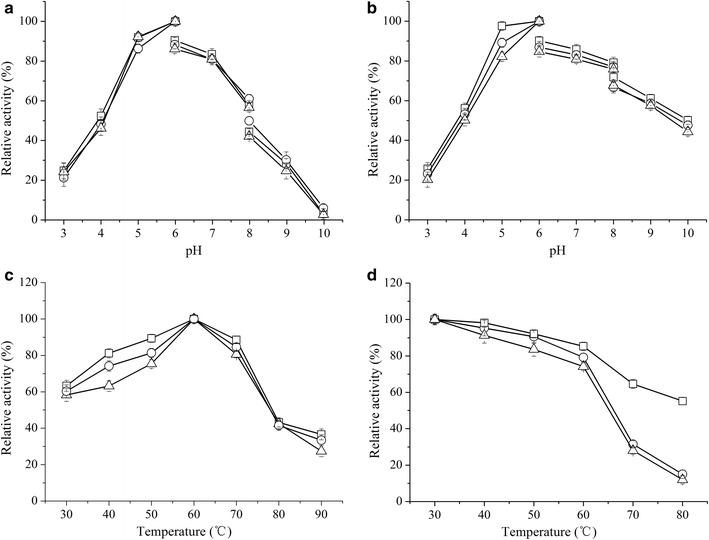
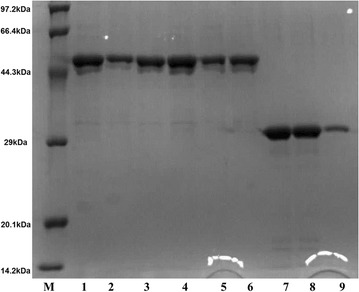
The endoglucanase EG5C and its truncated form EG5C-1 from BS-5 were expressed and characterized. EG5C was a typical endoglucanase, comprised of a family 5 catalytic domain and family 3 carbohydrate-binding domain, and which had high activity toward soluble cellulosic substrates, but low activity toward insoluble cellulosic substrates. Importantly, the truncated form EG5C-1 was a processive endoglucanase that hydrolyzed not only carboxymethyl cellulose (CMC), but also insoluble cellulosic substrates. The hydrolytic activities of EG5C-1 towards CMC, phosphoric acid-swollen cellulose (PASC), -nitrophenyl-β-d-cellobioside, filter paper and Avicel are 4170, 700, 2550, 405 and 320 U/μmol, respectively. These data demonstrated that EG5C-1 had higher activity ratio of exoglucanase to endoglucanase than other known processive endoglucanases. When PASC was degraded by EG5C-1, the ratio of soluble to insoluble reducing sugars was about 3.7 after 3 h of incubation with cellobiose and cellotriose as the main products. Importantly, EG5C-1 alone was able to hydrolyze filter paper and PASC. At 5% substrate concentration and 10 FPU/g PASC enzyme loading, the saccharification yield was 76.5% after 60 h of incubation. Replacement of a phenylalanine residue (F238) by an alanine at the entrance/exit of the substrate binding cleft significantly reduces the ability of EG5C-1 to degrade filter paper and Avicel, but this mutation has little impact on CMCase activity. The processivity of this mutant was also greatly reduced while its cellulose binding ability was markedly enhanced.
The processive endoglucanase EG5C-1 from BS-5 exhibits excellent properties that render it a suitable candidate for use in biofuel and biochemical production from lignocellulosic biomass. In addition, our studies also provide useful information for research on enzyme processivity at the molecular level.
目前,酶仍然是木质纤维素生物质生产生物燃料成本的主要组成部分。具有内切葡聚糖酶和外切葡聚糖酶活性的持续性内切葡聚糖酶与商业纤维素酶一起使用时,有可能降低生物质糖化的成本。因此,为了加速生物燃料和生化产品的工业化,探索新型持续性内切葡聚糖酶受到了广泛关注。
对来自BS-5的内切葡聚糖酶EG5C及其截短形式EG5C-1进行了表达和表征。EG5C是一种典型的内切葡聚糖酶,由5家族催化结构域和3家族碳水化合物结合结构域组成,对可溶性纤维素底物具有高活性,但对不溶性纤维素底物活性较低。重要的是,截短形式的EG5C-1是一种持续性内切葡聚糖酶,不仅能水解羧甲基纤维素(CMC),还能水解不溶性纤维素底物。EG5C-1对CMC、磷酸膨胀纤维素(PASC)、对硝基苯基-β-D-纤维二糖、滤纸和微晶纤维素的水解活性分别为4170、700、2550、405和320 U/μmol。这些数据表明,EG5C-1的外切葡聚糖酶与内切葡聚糖酶活性比高于其他已知的持续性内切葡聚糖酶。当EG5C-1降解PASC时,以纤维二糖和纤维三糖为主要产物孵育3小时后,可溶性与不溶性还原糖的比例约为3.7。重要的是,单独的EG5C-1能够水解滤纸和PASC。在底物浓度为5%和酶负载量为10 FPU/g PASC的条件下,孵育60小时后糖化产率为76.5%。在底物结合裂隙的入口/出口处将苯丙氨酸残基(F238)替换为丙氨酸显著降低了EG5C-1降解滤纸和微晶纤维素的能力,但这种突变对CMCase活性影响不大。该突变体的持续性也大大降低,而其纤维素结合能力明显增强。
来自BS-5的持续性内切葡聚糖酶EG5C-1具有优异的特性,使其成为用于木质纤维素生物质生物燃料和生化产品生产的合适候选酶。此外,我们的研究还为分子水平上的酶持续性研究提供了有用信息。