Royall Amy H, Maeso Ignacio, Dunwell Thomas L, Holland Peter W H
1Department of Zoology, University of Oxford, South Parks Road, Oxford, OX1 3PS UK.
2Centro Andaluz de Biología del Desarrollo, Consejo Superior de Investigaciones Científicas/Universidad Pablo de Olavide, 41013 Seville, Spain.
Evodevo. 2018 Jan 27;9:2. doi: 10.1186/s13227-018-0091-4. eCollection 2018.
ETCHbox genes are eutherian-specific homeobox genes expressed during preimplantation development at a time when the first cell lineage decisions are being made. The mouse has an unusual repertoire of ETCHbox genes with several gene families lost in evolution and the remaining two, and , greatly divergent in sequence and number. Each has undergone duplication to give a double homeodomain locus and a large cluster of over 60 loci. The gene content differences between species raise important questions about how evolution can tolerate loss of genes implicated in key developmental events.
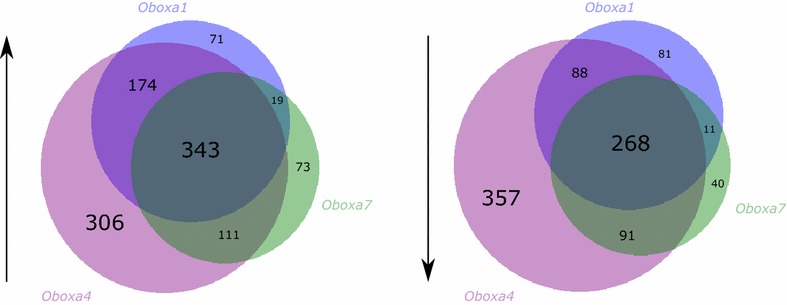
We find that internal duplication occurred in the mouse lineage, while duplication was stepwise, generating subgroups with distinct sequence and expression. Ectopic expression of three genes and a transcript in primary mouse embryonic cells followed by transcriptome sequencing allowed investigation into their functional roles. We find distinct transcriptomic influences for different subgroups and , including modulation of genes related to zygotic genome activation and preparation for blastocyst formation. Comparison with similar experiments performed using human homeobox genes reveals striking overlap between genes downstream of mouse and genes downstream of human .
Mouse and human homeobox genes are paralogous rather than orthologous, yet they have evolved to regulate a common set of genes. This suggests there was compensation of function alongside gene loss through co-option of a different locus. Functional compensation by non-orthologous genes with dissimilar sequences is unusual but may indicate underlying distributed robustness. Compensation may be driven by the strong evolutionary pressure for successful early embryo development.
ETCHbox基因是有胎盘类特有的同源框基因,在植入前发育过程中表达,此时正在做出第一批细胞谱系决定。小鼠具有不寻常的ETCHbox基因库,有几个基因家族在进化过程中丢失,其余两个基因家族,即 和 ,在序列和数量上有很大差异。每个基因家族都经历了复制,形成了一个双同源结构域基因座和一个由60多个基因座组成的大簇。物种间的基因含量差异引发了重要问题,即进化如何能够容忍与关键发育事件相关的基因丢失。
我们发现 基因在小鼠谱系中发生了内部复制,而 基因的复制是逐步进行的,产生了具有不同序列和表达的亚组。在原代小鼠胚胎细胞中异位表达三个 基因和一个 转录本,然后进行转录组测序,从而能够研究它们的功能作用。我们发现不同的 和 亚组对转录组有不同的影响,包括对与合子基因组激活和囊胚形成准备相关基因的调节。与使用人类同源框基因进行的类似实验进行比较,发现小鼠 基因下游的基因与人类 基因下游的基因之间存在显著重叠。
小鼠 和人类 同源框基因是旁系同源而非直系同源的,但它们已经进化到调节一组共同的基因。这表明在基因丢失的同时,通过选择不同的基因座实现了功能补偿。具有不同序列的非直系同源基因的功能补偿并不常见,但可能表明存在潜在的分布式稳健性。这种补偿可能是由早期胚胎成功发育的强大进化压力驱动的。