Reeves T, Bates S, Sharp T, Richardson K, Bali S, Plumb J, Anderson H, Prentis J, Swart M, Levett D Z H
1Anaesthesia and Critical Care Research Unit, University Hospital Southampton NHS Foundation Trust, Southampton, UK.
2Critical Care Research Area, National Institute for Health Research Respiratory Biomedical Research Unit, University Hospital Southampton NHS Foundation Trust, Southampton, UK.
Perioper Med (Lond). 2018 Jan 26;7:2. doi: 10.1186/s13741-017-0082-3. eCollection 2018.
Cardiopulmonary exercise testing (CPET) is an exercise stress test with concomitant expired gas analysis that provides an objective, non-invasive measure of functional capacity under stress. CPET-derived variables predict postoperative morbidity and mortality after major abdominal and thoracic surgery. Two previous surveys have reported increasing utilisation of CPET preoperatively in England. We aimed to evaluate current CPET practice in the UK, to identify who performs CPET, how it is performed, how the data generated are used and the funding models.
All anaesthetic departments in trusts with adult elective surgery in the UK were contacted by telephone to obtain contacts for their pre-assessment and CPET service leads. An online survey was sent to all leads between November 2016 and March 2017.
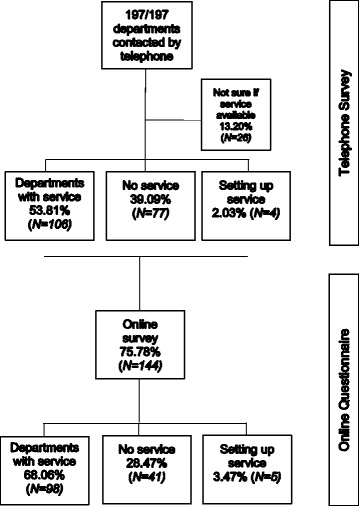
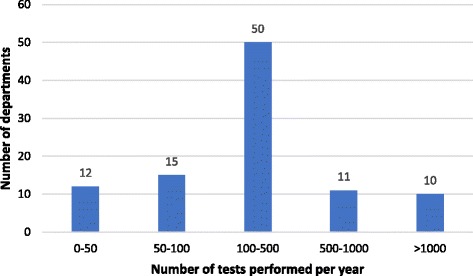
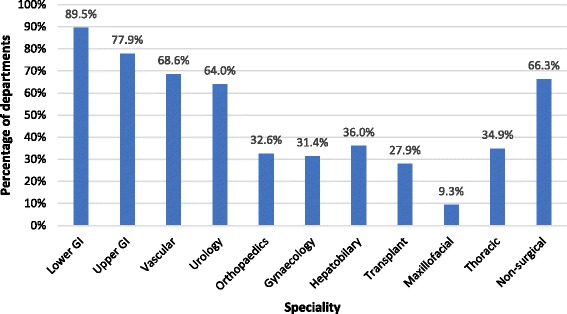
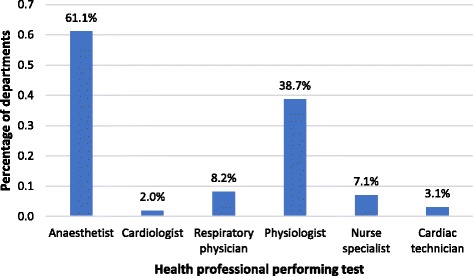
The response rate to the online survey was 73.1% (144/197) with 68.1% (98/144) reporting an established clinical service and 3.5% (5/144) setting up a service. Approximately 30,000 tests are performed a year with 93.0% (80/86) using cycle ergometry. Colorectal surgical patients are the most frequently tested (89.5%, 77/86). The majority of tests are performed and interpreted by anaesthetists. There is variability in the methods of interpretation and reporting of CPET and limited external validation of results.
This survey has identified the continued expansion of perioperative CPET services in the UK which have doubled since 2011. The vast majority of CPET tests are performed and reported by anaesthetists. It has highlighted variation in practice and a lack of standardised reporting implying a need for practice guidelines and standardised training to ensure high-quality data to inform perioperative decision making.
心肺运动试验(CPET)是一种伴有呼出气体分析的运动应激试验,可在应激状态下提供客观、无创的功能能力测量方法。CPET得出的变量可预测腹部和胸部大手术后的术后发病率和死亡率。此前的两项调查显示,英国术前CPET的使用有所增加。我们旨在评估英国目前的CPET实践情况,确定谁进行CPET检查、如何进行检查、所生成的数据如何使用以及资金模式。
通过电话联系英国所有开展成人择期手术的信托机构的麻醉科,获取其术前评估和CPET服务负责人的联系方式。在2016年11月至2017年3月期间,向所有负责人发送了在线调查问卷。
在线调查的回复率为73.1%(144/197),其中68.1%(98/144)报告已建立临床服务,3.5%(5/144)正在建立服务。每年进行约30000次检查,93.0%(80/86)使用自行车测力计。结直肠手术患者接受检查的频率最高(89.5%,77/86)。大多数检查由麻醉医生进行并解读。CPET的解读和报告方法存在差异,结果的外部验证有限。
本次调查发现,英国围手术期CPET服务持续扩大,自2011年以来已翻倍。绝大多数CPET检查由麻醉医生进行和报告。它突出了实践中的差异以及缺乏标准化报告,这意味着需要实践指南和标准化培训,以确保获得高质量数据,为围手术期决策提供依据。