a Department of Pharmaceutical Technology , Jadavpur University , Kolkata , India.
b Department of Pharmaceutical Sciences , Dibrugarh University , Dibrugarh , India.
Drug Deliv. 2018 Nov;25(1):504-516. doi: 10.1080/10717544.2018.1435749.
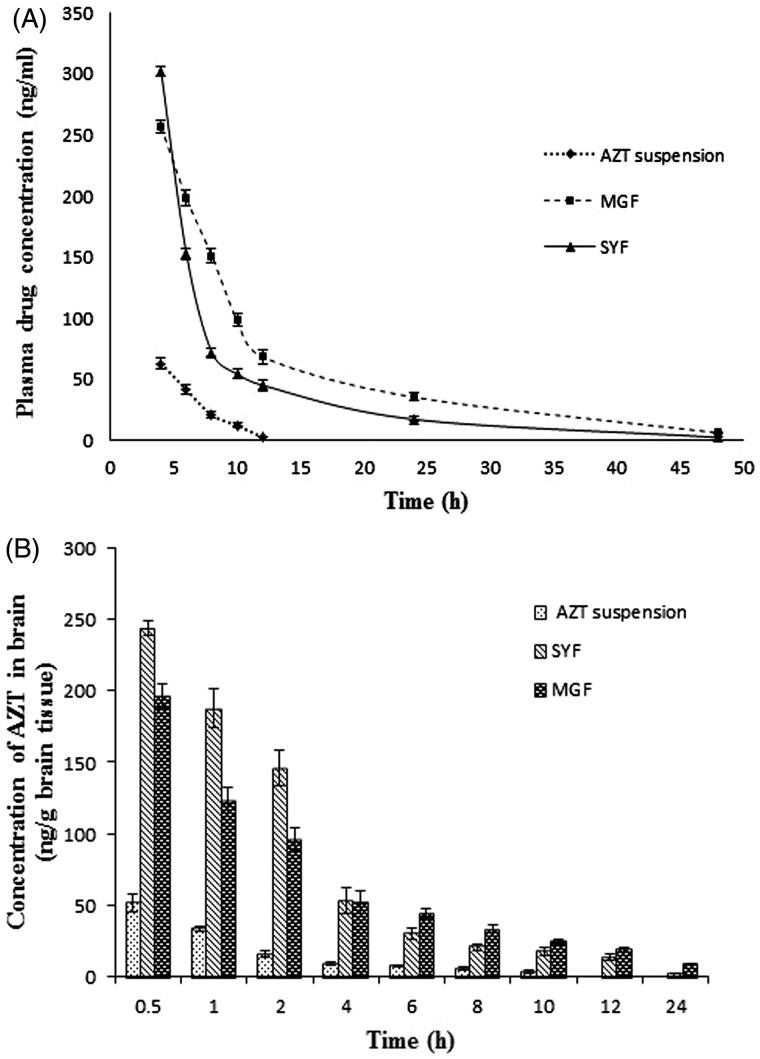
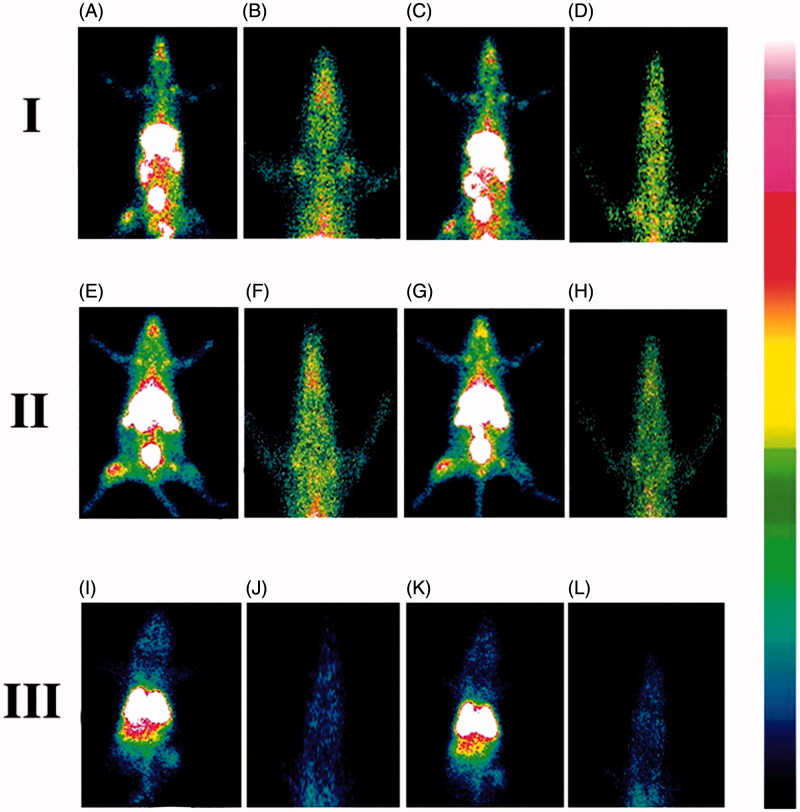
Delivering highly water soluble drugs across blood-brain barrier (BBB) is a crucial challenge for the formulation scientists. A successful therapeutic intervention by developing a suitable drug delivery system may revolutionize treatment across BBB. Efforts were given here to unravel the capability of a newly developed fatty acid combination (stearic acid:oleic acid:palmitic acid = 8.08:4.13:1) (ML) as fundamental component of nanocarrier to deliver highly water soluble zidovudine (AZT) as a model drug into brain across BBB. A comparison was made with an experimentally developed standard phospholipid-based nanocarrier containing AZT. Both the formulations had nanosize spherical unilamellar vesicular structure with highly negative zeta potential along with sustained drug release profiles. Gamma scintigraphic images showed both the radiolabeled formulations successfully crossed BBB, but longer retention in brain was observed for ML-based formulation (MGF) as compared to soya lecithin (SL)-based drug carrier (SYF). Plasma and brain pharmacokinetic data showed less clearance, prolonged residence time, more bioavailability and sustained release of AZT from MGF in rats compared to those data of the rats treated with SYF/AZT suspension. Thus, ML may be utilized to successfully develop drug nanocarrier to deliver drug into brain across BBB, in a sustained manner for a prolong period of time and may provide an effective therapeutic strategy for many diseases of brain. Further, many anti-HIV drugs cannot cross BBB sufficiently. Hence, the developed formulation may be a suitable option to carry those drugs into brain for better therapeutic management of HIV.
将高水溶性药物递送到血脑屏障 (BBB) 是制剂科学家面临的一个关键挑战。通过开发合适的药物递送系统进行成功的治疗干预可能会彻底改变 BBB 两侧的治疗方法。本文旨在研究一种新开发的脂肪酸混合物(硬脂酸:油酸:棕榈酸=8.08:4.13:1)(ML)作为纳米载体的基本成分,将高水溶性齐多夫定 (AZT) 作为模型药物递送到 BBB 内的脑内的能力。并与含有 AZT 的实验开发的标准磷脂基纳米载体进行了比较。这两种制剂都具有纳米级球形单分子层囊泡结构,具有高度负的 Zeta 电位和持续的药物释放曲线。伽马闪烁成像图像显示,两种放射性标记的制剂都成功地穿过了 BBB,但与基于大豆卵磷脂 (SL) 的药物载体 (SYF) 相比,ML 为基础的制剂 (MGF) 在大脑中的滞留时间更长。与用 SYF/AZT 混悬剂治疗的大鼠相比,MGF 中的 AZT 清除率更低、半衰期更长、生物利用度更高、释放更持久。因此,ML 可用于成功开发药物纳米载体,以持续的方式将药物递送到 BBB 内的脑内,并为许多脑部疾病提供有效的治疗策略。此外,许多抗 HIV 药物不能充分穿透 BBB。因此,开发的制剂可能是将这些药物递送到大脑的合适选择,以更好地管理 HIV 治疗。