Wang Mei, Li Ai-Dong, Kong Ji-Zhou, Gong You-Pin, Zhao Chao, Tang Yue-Feng, Wu Di
National Laboratory of Solid State Microstructures, Department of Materials Science and Engineering, College of Engineering and Applied Sciences, Collaborative Innovation Center of Advanced Microstructures, Nanjing University, Nanjing, 210093, People's Republic of China.
Nanoscale Res Lett. 2018 Feb 9;13(1):47. doi: 10.1186/s11671-018-2458-9.
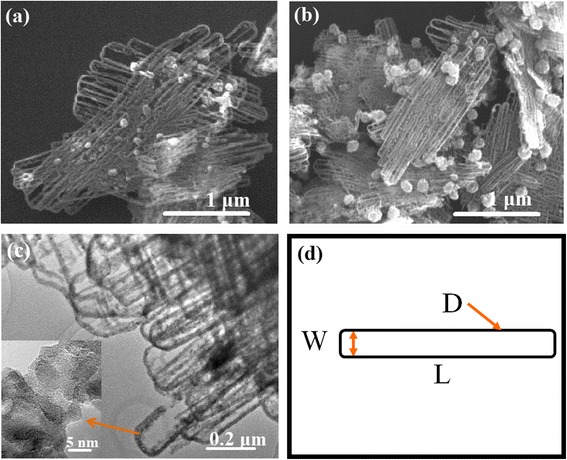
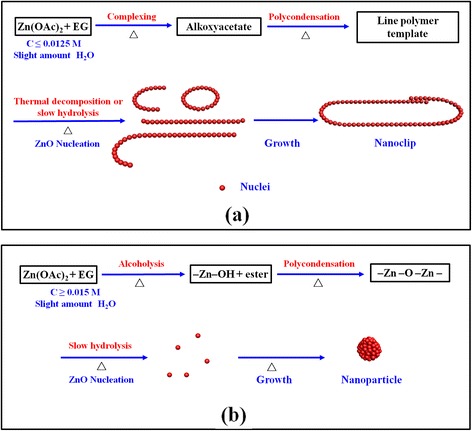
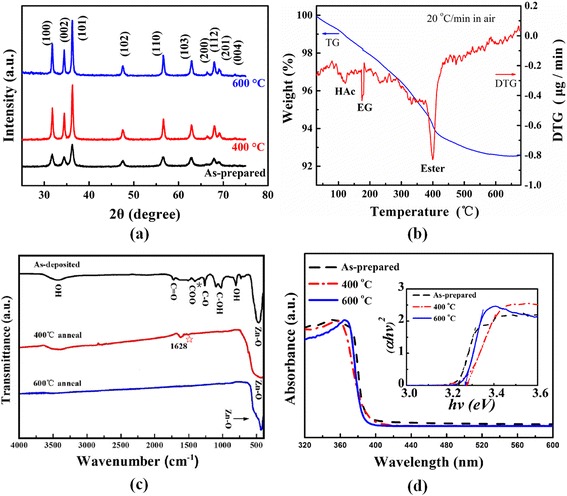
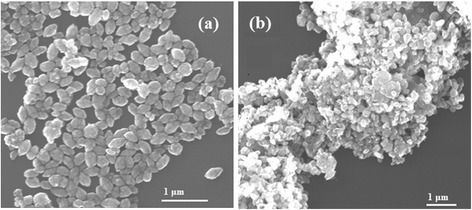
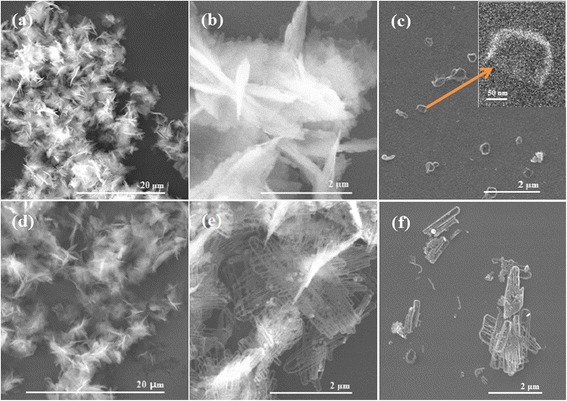
ZnO nano-clips with better monodispersion were prepared successfully using zinc acetate hydrate (Zn(OAc)·nHO) as Zn source and ethylene glycol (EG) as solvent by a simple solution-based route-polyol process. The effect of solution concentration on the formation of ZnO nano-clips has been investigated deeply. We first prove that the 0.01 M Zn(OAc)·nHO can react with EG without added water or alkaline, producing ZnO nano-clips with polycrystalline wurtzite structure at 170 °C. As-synthesized ZnO nano-clips contain a lot of aggregated nanocrystals (~ 5 to 15 nm) with high specific surface area of 88 m/g. The shapes of ZnO nano-clips basically keep constant with improved crystallinity after annealing at 400-600 °C. The lower solution concentration and slight amount of HO play a decisive role in ZnO nano-clip formation. When the solution concentration is ≤ 0.0125 M, the complexing and polymerization reactions between Zn(OAc)·nHO and EG predominate, mainly elaborating ZnO nano-clips. When the solution concentration is ≥ 0.015 M, the alcoholysis and polycondensation reactions of Zn(OAc)·nHO and EG become dominant, leading to ZnO particle formation with spherical and elliptical shapes. The possible growth mechanism based on a competition between complexing and alcoholysis of Zn(OAc)·nHO and EG has been proposed.
以水合醋酸锌(Zn(OAc)·nH₂O)为锌源、乙二醇(EG)为溶剂,通过简单的溶液法——多元醇法成功制备了具有更好单分散性的ZnO纳米夹。深入研究了溶液浓度对ZnO纳米夹形成的影响。我们首次证明,0.01 M的Zn(OAc)·nH₂O在不加水或碱的情况下能与EG反应,在170℃下生成具有多晶纤锌矿结构的ZnO纳米夹。合成的ZnO纳米夹包含许多聚集的纳米晶体(约5至15纳米),比表面积高达88平方米/克。在400 - 600℃退火后,ZnO纳米夹的形状基本保持不变,结晶度有所提高。较低的溶液浓度和少量的H₂O在ZnO纳米夹的形成中起决定性作用。当溶液浓度≤0.0125 M时,Zn(OAc)·nH₂O与EG之间的络合和聚合反应占主导,主要生成ZnO纳米夹。当溶液浓度≥0.015 M时,Zn(OAc)·nH₂O与EG的醇解和缩聚反应占主导,导致形成球形和椭圆形的ZnO颗粒。基于Zn(OAc)·nH₂O与EG的络合和醇解之间竞争的可能生长机制已被提出。