Division of Biomedical Sciences, Warwick Medical School, University of Warwick, Coventry, UK.
Department of Medical Technology, Chiang Mai University, Chiang Mai, Thailand.
Diabetologia. 2018 May;61(5):1155-1166. doi: 10.1007/s00125-018-4558-6. Epub 2018 Feb 9.
AIMS/HYPOTHESIS: Lipoprotein-associated phospholipase A2 (Lp-PLA2) is a circulatory macrophage-derived factor that increases with obesity and leads to a higher risk of cardiovascular disease (CVD). Despite this, its role in adipose tissue and the adipocyte is unknown. Therefore, the aims of this study were to clarify the expression of Lp-PLA2 in relation to different adipose tissue depots and type 2 diabetes, and ascertain whether markers of obesity and type 2 diabetes correlate with circulating Lp-PLA2. A final aim was to evaluate the effect of cholesterol on cellular Lp-PLA2 in an in vitro adipocyte model.
Analysis of anthropometric and biochemical variables from a cohort of lean (age 44.4 ± 6.2 years; BMI 22.15 ± 1.8 kg/m, n = 23), overweight (age 45.4 ± 12.3 years; BMI 26.99 ± 1.5 kg/m, n = 24), obese (age 49.0 ± 9.1 years; BMI 33.74 ± 3.3 kg/m, n = 32) and type 2 diabetic women (age 53.0 ± 6.13 years; BMI 35.08 ± 8.6 kg/m, n = 35), as part of an ethically approved study. Gene and protein expression of PLA2 and its isoforms were assessed in adipose tissue samples, with serum analysis undertaken to assess circulating Lp-PLA2 and its association with cardiometabolic risk markers. A human adipocyte cell model, Chub-S7, was used to address the intracellular change in Lp-PLA2 in adipocytes.
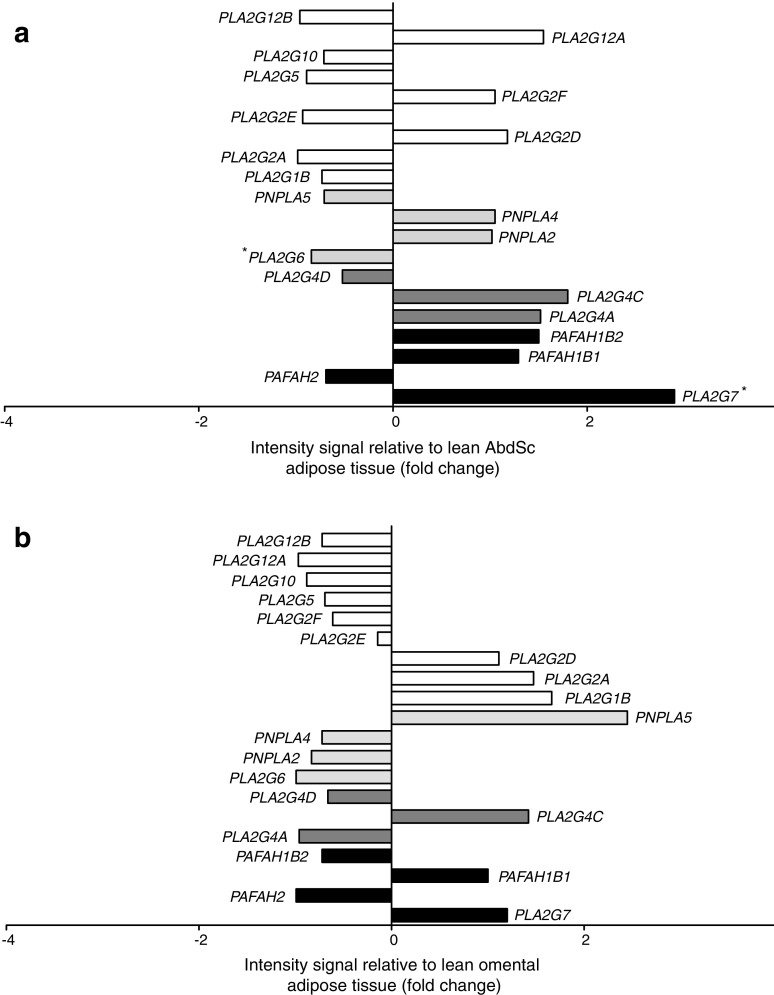
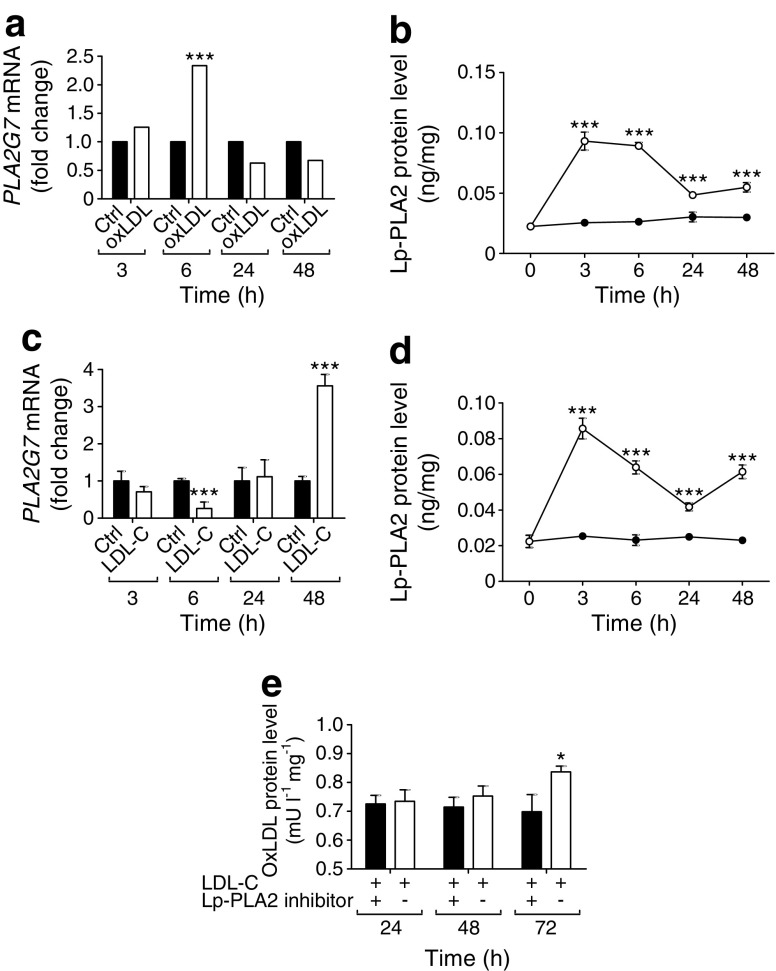
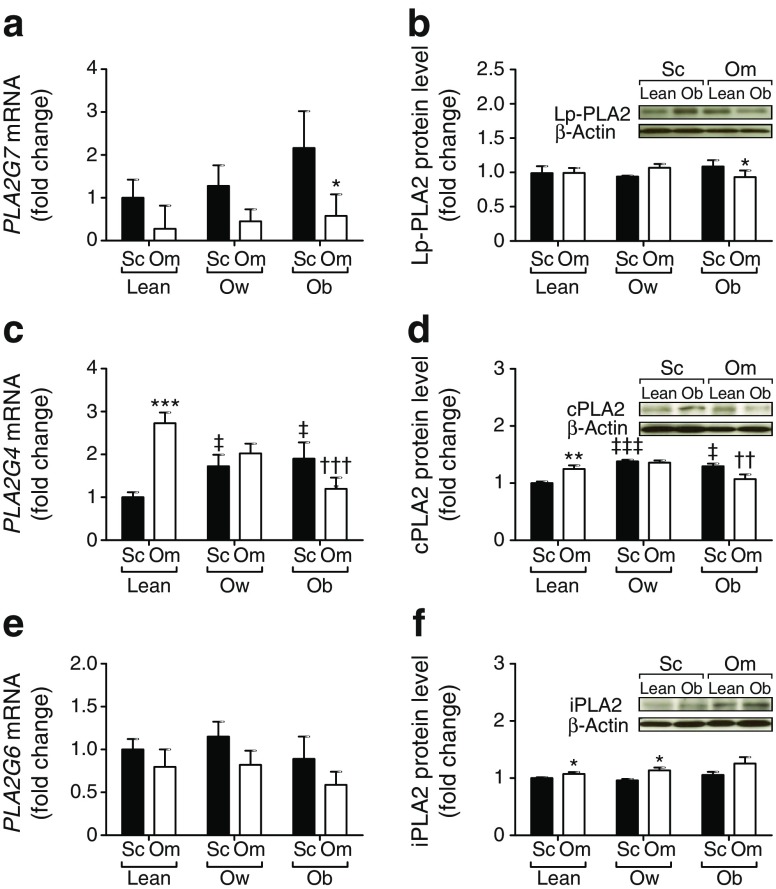
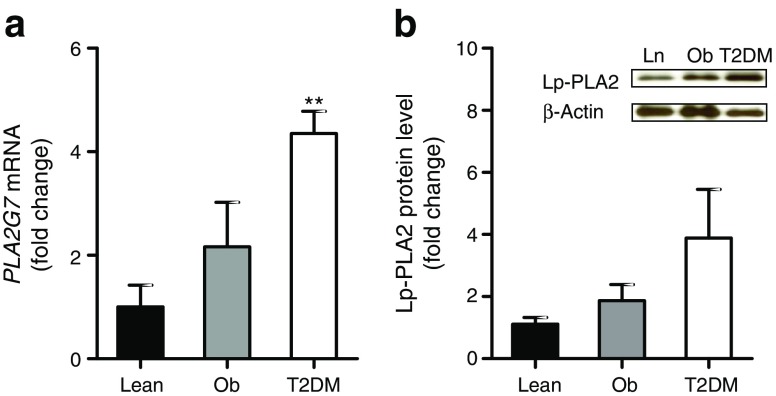
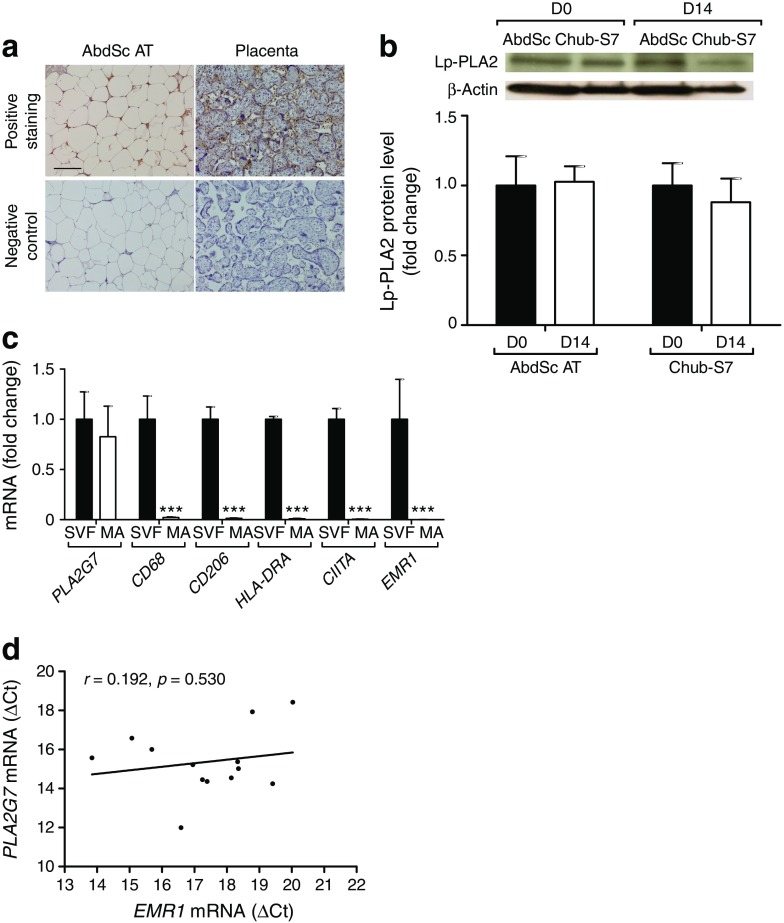
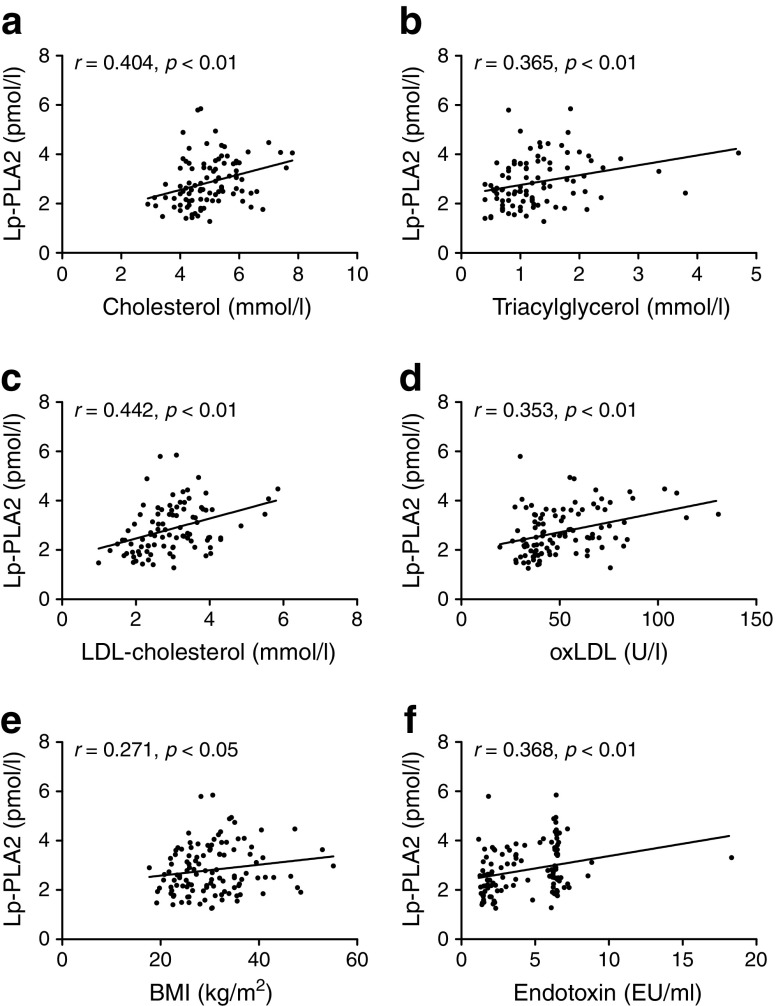
Lp-PLA2 and calcium-independent PLA2 (iPLA2) isoforms were altered by adiposity, as shown by microarray analysis (p < 0.05). Type 2 diabetes status was also observed to significantly alter gene and protein levels of Lp-PLA2 in abdominal subcutaneous (AbdSc) (p < 0.01), but not omental, adipose tissue. Furthermore, multivariate stepwise regression analysis of circulating Lp-PLA2 and metabolic markers revealed that the greatest predictor of Lp-PLA2 in non-diabetic individuals was LDL-cholesterol (p = 0.004). Additionally, in people with type 2 diabetes, oxidised LDL (oxLDL), triacylglycerols and HDL-cholesterol appeared important predictors, accounting for 59.7% of the variance (p < 0.001). Subsequent in vitro studies determined human adipocytes to be a source of Lp-PLA2, as confirmed by mRNA expression, protein levels and immunochemistry. Further in vitro experiments revealed that treatment with LDL-cholesterol or oxLDL resulted in significant upregulation of Lp-PLA2, while inhibition of Lp-PLA2 reduced oxLDL production by 19.8% (p < 0.05).
CONCLUSIONS/INTERPRETATION: Our study suggests adipose tissue and adipocytes are active sources of Lp-PLA2, with differential regulation by fat depot and metabolic state. Moreover, levels of circulating Lp-PLA2 appear to be influenced by unfavourable lipid profiles in type 2 diabetes, which may occur in part through regulation of LDL-cholesterol and oxLDL metabolism in adipocytes.
目的/假设:脂蛋白相关磷脂酶 A2(Lp-PLA2)是一种循环巨噬细胞衍生的因子,它会随着肥胖而增加,导致心血管疾病(CVD)的风险更高。尽管如此,其在脂肪组织和脂肪细胞中的作用尚不清楚。因此,本研究的目的是阐明 Lp-PLA2 在不同脂肪组织库与 2 型糖尿病之间的表达情况,并确定肥胖和 2 型糖尿病的标志物是否与循环 Lp-PLA2 相关。最终目的是评估胆固醇对体外脂肪细胞模型中细胞 Lp-PLA2 的影响。
分析了一组瘦(年龄 44.4±6.2 岁;BMI 22.15±1.8kg/m,n=23)、超重(年龄 45.4±12.3 岁;BMI 26.99±1.5kg/m,n=24)、肥胖(年龄 49.0±9.1 岁;BMI 33.74±3.3kg/m,n=32)和 2 型糖尿病女性(年龄 53.0±6.13 岁;BMI 35.08±8.6kg/m,n=35)的人体测量学和生化变量,这是一项经伦理批准的研究的一部分。在脂肪组织样本中评估 PLA2 及其同工型的基因和蛋白表达,并进行血清分析以评估循环 Lp-PLA2 及其与心血管代谢风险标志物的相关性。使用人类脂肪细胞模型 Chub-S7 来研究脂肪细胞中 Lp-PLA2 的细胞内变化。
微阵列分析显示,Lp-PLA2 和钙非依赖性 PLA2(iPLA2)同工型受肥胖影响(p<0.05)。2 型糖尿病状态也显著改变了腹部皮下(AbdSc)脂肪组织中 Lp-PLA2 的基因和蛋白水平(p<0.01),但网膜脂肪组织中没有改变。此外,对循环 Lp-PLA2 和代谢标志物的多元逐步回归分析表明,非糖尿病个体中 Lp-PLA2 的最大预测因子是 LDL 胆固醇(p=0.004)。此外,在 2 型糖尿病患者中,氧化型 LDL(oxLDL)、三酰甘油和 HDL 胆固醇似乎是重要的预测因子,占总方差的 59.7%(p<0.001)。随后的体外研究确定人类脂肪细胞是 Lp-PLA2 的来源,这通过 mRNA 表达、蛋白水平和免疫化学得到证实。进一步的体外实验表明,LDL 胆固醇或 oxLDL 的处理导致 Lp-PLA2 显著上调,而 Lp-PLA2 的抑制使 oxLDL 的产生减少了 19.8%(p<0.05)。
结论/解释:我们的研究表明,脂肪组织和脂肪细胞是 Lp-PLA2 的活性来源,受脂肪库和代谢状态的差异调节。此外,循环 Lp-PLA2 的水平似乎受到 2 型糖尿病中不良脂质谱的影响,这可能部分通过调节脂肪细胞中的 LDL 胆固醇和 oxLDL 代谢来发生。