Department of Gynecology and Obstetrics, Shanghai Jiao Tong University Affiliated Sixth People's Hospital, Shanghai Jiao Tong University School of medicine, Shanghai, China.
Department of Gynecologic Oncology, Hunan Cancer Hospital, The Affiliated Cancer Hospital of Xiangya School of Medicine, Central South University, Changsha, China.
Oncogene. 2018 May;37(18):2394-2409. doi: 10.1038/s41388-017-0119-6. Epub 2018 Feb 12.
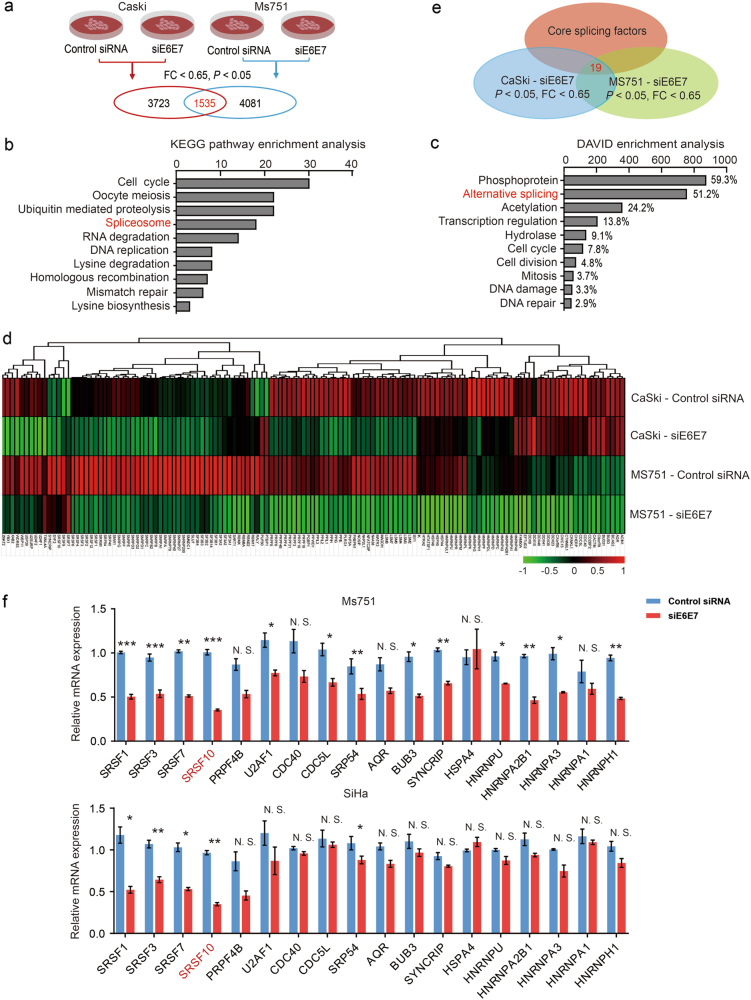
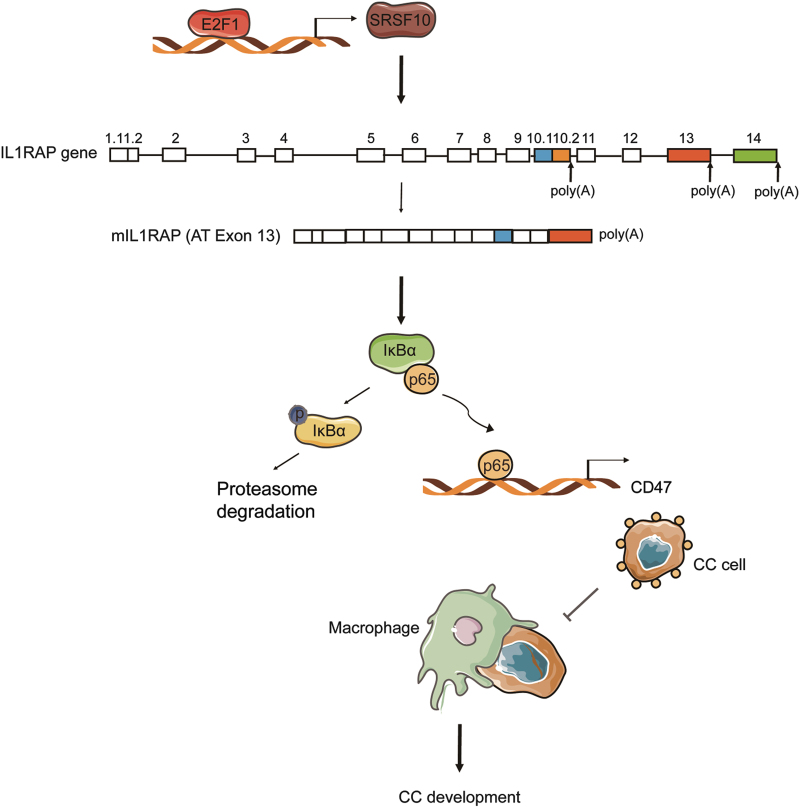
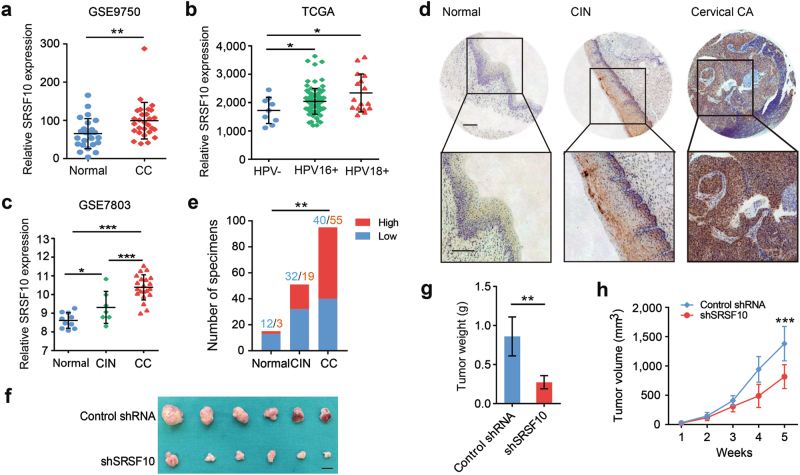
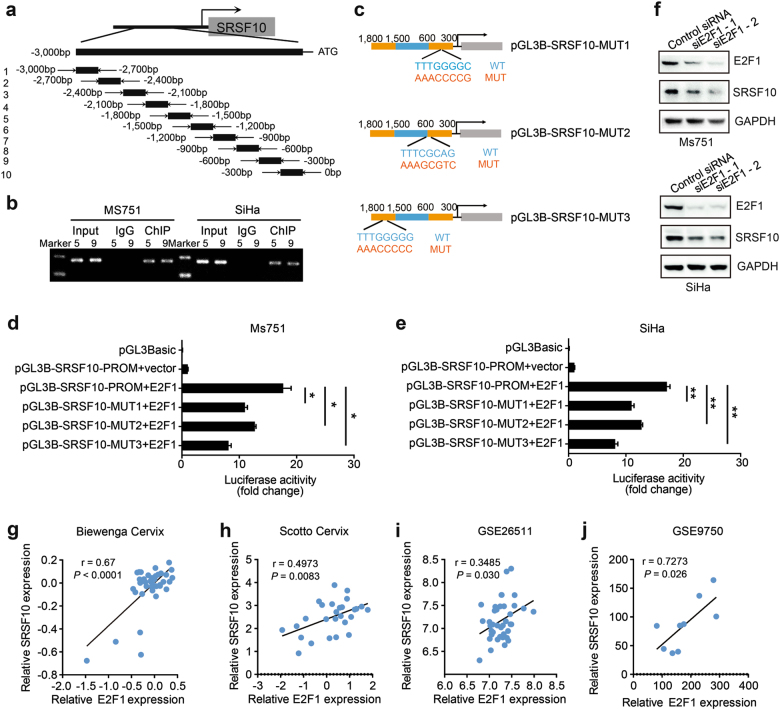
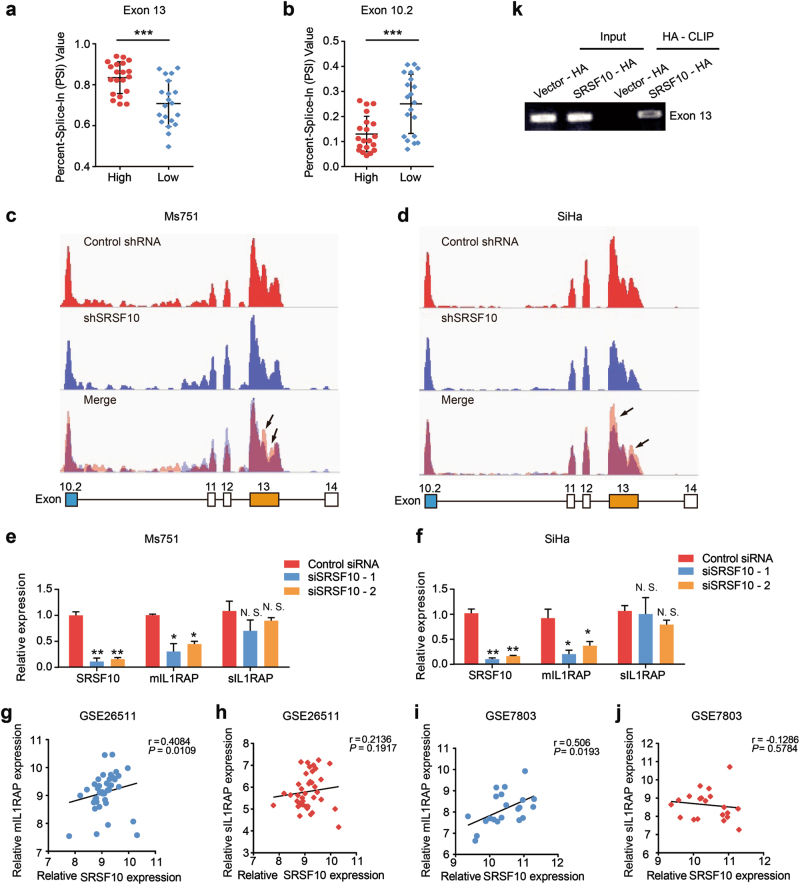
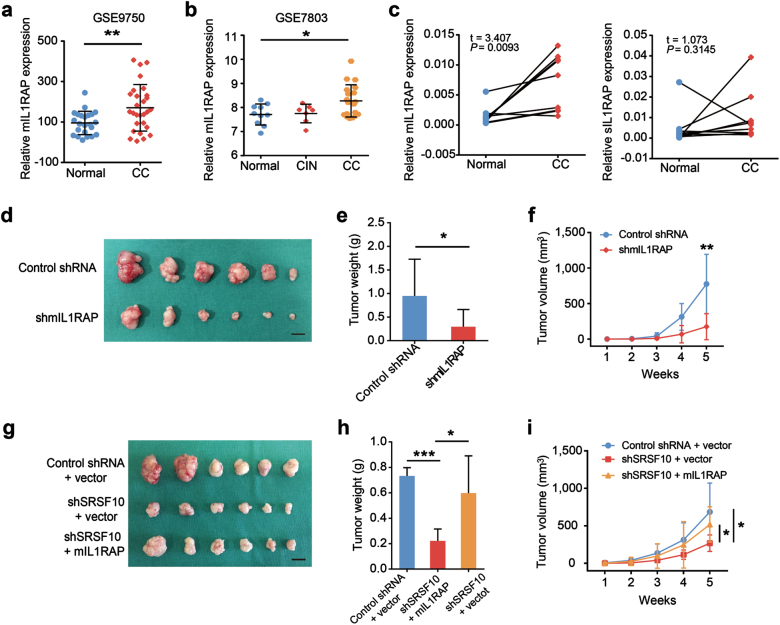
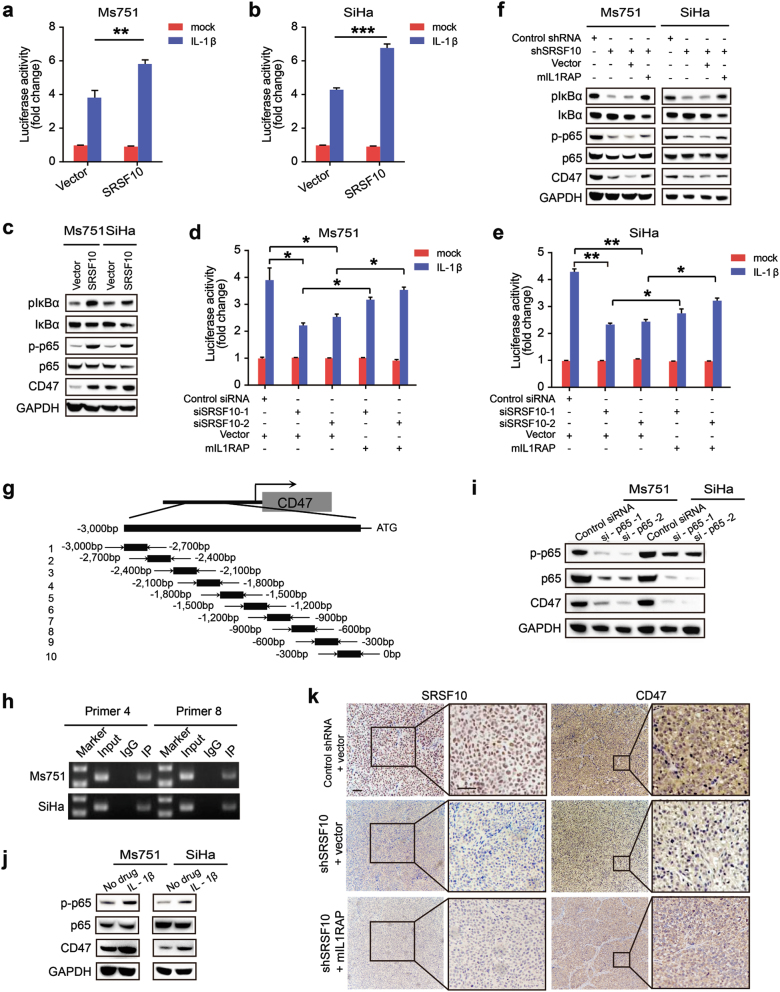
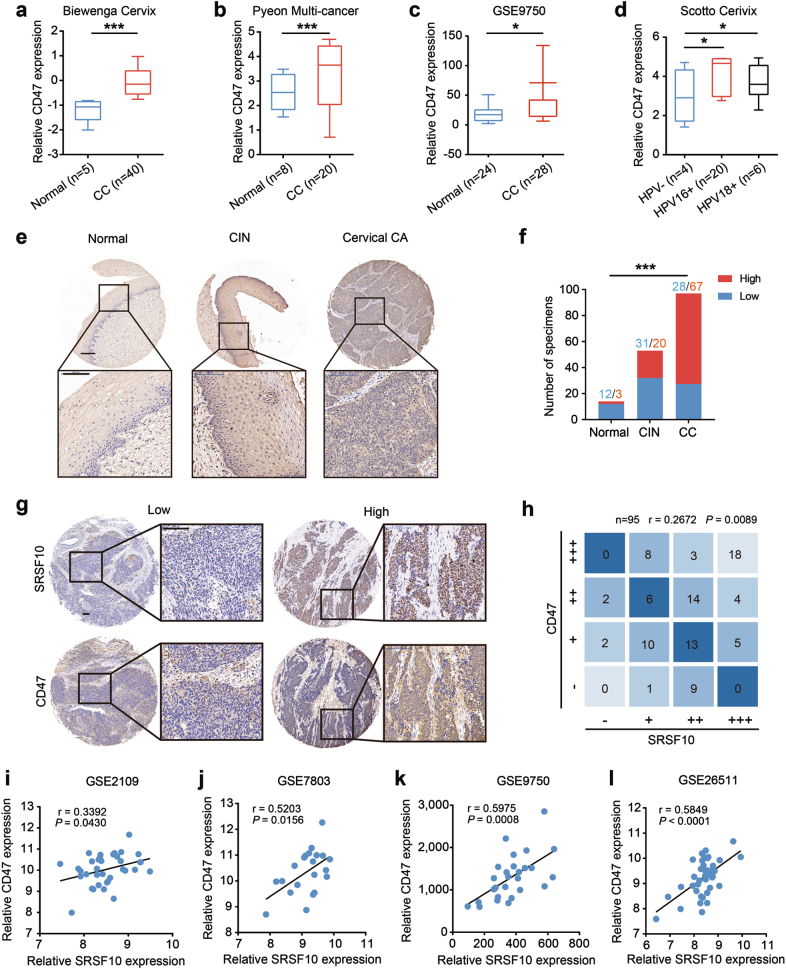
High-risk human papillomavirus oncoproteins E6 and E7 are the major etiological factors of cervical cancer but are insufficient for malignant transformation of cervical cancer. Dysregulated alternative splicing, mainly ascribed to aberrant splicing factor levels and activities, contributes to most cancer hallmarks. However, do E6 and E7 regulate the expression of splicing factors? Does alternative splicing acts as an "accomplice" of E6E7 to promote cervical cancer progression? Here, we identified that the splicing factor SRSF10, which promotes tumorigenesis of cervix, was upregulated by E6E7 via E2F1 transcriptional activation. SRSF10 modulates the alternate terminator of interleukin-1 receptor accessory protein exon 13 to increase production of the membrane form of interleukin-1 receptor accessory protein. SRSF10-mediated mIL1RAP upregulates the expression of the "don't eat me" signal CD47 to inhibit macrophage phagocytosis by promoting nuclear factor-κB activation, which is pivotal in inflammatory, immune, and tumorigenesis processes. Altogether, these data reveal a close relationship among HPV infection, alternative splicing and tumor immune evasion, and also suggests that the SRSF10-mIL1RAP-CD47 axis could be an attractive therapeutic target for the treatment of cervical cancer.
高危型人乳头瘤病毒致癌蛋白 E6 和 E7 是宫颈癌的主要病因,但不足以导致宫颈癌的恶性转化。失调的选择性剪接主要归因于异常剪接因子水平和活性,这是大多数癌症特征的基础。然而,E6 和 E7 是否调节剪接因子的表达?选择性剪接是否作为 E6E7 的“帮凶”促进宫颈癌的进展?在这里,我们发现,促进宫颈肿瘤发生的剪接因子 SRSF10 通过 E2F1 的转录激活被 E6E7 上调。SRSF10 调节白细胞介素-1 受体辅助蛋白外显子 13 的交替终止子,增加白细胞介素-1 受体辅助蛋白的膜形式的产生。SRSF10 介导的 mIL1RAP 通过促进核因子-κB 激活而上调“不要吃我”信号 CD47 的表达,这对于炎症、免疫和肿瘤发生过程至关重要,核因子-κB 激活抑制巨噬细胞吞噬作用。总之,这些数据揭示了 HPV 感染、选择性剪接和肿瘤免疫逃逸之间的密切关系,并表明 SRSF10-mIL1RAP-CD47 轴可能是治疗宫颈癌的有吸引力的治疗靶点。