Wang Yichen, Shao Feng, Chen Lu
Department of Gynecologic Oncology, Zhejiang Cancer Hospital, Hangzhou, China.
Onco Targets Ther. 2018 Jan 31;11:599-608. doi: 10.2147/OTT.S145864. eCollection 2018.
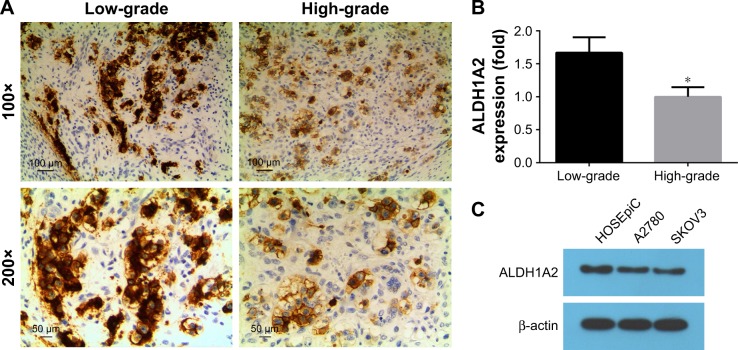
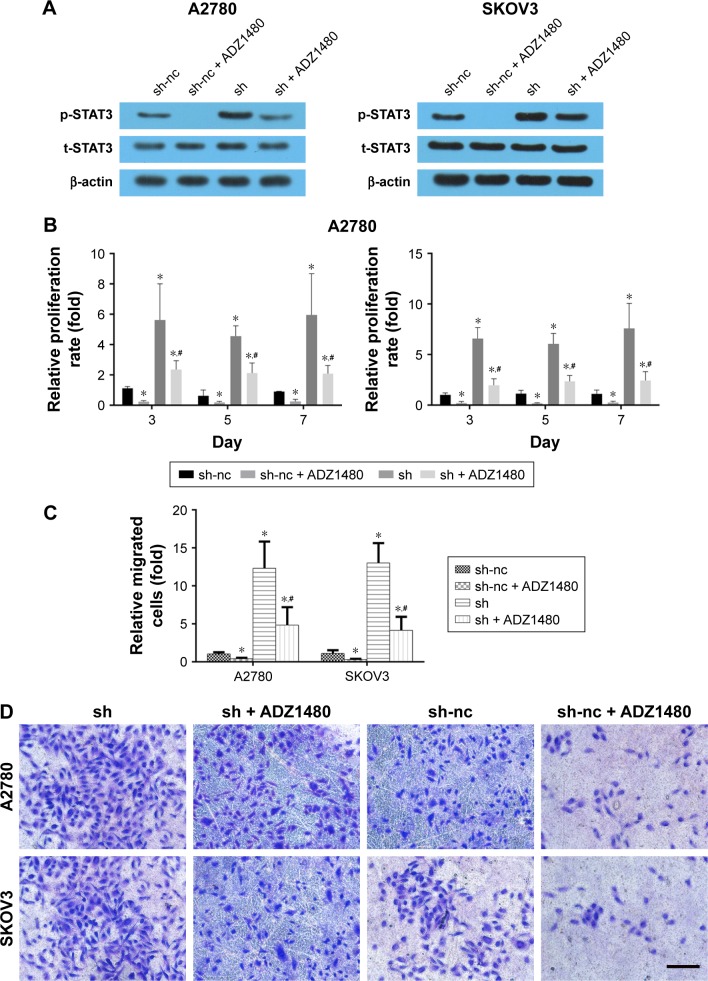
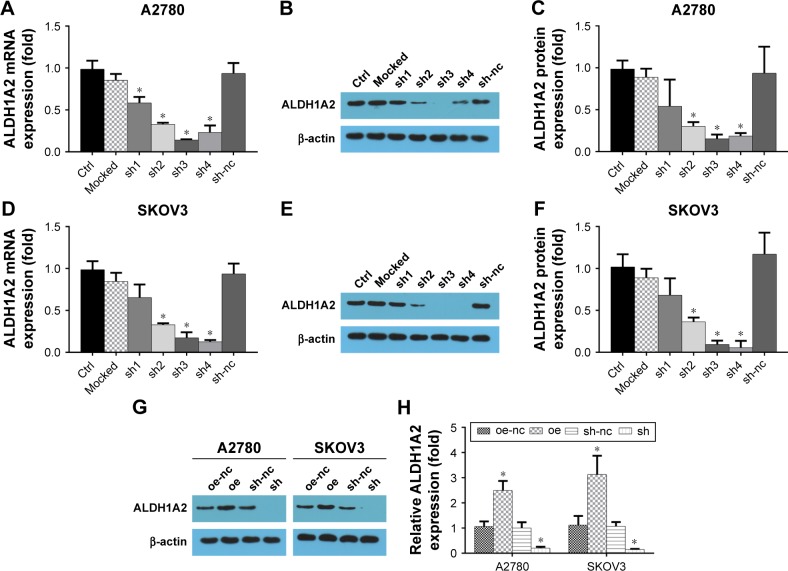
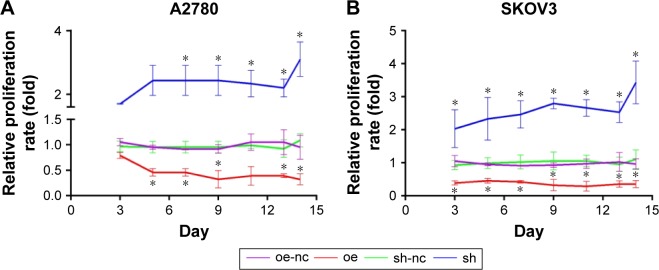
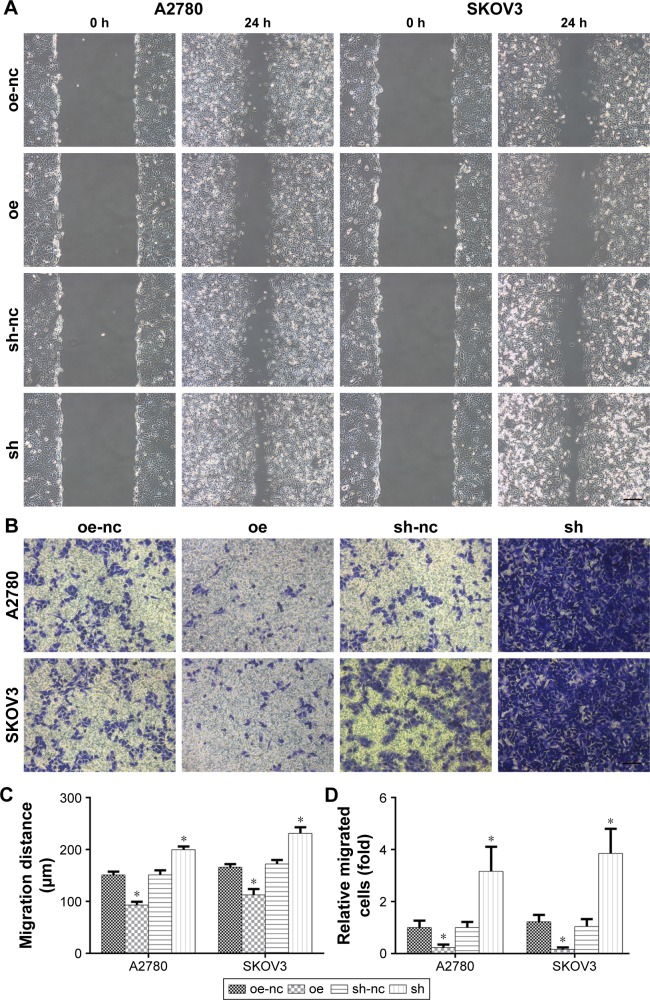
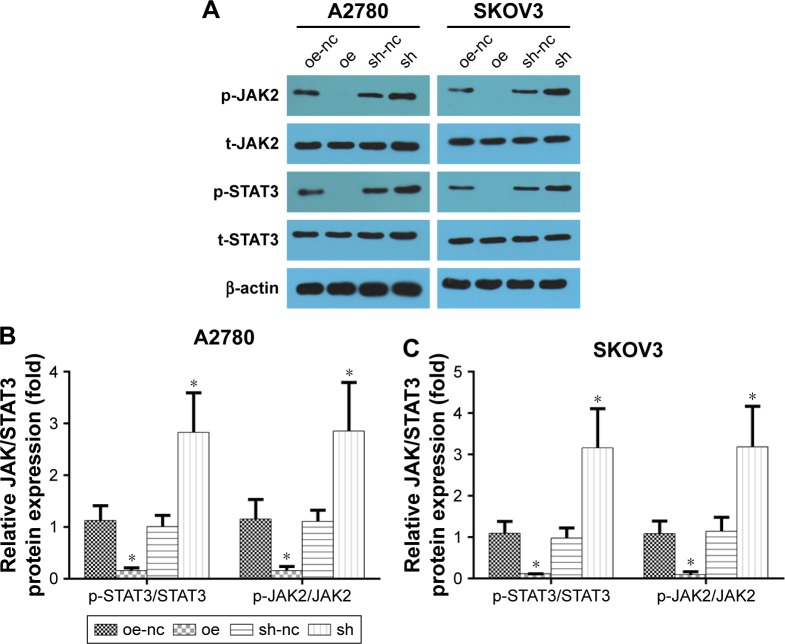
Epithelial ovarian cancer is the deadliest gynecological malignancy worldwide. A better understanding of epithelial ovarian cancer pathogenesis and the molecular mechanism underlying its metastasis may increase overall survival rates. Previous studies have indicated that aldehyde dehydrogenase 1 family member A2 (ALDH1A2) is a candidate tumor suppressor in epithelial ovarian cancer. However, the potential role of ALDH1A2 in the molecular mechanisms of epithelial ovarian cancer remains largely unclear. In the present study, we found lower expression of ALDH1A2 in high-grade epithelial ovarian cancer tissues than in low-grade epithelial ovarian cancer tissues. Overexpression of ALDH1A2 decreased the proliferation and migration of epithelial ovarian cancer cell lines, whereas ALDH1A2 knockdown significantly increased cell growth and migration. Moreover, upregulation of ALDH1A2 also reduced the activation of signal transducer and activator of transcription 3 (STAT3). In conclusion, these findings suggest that ALDH1A2 suppresses epithelial ovarian cancer cell proliferation and migration by downregulating STAT3.
上皮性卵巢癌是全球最致命的妇科恶性肿瘤。更好地了解上皮性卵巢癌的发病机制及其转移的分子机制可能会提高总体生存率。先前的研究表明,醛脱氢酶1家族成员A2(ALDH1A2)是上皮性卵巢癌中的候选肿瘤抑制因子。然而,ALDH1A2在上皮性卵巢癌分子机制中的潜在作用仍不清楚。在本研究中,我们发现高级别上皮性卵巢癌组织中ALDH1A2的表达低于低级别上皮性卵巢癌组织。ALDH1A2的过表达降低了上皮性卵巢癌细胞系的增殖和迁移,而敲低ALDH1A2则显著增加细胞生长和迁移。此外,ALDH1A2的上调还降低了信号转导和转录激活因子3(STAT3)的激活。总之,这些发现表明ALDH1A2通过下调STAT3来抑制上皮性卵巢癌细胞的增殖和迁移。