Department of Chemistry, University of Minnesota, 207 Pleasant Street, SE, Minneapolis, MN, 55455, USA.
Chembiochem. 2018 May 4;19(9):963-969. doi: 10.1002/cbic.201700686. Epub 2018 Apr 6.
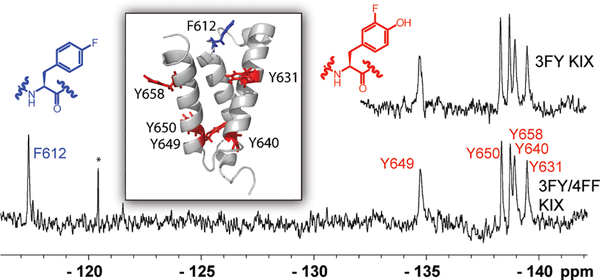
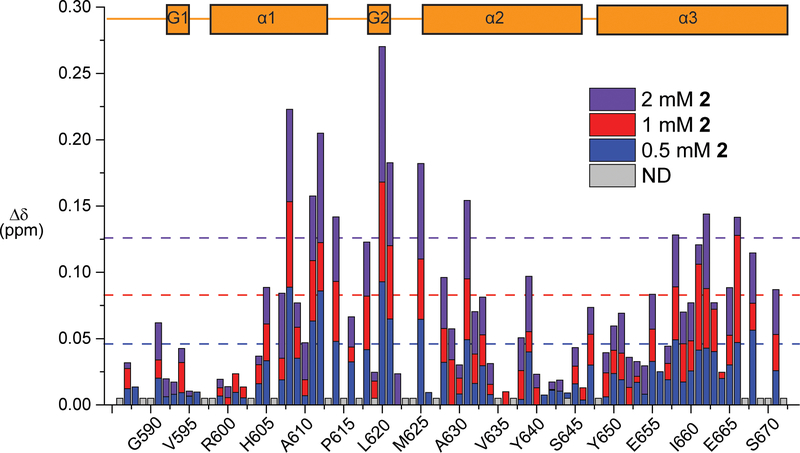
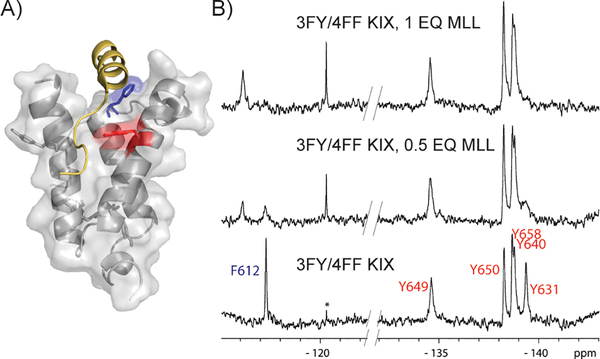
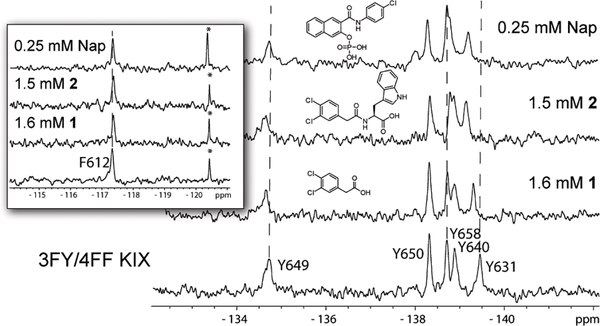
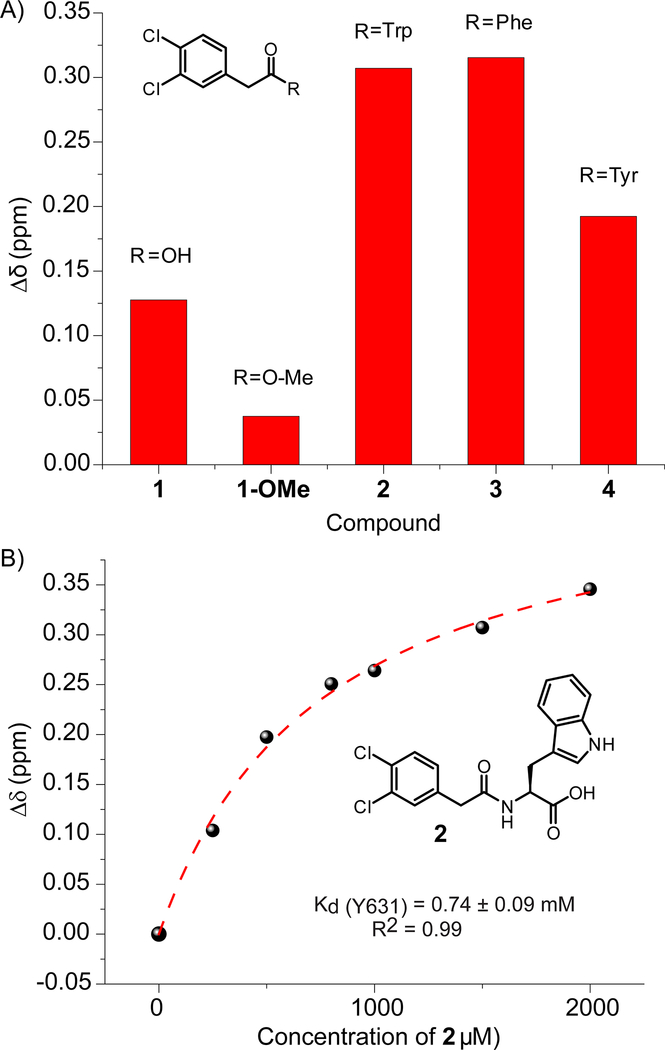
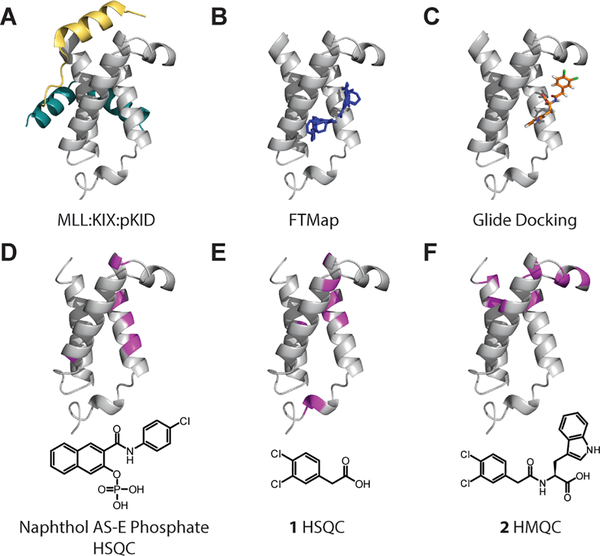
Protein-Observed Fluorine NMR (PrOF NMR) spectroscopy is an emerging technique for screening and characterizing small-molecule-protein interactions. The choice of which amino acid to label for PrOF NMR can be critical for analysis. Here we report the first use of a protein containing two different fluoroaromatic amino acids for NMR studies. Using the KIX domain of the CBP/p300 as a model system, we examine ligand binding of several small-molecule compounds elaborated from our previous fragment screen and identify a new ligand binding site distinct from those used by native transcription factors. This site was further supported by computational modeling (FTMap and Schrödinger) and H, N HSQC/HMQC NMR spectroscopy. Metabolic labeling with multiple fluorinated amino acids provides useful probes for further studying ligand binding and has led to new insight for allosterically regulating transcription-factor protein interactions with small-molecule ligands.
蛋白质观察氟 NMR(PrOF NMR)光谱学是一种新兴的技术,可用于筛选和表征小分子-蛋白质相互作用。选择用于 PrOF NMR 的标记氨基酸对于分析至关重要。在这里,我们报告了第一个使用含有两种不同氟芳族氨基酸的蛋白质进行 NMR 研究的案例。使用 CBP/p300 的 KIX 结构域作为模型系统,我们研究了几种小分子化合物的配体结合情况,这些化合物是从我们之前的片段筛选中得到的,并确定了一个与天然转录因子不同的新的配体结合位点。该位点进一步得到了计算建模(FTMap 和 Schrödinger)和 H、N HSQC/HMQC NMR 光谱学的支持。使用多种氟化氨基酸进行代谢标记为进一步研究配体结合提供了有用的探针,并为用小分子配体对转录因子蛋白相互作用进行别构调节提供了新的见解。