Department of Pharmacology, Dalian Medical University, 9 west section, south road of Lvshun, Dalian, 116044, China.
J Exp Clin Cancer Res. 2018 Feb 13;37(1):26. doi: 10.1186/s13046-018-0680-z.
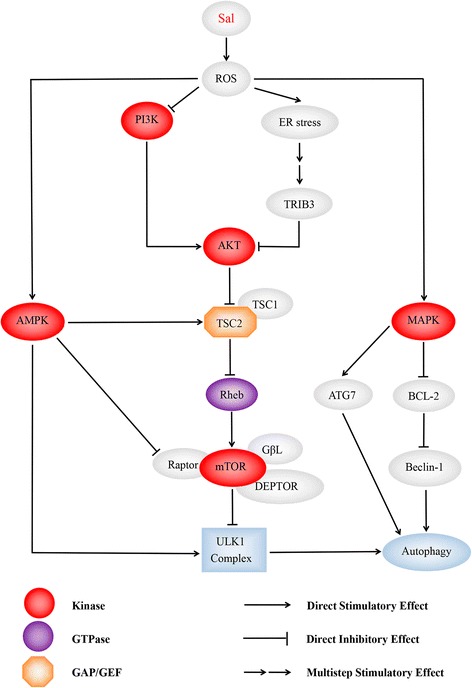
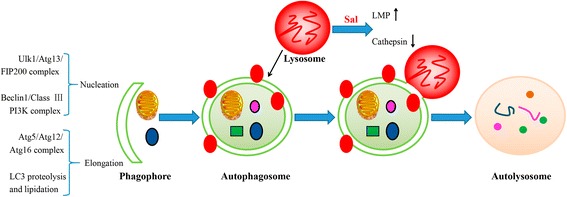
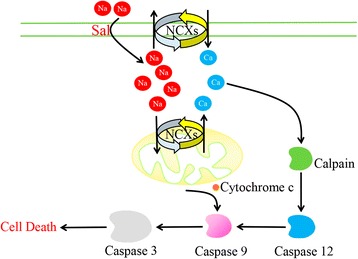
Since Salinomycin (Sal) emerged its ability to target breast cancer stem cells in 2009, numerous experiments have been carried out to test Sal's anticancer effects. What deserve to be mentioned is that Sal can efficiently induce proliferation inhibition, cell death and metastasis suppression against human cancers from different origins both in vivo and in vitro without causing serious side effects as the conventional chemotherapeutical drugs on the body. There may be novel cell death pathways involving the anticancer effects of Sal except the conventional pathways, such as autophagic pathway. This review is focused on how autophagy involves the effects of Sal, trying to describe clearly and systematically why autophagy plays a vital role in predominant anticancer effects of Sal, including its distinctive characteristic. Based on recent advances, we present evidence that a dual role of Sal involving in autophagy may account for its unique anticancer effects - the preference for cancer cells. Further researches are required to confirm the authenticity of this suppose in order to develop an ideal anticancer drug.
自 2009 年发现萨利霉素(Salinomycin,Sal)能够靶向乳腺癌干细胞以来,已经进行了大量实验来测试 Sal 的抗癌作用。值得一提的是,Sal 能够在体内和体外有效地抑制来自不同来源的人类癌症的增殖、诱导细胞死亡和抑制转移,而不会像传统的化疗药物那样对身体造成严重的副作用。除了传统途径外,Sal 的抗癌作用可能涉及新的细胞死亡途径,例如自噬途径。本综述重点介绍了自噬如何参与 Sal 的作用,试图清楚和系统地描述为什么自噬在 Sal 的主要抗癌作用中起着至关重要的作用,包括其独特的特征。基于最近的进展,我们提出了证据表明 Sal 涉及自噬的双重作用可能是其独特抗癌作用的原因——对癌细胞的偏好。为了开发理想的抗癌药物,需要进一步的研究来证实这一假设的真实性。