Zuo Erdong, Lu Ye, Yan Min, Pan Xiangtao, Cheng Xu
Department of Chemotherapy and Hematology, Taicang Affiliated Hospital of Soochow University, Suzhou, Jiangsu 215400, P.R. China.
Oncol Lett. 2018 Feb;15(2):2236-2244. doi: 10.3892/ol.2017.7574. Epub 2017 Dec 8.
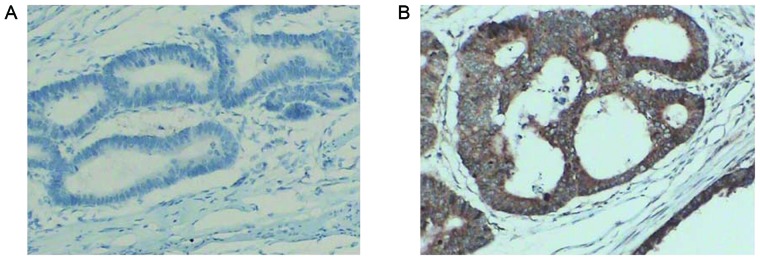
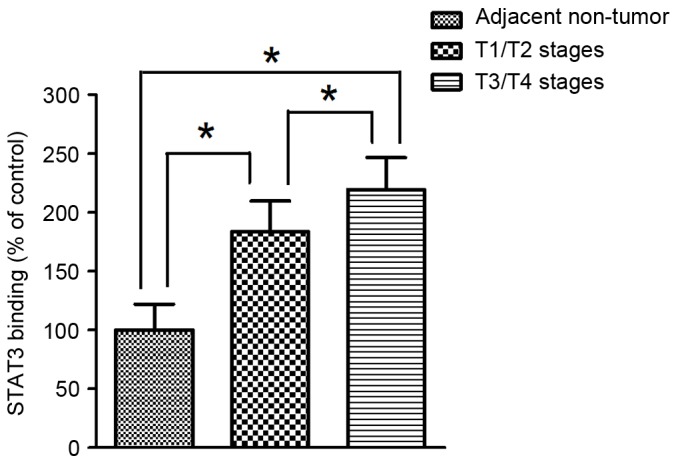
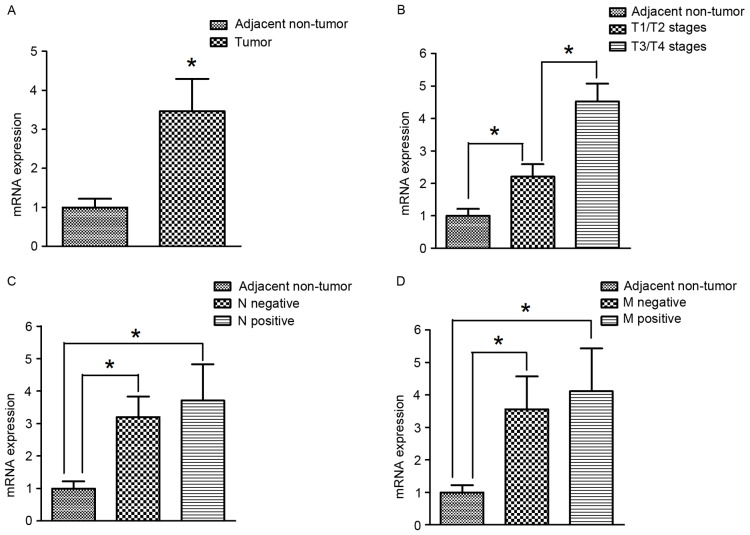
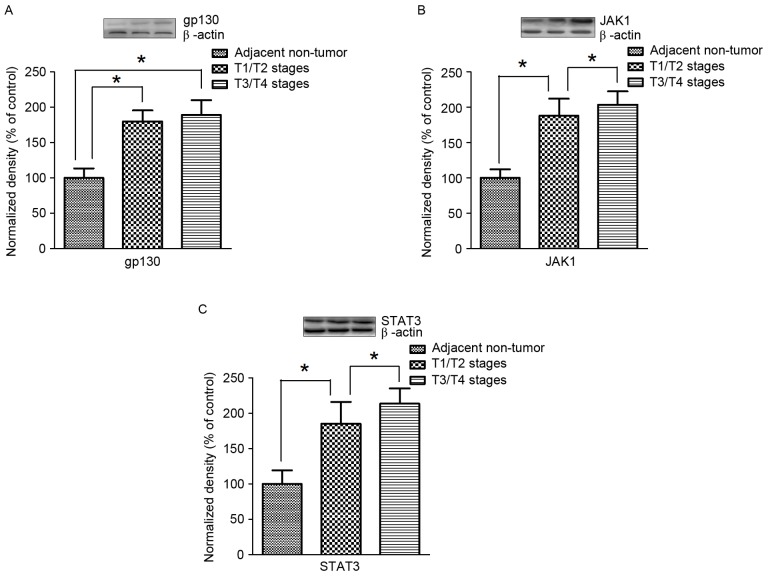
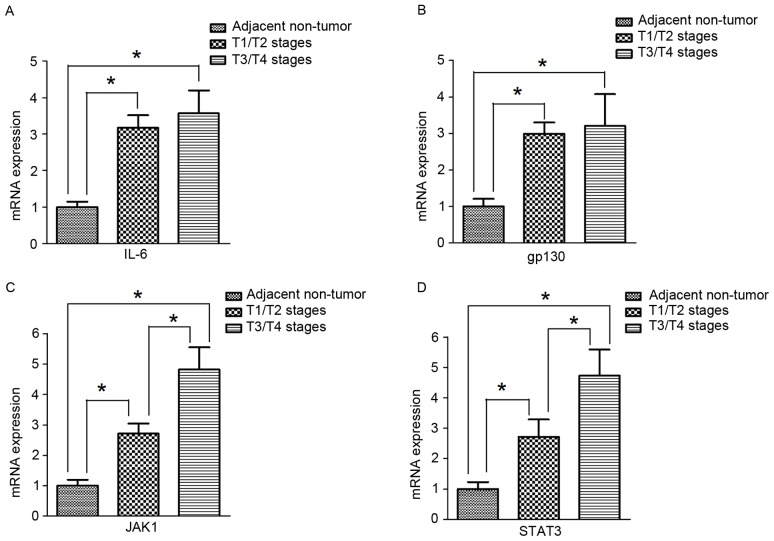
Gastric cancer is one of the most common malignancies with high cancer-associated mortality rate globally. Hepcidin is the peptide hormone, which is critically important in the regulation of systemic iron homeostasis. Cumulating evidence has reported that the disturbed local expression of hepcidin may serve as a predictive biomarker in assessing the clinical outcomes in a range of cancer types. However, the expression profile of hepcidin in human gastric cancer is remains to be investigated. In the present retrospective study, using archived paraffin-embedded tissue blocks, the local production of hepcidin by immunohistochemical analysis was detected, and then its correlation with clinicopathological characteristics in human gastric cancer was evaluated. In parallel, using western blotting, quantitative reverse transcription polymerase chain reaction and chromatin immunoprecipitation assay, the local status of Janus kinase (JAK)/signal transducer and activator of transcription 3 (STAT3) signaling in response to inflammatory stimuli mediated by interleukin (IL)-6, which in turn regulates transcriptional activity of hepcidin gene (HAMP) was also assessed. The results indicated that, the local production of hepcidin was significantly elevated in tumor tissues compared with adjacent non-tumor tissues, and was tightly correlated with increasing tumor stages according to the tumor node metastasis (TNM) classification. In addition, JAK/STAT3 signaling and the STAT3 binding affinity to the HAMP gene promoter were significantly enhanced, in parallel with an increased expression of hepcidin, in tumor tissues compared with adjacent non-tumor tissues. Collectively, the present study indicated that local expression of hepcidin in gastric cancer tumor tissues was positively correlated with increasing tumor stages, which may be closely associated with the upregulation of IL-6-mediated JAK/STAT3 signaling in human gastric cancer.
胃癌是全球最常见的恶性肿瘤之一,癌症相关死亡率很高。铁调素是一种肽类激素,在全身铁稳态调节中至关重要。越来越多的证据表明,铁调素局部表达紊乱可能作为预测生物标志物,用于评估一系列癌症类型的临床结局。然而,铁调素在人类胃癌中的表达谱仍有待研究。在本回顾性研究中,使用存档的石蜡包埋组织块,通过免疫组织化学分析检测铁调素的局部产生,然后评估其与人类胃癌临床病理特征的相关性。同时,使用蛋白质免疫印迹法、定量逆转录聚合酶链反应和染色质免疫沉淀试验,还评估了Janus激酶(JAK)/信号转导子和转录激活子3(STAT3)信号通路在白细胞介素(IL)-6介导的炎症刺激下的局部状态,IL-6进而调节铁调素基因(HAMP)的转录活性。结果表明,与相邻非肿瘤组织相比,肿瘤组织中铁调素的局部产生显著升高,并且根据肿瘤淋巴结转移(TNM)分类与肿瘤分期增加密切相关。此外,与相邻非肿瘤组织相比,肿瘤组织中JAK/STAT3信号通路以及STAT3与HAMP基因启动子的结合亲和力显著增强,同时铁调素表达增加。总体而言,本研究表明胃癌肿瘤组织中铁调素的局部表达与肿瘤分期增加呈正相关,这可能与人类胃癌中IL-6介导的JAK/STAT3信号通路上调密切相关。