Program in MPE Molecular Pathological Epidemiology, Department of Pathology, Brigham and Women's Hospital, Harvard Medical School, Boston, Massachusetts, USA.
Department of Oncologic Pathology, Dana-Farber Cancer Institute, Harvard Medical School, Boston, Massachusetts, USA.
Gut. 2018 Jun;67(6):1168-1180. doi: 10.1136/gutjnl-2017-315537. Epub 2018 Feb 6.
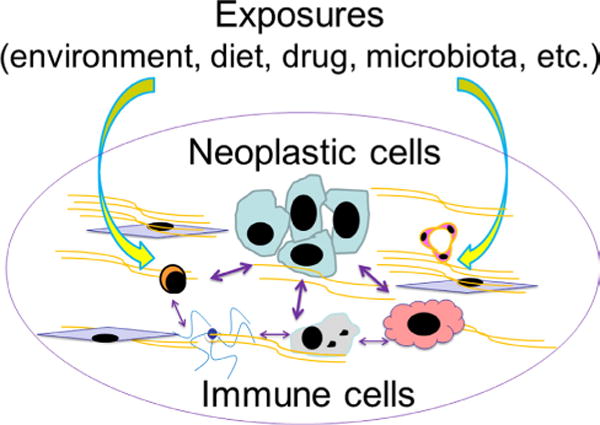
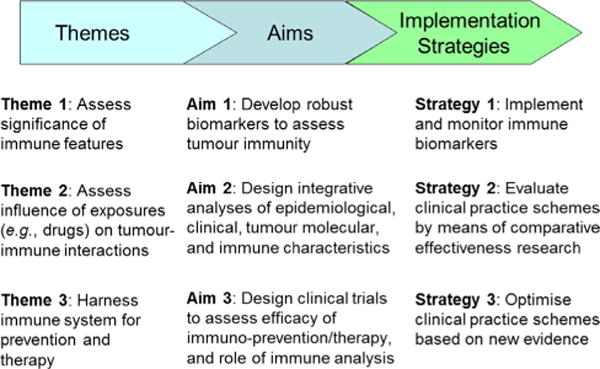
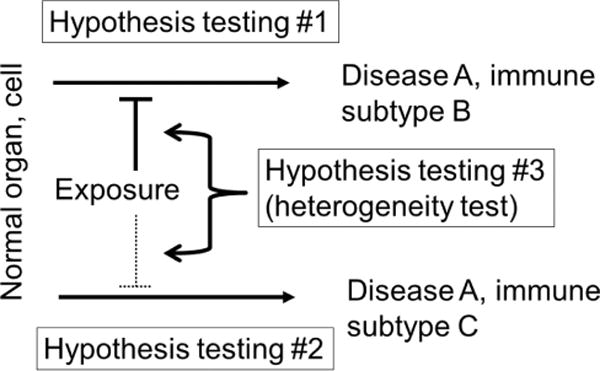
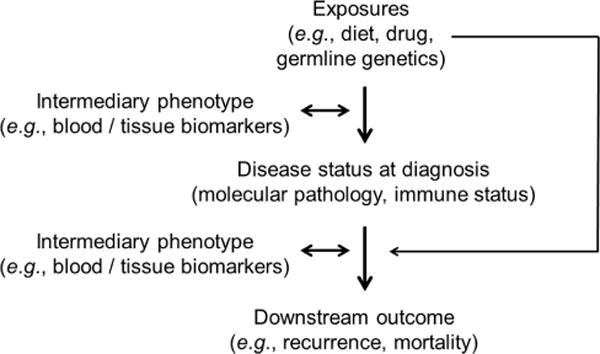
Immunotherapy strategies targeting immune checkpoints such as the and (programmed cell death 1 ligand 1, PD-L1)/ (programmed cell death 1, PD-1) T-cell coreceptor pathways are revolutionising oncology. The approval of pembrolizumab use for solid tumours with high-level microsatellite instability or mismatch repair deficiency by the US Food and Drug Administration highlights promise of precision immuno-oncology. However, despite evidence indicating influences of exogenous and endogenous factors such as diet, nutrients, alcohol, smoking, obesity, lifestyle, environmental exposures and microbiome on tumour-immune interactions, integrative analyses of those factors and immunity lag behind. Immune cell analyses in the tumour microenvironment have not adequately been integrated into large-scale studies. Addressing this gap, the transdisciplinary field of molecular pathological epidemiology (MPE) offers research frameworks to integrate tumour immunology into population health sciences, and link the exposures and germline genetics (eg, genotypes) to tumour and immune characteristics. Multilevel research using bioinformatics, in vivo pathology and omics (genomics, epigenomics, transcriptomics, proteomics and metabolomics) technologies is possible with use of tissue, peripheral blood circulating cells, cell-free plasma, stool, sputum, urine and other body fluids. This immunology-MPE model can synergise with experimental immunology, microbiology and systems biology. GI neoplasms represent exemplary diseases for the immunology-MPE model, given rich microbiota and immune tissues of intestines, and the well-established carcinogenic role of intestinal inflammation. Proof-of-principle studies on colorectal cancer provided insights into immunomodulating effects of aspirin, vitamin D, inflammatory diets and omega-3 polyunsaturated fatty acids. The integrated immunology-MPE model can contribute to better understanding of environment-tumour-immune interactions, and effective immunoprevention and immunotherapy strategies for precision medicine.
免疫疗法策略针对免疫检查点,如 和 (程序性细胞死亡 1 配体 1,PD-L1)/(程序性细胞死亡 1,PD-1)T 细胞共受体途径,正在彻底改变肿瘤学。美国食品和药物管理局批准 pembrolizumab 用于高水平微卫星不稳定或错配修复缺陷的实体瘤,突显了精准免疫肿瘤学的前景。然而,尽管有证据表明饮食、营养物质、酒精、吸烟、肥胖、生活方式、环境暴露和微生物组等外源性和内源性因素会影响肿瘤-免疫相互作用,但这些因素和免疫的综合分析仍相对滞后。肿瘤微环境中的免疫细胞分析尚未充分纳入大规模研究中。为了解决这一差距,跨学科的分子病理流行病学(MPE)领域提供了研究框架,将肿瘤免疫学纳入人群健康科学,并将暴露和种系遗传学(例如, 基因型)与肿瘤和免疫特征联系起来。使用生物信息学、体内病理学和组学(基因组学、表观基因组学、转录组学、蛋白质组学和代谢组学)技术进行多层次研究,可利用组织、外周血循环细胞、无细胞血浆、粪便、痰液、尿液和其他体液。这种免疫学-MPE 模型可以与实验免疫学、微生物学和系统生物学协同作用。胃肠道肿瘤代表了该免疫学-MPE 模型的典范疾病,因为肠道有丰富的微生物群和免疫组织,以及肠道炎症在癌症形成中的明确作用。结直肠癌的初步研究提供了有关阿司匹林、维生素 D、炎症饮食和 ω-3 多不饱和脂肪酸的免疫调节作用的见解。综合的免疫学-MPE 模型有助于更好地理解环境-肿瘤-免疫相互作用,以及针对精准医学的有效免疫预防和免疫治疗策略。