Department of Oncologic Pathology, Dana-Farber Cancer Institute and Harvard Medical School, Boston, Massachusetts, 02215, USA.
Department of Gastroenterology, Graduate School of Medicine, The University of Tokyo, Tokyo, Japan.
J Pathol. 2019 Apr;247(5):615-628. doi: 10.1002/path.5236. Epub 2019 Feb 20.
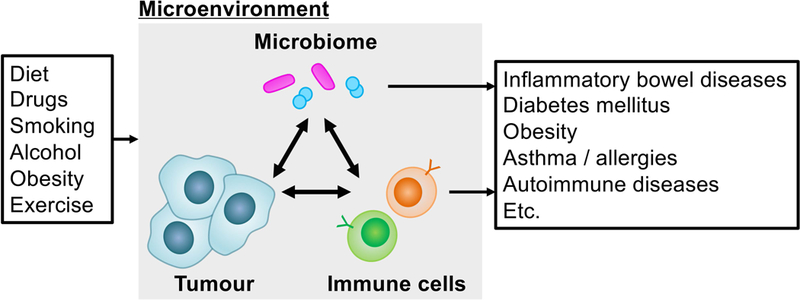
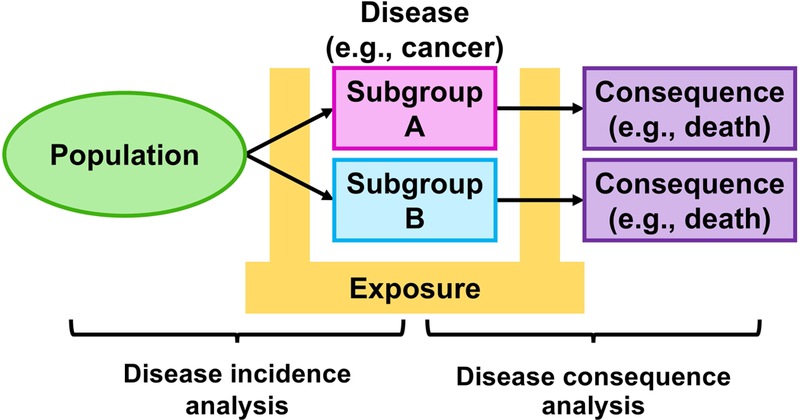
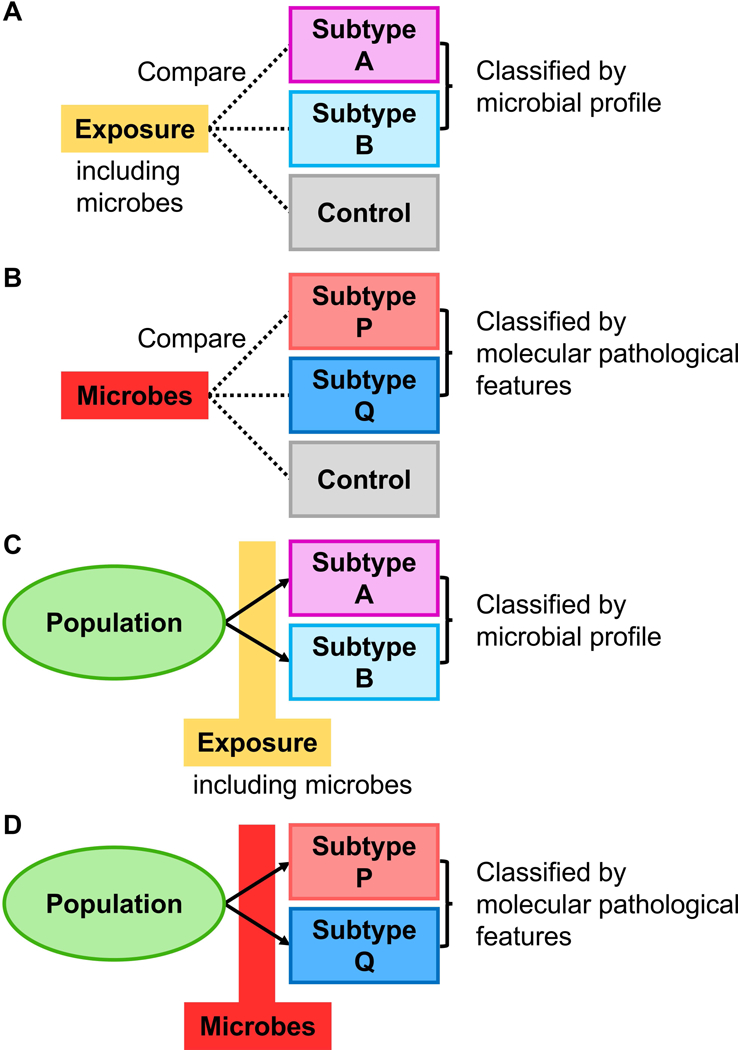
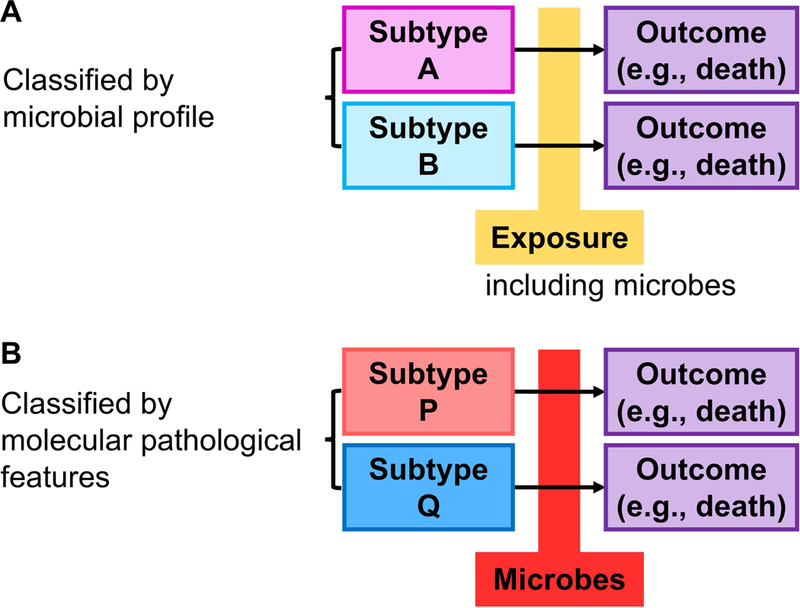
Molecular pathological epidemiology (MPE) is an integrative transdisciplinary field that addresses heterogeneous effects of exogenous and endogenous factors (collectively termed 'exposures'), including microorganisms, on disease occurrence and consequences, utilising molecular pathological signatures of the disease. In parallel with the paradigm of precision medicine, findings from MPE research can provide aetiological insights into tailored strategies of disease prevention and treatment. Due to the availability of molecular pathological tests on tumours, the MPE approach has been utilised predominantly in research on cancers including breast, lung, prostate, and colorectal carcinomas. Mounting evidence indicates that the microbiome (inclusive of viruses, bacteria, fungi, and parasites) plays an important role in a variety of human diseases including neoplasms. An alteration of the microbiome may be not only a cause of neoplasia but also an informative biomarker that indicates or mediates the association of an epidemiological exposure with health conditions and outcomes. To adequately educate and train investigators in this emerging area, we herein propose the integration of microbiology into the MPE model (termed 'microbiology-MPE'), which could improve our understanding of the complex interactions of environment, tumour cells, the immune system, and microbes in the tumour microenvironment during the carcinogenic process. Using this approach, we can examine how lifestyle factors, dietary patterns, medications, environmental exposures, and germline genetics influence cancer development and progression through impacting the microbial communities in the human body. Further integration of other disciplines (e.g. pharmacology, immunology, nutrition) into microbiology-MPE would expand this developing research frontier. With the advent of high-throughput next-generation sequencing technologies, researchers now have increasing access to large-scale metagenomics as well as other omics data (e.g. genomics, epigenomics, proteomics, and metabolomics) in population-based research. The integrative field of microbiology-MPE will open new opportunities for personalised medicine and public health. Copyright © 2019 Pathological Society of Great Britain and Ireland. Published by John Wiley & Sons, Ltd.
分子病理流行病学(MPE)是一个综合的跨学科领域,利用疾病的分子病理特征,研究外源性和内源性因素(统称为“暴露”)对疾病发生和结果的异质性影响。与精准医学的范式并行,MPE 研究的结果可以为疾病预防和治疗的针对性策略提供病因学见解。由于肿瘤的分子病理检测可用,因此 MPE 方法主要用于乳腺癌、肺癌、前列腺癌和结直肠癌等癌症的研究。越来越多的证据表明,微生物组(包括病毒、细菌、真菌和寄生虫)在多种人类疾病中发挥着重要作用,包括肿瘤。微生物组的改变不仅可能是肿瘤发生的原因,而且可能是一个信息丰富的生物标志物,表明或介导流行病学暴露与健康状况和结果之间的关联。为了在这个新兴领域充分教育和培训研究人员,我们在此提出将微生物学纳入 MPE 模型(称为“微生物学-MPE”),这可以提高我们对致癌过程中环境、肿瘤细胞、免疫系统和微生物在肿瘤微环境中的复杂相互作用的理解。使用这种方法,我们可以研究生活方式因素、饮食模式、药物、环境暴露和种系遗传学如何通过影响人体中的微生物群落来影响癌症的发展和进展。将其他学科(如药理学、免疫学、营养学)进一步纳入微生物学-MPE 将扩展这一不断发展的研究前沿。随着高通量下一代测序技术的出现,研究人员现在可以越来越多地获得基于人群的研究中的大规模宏基因组学以及其他组学数据(例如基因组学、表观基因组学、蛋白质组学和代谢组学)。微生物学-MPE 的综合领域将为个性化医学和公共卫生开辟新的机会。版权所有©2019 英国和爱尔兰病理学学会。由 John Wiley & Sons,Ltd 出版。