School of Chinese Medicine, Jinan University, Guangzhou, Guangdong 510632, China.
Reproductive Center, Guangdong Women and Children Hospital, Guangzhou, Guangdong 511400, China.
Biosci Rep. 2018 Mar 21;38(2). doi: 10.1042/BSR20171208. Print 2018 Apr 27.
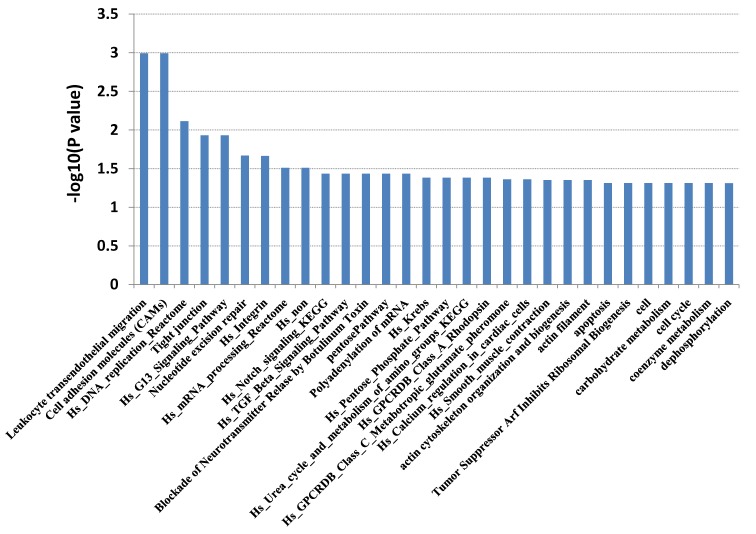
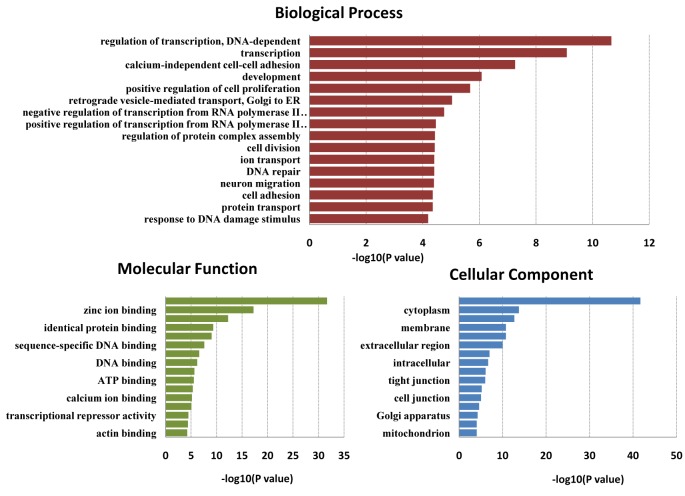
In traditional Chinese medicine (TCM), blood stasis syndrome (BSS) is mainly manifested by the increase of blood viscosity, platelet adhesion rate and aggregation, and the change of microcirculation, resulting in vascular endothelial injury. It is an important factor in the development of diabetes mellitus (DM). The aim of the present study was to screen out the potential candidate microRNAs (miRNAs) in DM patients with BSS by high-throughput sequencing (HTS) and bioinformatics analysis. Human umbilical vein endothelial cells (HUVECs) were incubated with 10% human serum to establish models of DM with BSS, DM without BSS (NBS), and normal control (NC). Total RNA of each sample was extracted and sequenced by the Hiseq2000 platform. Differentially expressed miRNAs (DE-miRNAs) were screened between samples and compared with known changes in mRNA abundance. Target genes of miRNAs were predicted by softwares. Gene Ontology (GO) and pathway enrichment analysis of the target genes were conducted. According to the significantly enriched GO annotations and pathways (-value ≤ 0.001), we selected the key miRNAs of DM with BSS. It showed that the number of DE-miRNAs in BSS was 32 compared with non-blood stasis syndrome (NBS) and NC. The potential candidate miRNAs were chosen from GO annotations in which target genes were significantly enriched (-log (-value) > 5), which included miR-140-5p, miR-210, miR-362-5p, miR-590-3p, and miR-671-3p. The present study screened out the potential candidate miRNAs in DM patients with BSS by HTS and bioinformatics analysis. The miRNAs will be helpful to provide valuable suggestions on clinical studies of DM with BSS at the gene level.
在中医(TCM)中,血瘀证主要表现为血液粘度增加、血小板黏附率和聚集率增加以及微循环改变,导致血管内皮损伤。血瘀证是糖尿病(DM)发展的重要因素。本研究旨在通过高通量测序(HTS)和生物信息学分析筛选出 DM 伴血瘀证患者的潜在候选 microRNAs(miRNAs)。用人脐静脉内皮细胞(HUVEC)孵育 10%人血清,建立 DM 伴血瘀证(BSS)、DM 无血瘀证(NBS)和正常对照(NC)模型。用 Hiseq2000 平台提取各样本总 RNA 并进行测序。筛选样本间差异表达的 miRNAs(DE-miRNAs),并与已知 mRNA 丰度变化进行比较。用软件预测 miRNA 的靶基因。对靶基因进行基因本体论(GO)和通路富集分析。根据显著富集的 GO 注释和通路(-值≤0.001),我们选择了 DM 伴血瘀证的关键 miRNAs。结果显示,BSS 组与非血瘀证组和 NC 组相比,DE-miRNA 的数量为 32。从靶基因显著富集的 GO 注释中选择潜在的候选 miRNAs(-log(-值)>5),包括 miR-140-5p、miR-210、miR-362-5p、miR-590-3p 和 miR-671-3p。本研究通过 HTS 和生物信息学分析筛选出 DM 伴血瘀证患者的潜在候选 miRNAs。这些 miRNA 将有助于为 DM 伴血瘀证的基因水平临床研究提供有价值的建议。