Department of Medical Parasitology, School of Basic Medical Sciences, Wuhan University, Hubei, China; Department of Medical Microbiology and Immunology, Creighton University School of Medicine, Omaha, NE, United States.
Department of Medical Microbiology and Immunology, Creighton University School of Medicine, Omaha, NE, United States.
Int J Parasitol. 2018 May;48(6):423-431. doi: 10.1016/j.ijpara.2017.10.008. Epub 2018 Feb 10.
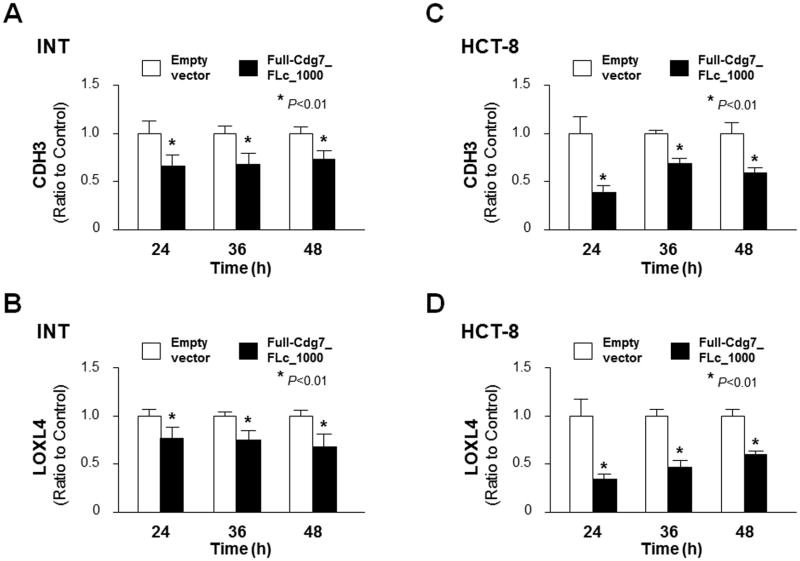
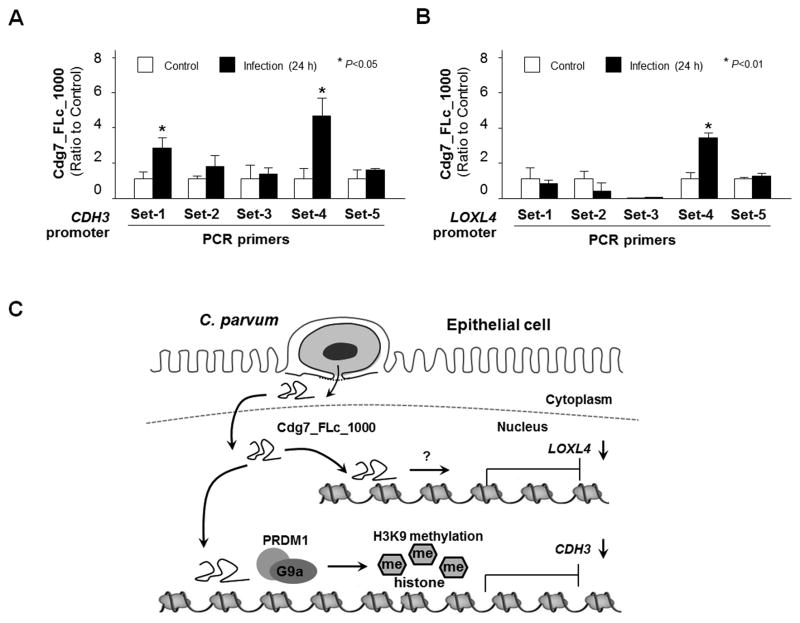
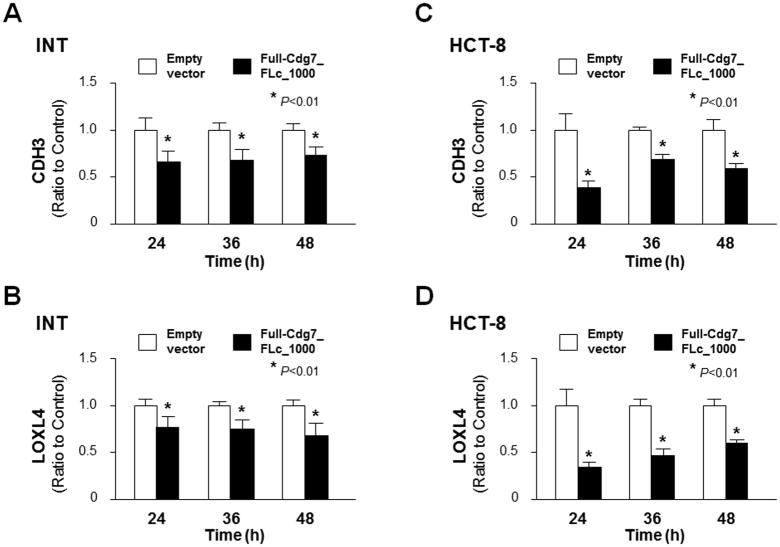
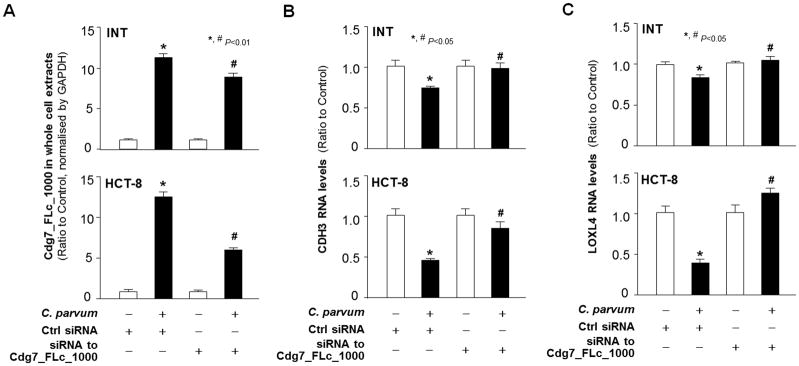
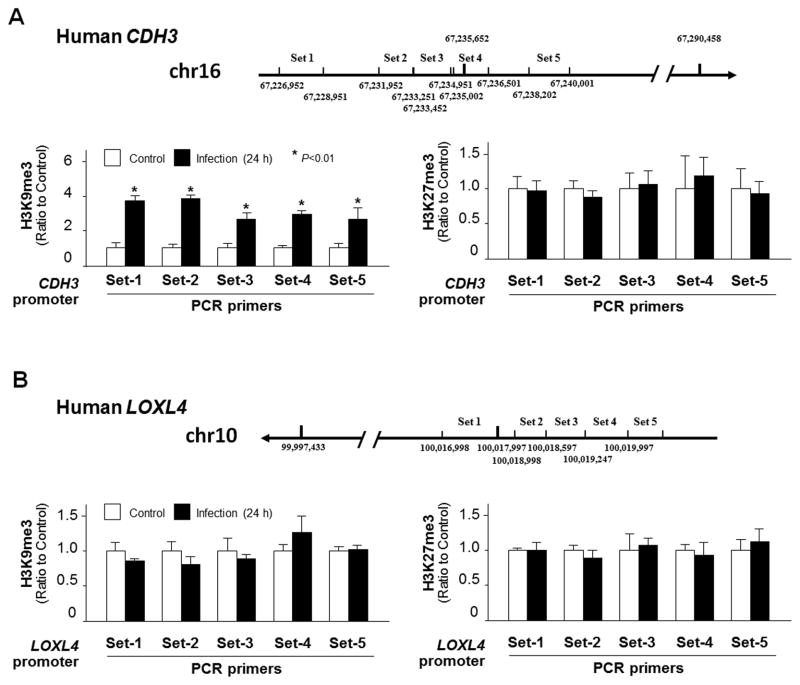
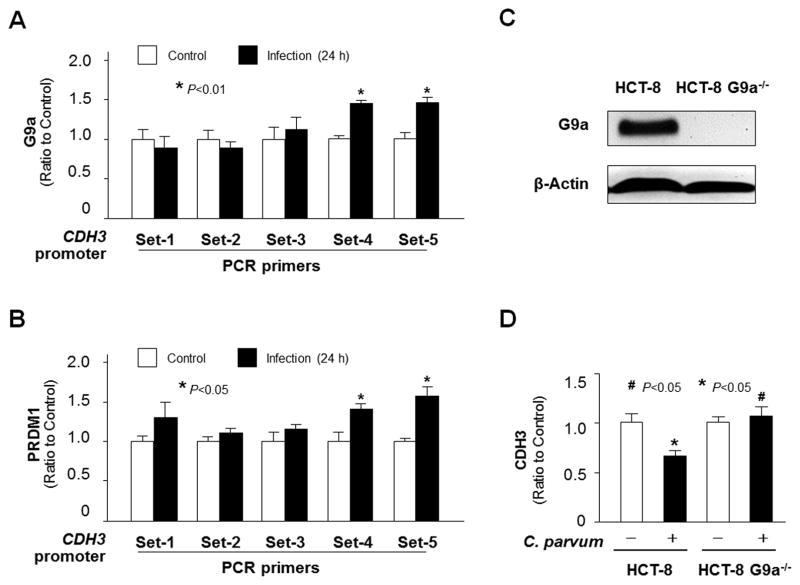
Intestinal infection by Cryptosporidium parvum causes significant alterations in the gene expression profile in host epithelial cells. Previous studies demonstrate that a panel of parasite RNA transcripts of low protein-coding potential are delivered into infected host cells and may modulate host gene transcription. Using in vitro models of human intestinal cryptosporidiosis, we report here that trans-suppression of the cadherin 3 (CDH3) and lysyl oxidase like 4 (LOXL4) genes in human intestinal epithelial cells following C. parvum infection involves host delivery of the Cdg7_FLc_1000 RNA, a C. parvum RNA that has been previously demonstrated to be delivered into the nuclei of infected host cells. Downregulation of CDH3 and LOXL4 genes was detected in host epithelial cells following C. parvum infection or in cells expressing the parasite Cdg7_FLc_1000 RNA. Knockdown of Cdg7_FLc_1000 attenuated the trans-suppression of CDH3 and LOXL4 genes in host cells induced by infection. Interestingly, Cdg7_FLc_1000 was detected to be recruited to the promoter regions of both CDH3 and LOXL4 gene loci in host cells following C. parvum infection. Host delivery of Cdg7_FLc_1000 promoted the PH domain zinc finger protein 1 (PRDM1)-mediated H3K9 methylation associated with trans-suppression in the CDH3 gene locus, but not the LOXL4 gene. Therefore, our data suggest that host delivery of Cdg7_FLc_1000 causes CDH3 trans-suppression in human intestinal epithelial cells following C. parvum infection through PRDM1-mediated H3K9 methylation in the CDH3 gene locus, whereas Cdg7_FLc_1000 induces trans-suppression of the host LOXL4 gene through H3K9/H3K27 methylation-independent mechanisms.
微小隐孢子虫引起的肠道感染导致宿主上皮细胞的基因表达谱发生显著改变。先前的研究表明,一组低蛋白编码潜能的寄生虫 RNA 转录本被递送到感染的宿主细胞中,可能调节宿主基因转录。本研究使用人类肠道隐孢子虫病的体外模型,报告了微小隐孢子虫感染后,宿主细胞中 cadherin 3 (CDH3) 和赖氨酰氧化酶样 4 (LOXL4) 基因的反式抑制涉及宿主递送 Cdg7_FLc_1000 RNA,这是一种先前已被证明递送到感染宿主细胞核中的微小隐孢子虫 RNA。在微小隐孢子虫感染后或表达寄生虫 Cdg7_FLc_1000 RNA 的细胞中,检测到宿主上皮细胞中 CDH3 和 LOXL4 基因的下调。Cdg7_FLc_1000 的敲低减弱了感染诱导的宿主细胞中 CDH3 和 LOXL4 基因的反式抑制。有趣的是,在微小隐孢子虫感染后,在宿主细胞中检测到 Cdg7_FLc_1000 被招募到 CDH3 和 LOXL4 基因座的启动子区域。宿主递送的 Cdg7_FLc_1000 促进了 PH 结构域锌指蛋白 1 (PRDM1)介导的与 CDH3 基因座反式抑制相关的 H3K9 甲基化,但不影响 LOXL4 基因。因此,我们的数据表明,微小隐孢子虫感染后,宿主细胞中 Cdg7_FLc_1000 的递送通过 PRDM1 介导的 CDH3 基因座中的 H3K9 甲基化引起 CDH3 的反式抑制,而 Cdg7_FLc_1000 通过 H3K9/H3K27 甲基化非依赖机制诱导宿主 LOXL4 基因的反式抑制。