Li Xiaomin, Li Di, Dong Zhijie, Hu Yage, Liu Chengliang
School of Mechanical and Automotive Engineering, South China University of Technology, Guangzhou 510640, China.
Super Micro Computer, Inc., San Jose 95131, CA, USA.
Sensors (Basel). 2018 Feb 10;18(2):545. doi: 10.3390/s18020545.
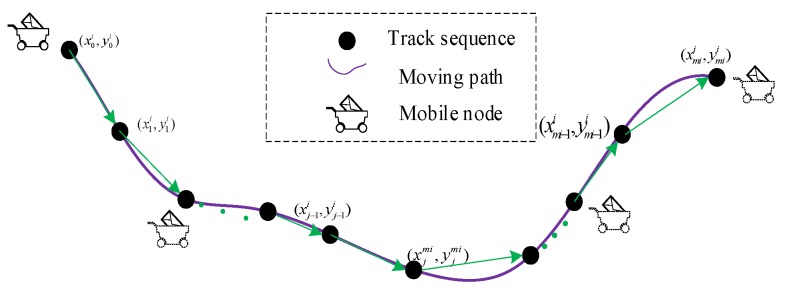
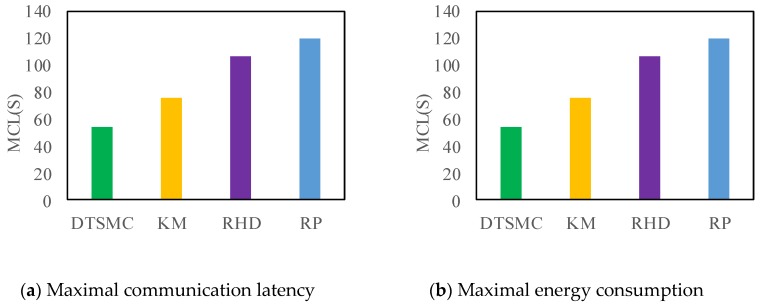
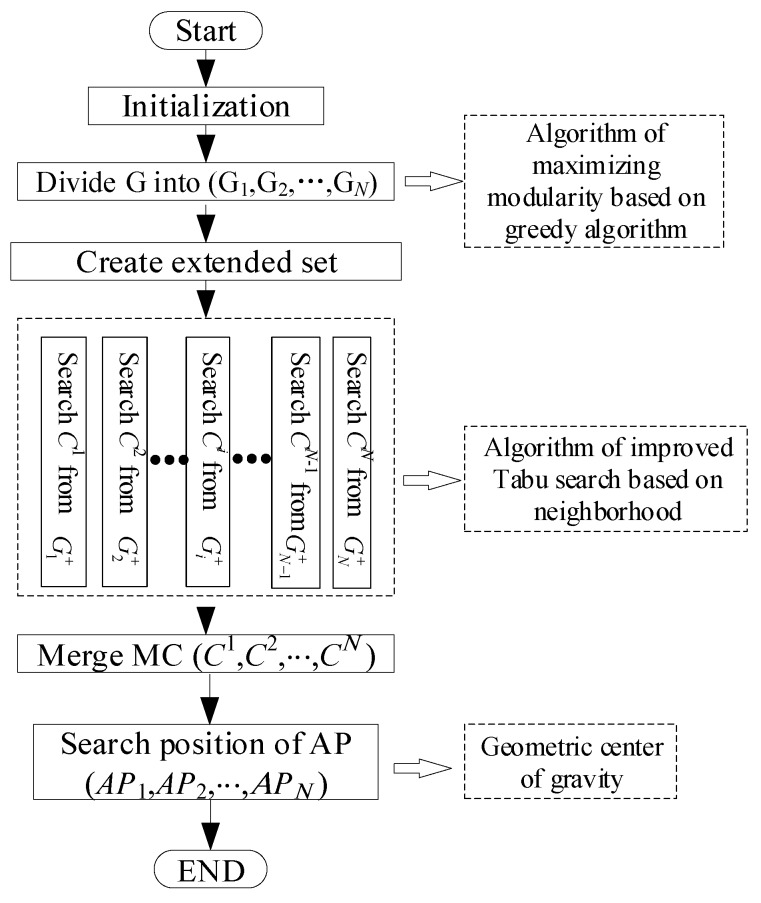
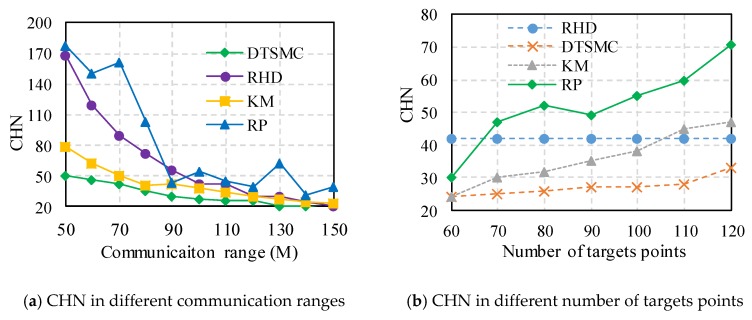
In recent years, industrial wireless networks (IWNs) have been transformed by the introduction of mobile nodes, and they now offer increased extensibility, mobility, and flexibility. Nevertheless, mobile nodes pose efficiency and reliability challenges. Efficient node deployment and management of channel interference directly affect network system performance, particularly for key node placement in clustered wireless networks. This study analyzes this system model, considering both industrial properties of wireless networks and their mobility. Then, static and mobile node coverage problems are unified and simplified to target coverage problems. We propose a novel strategy for the deployment of clustered heads in grouped industrial mobile wireless networks (IMWNs) based on the improved maximal clique model and the iterative computation of new candidate cluster head positions. The maximal cliques are obtained via a double-layer Tabu search. Each cluster head updates its new position via an improved virtual force while moving with full coverage to find the minimal inter-cluster interference. Finally, we develop a simulation environment. The simulation results, based on a performance comparison, show the efficacy of the proposed strategies and their superiority over current approaches.
近年来,工业无线网络(IWNs)因移动节点的引入而发生了变革,如今具备了更高的可扩展性、移动性和灵活性。然而,移动节点带来了效率和可靠性方面的挑战。高效的节点部署以及信道干扰管理直接影响网络系统性能,特别是对于集群无线网络中的关键节点布局而言。本研究分析了该系统模型,兼顾了无线网络的工业特性及其移动性。接着,将静态和移动节点覆盖问题统一并简化为目标覆盖问题。我们基于改进的最大团模型以及新候选簇头位置的迭代计算,提出了一种在分组工业移动无线网络(IMWNs)中部署簇头的新颖策略。通过双层禁忌搜索获得最大团。每个簇头在全覆盖移动时通过改进的虚拟力更新其新位置,以找到最小的簇间干扰。最后,我们开发了一个仿真环境。基于性能比较的仿真结果表明了所提策略的有效性及其相对于现有方法的优越性。