• 文献检索
  • 文档翻译
  • 深度研究
  • 学术资讯
  • Suppr Zotero 插件Zotero 插件
  • 邀请有礼
  • 套餐&价格
  • 历史记录
应用&插件
Suppr Zotero 插件Zotero 插件浏览器插件Mac 客户端Windows 客户端微信小程序
定价
高级版会员购买积分包购买API积分包
服务
文献检索文档翻译深度研究API 文档MCP 服务
关于我们
关于 Suppr公司介绍联系我们用户协议隐私条款
关注我们

Suppr 超能文献

核心技术专利:CN118964589B侵权必究
粤ICP备2023148730 号-1Suppr @ 2026

文献检索

告别复杂PubMed语法,用中文像聊天一样搜索,搜遍4000万医学文献。AI智能推荐,让科研检索更轻松。

立即免费搜索

文件翻译

保留排版,准确专业,支持PDF/Word/PPT等文件格式,支持 12+语言互译。

免费翻译文档

深度研究

AI帮你快速写综述,25分钟生成高质量综述,智能提取关键信息,辅助科研写作。

立即免费体验

一名94岁跑步者在6小时跑步过程中的起搏情况。

Pacing in a 94-year-old runner during a 6-hour run.

作者信息

Knechtle Beat, Nikolaidis Pantelis T

机构信息

Medbase St. Gallen Am Vadianplatz, St. Gallen, Switzerland.

Institute of Primary Care, University of Zurich, Zurich, Switzerland.

出版信息

Open Access J Sports Med. 2018 Feb 5;9:19-25. doi: 10.2147/OAJSM.S155526. eCollection 2018.

DOI:10.2147/OAJSM.S155526
PMID:29440939
原文链接:https://pmc.ncbi.nlm.nih.gov/articles/PMC5804293/
Abstract

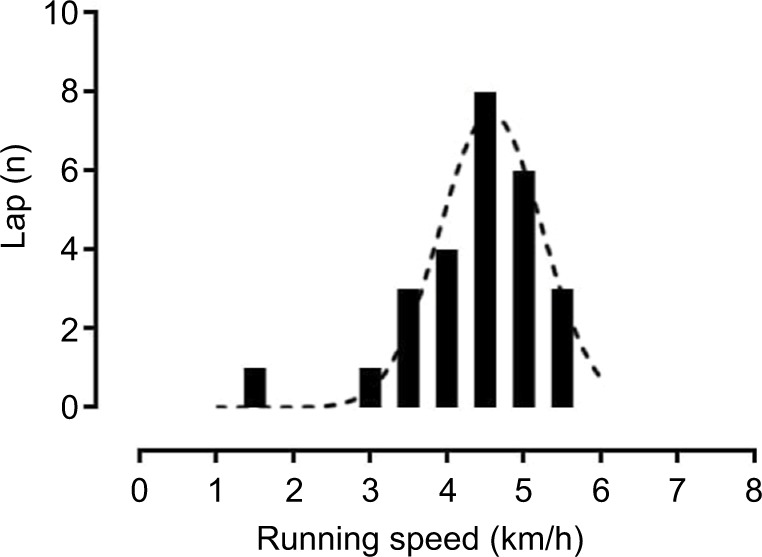
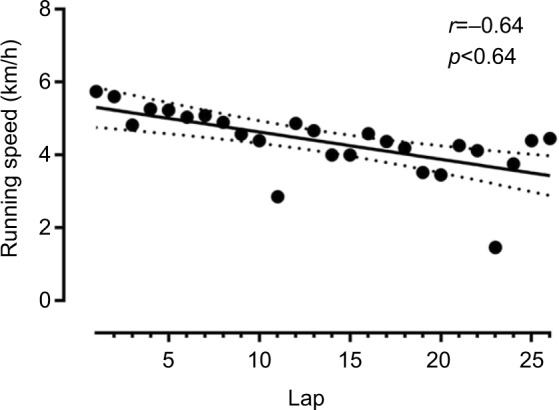
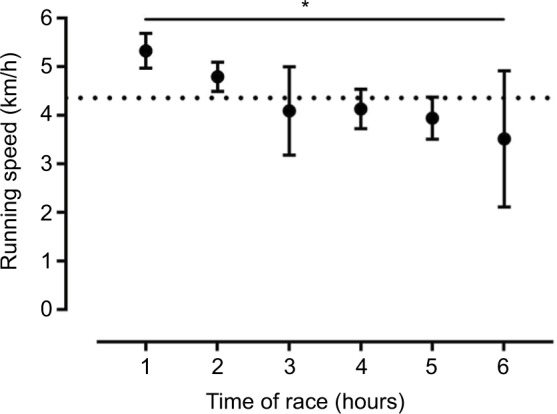
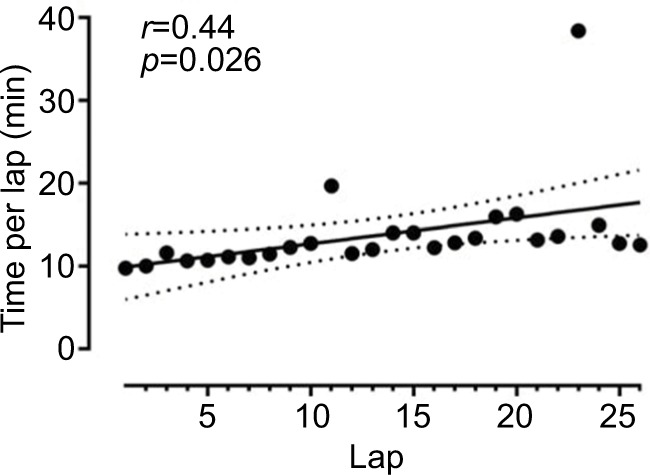
It is well known that elderly people up to 90 years of age are able to finish a marathon. We have no knowledge, however, how runners at the age of 90 years or older pace during a long run. In this case report, we describe the pacing of a 94-year-old man competing in a 6-hour run in order to prepare for a marathon at the age of 95 years in category M95. In the "6-Stunden-Lauf " held in Brugg, Switzerland, participants have to run as many laps of 0.934 km as possible on a completely flat circuit within 6 hours to achieve as many kilometers as possible. Before and after the competition we measured body weight, percentage of body fat, fat-free mass and percentage of body water using a bioelectrical impedance scale. On the day before the start, 24 hours after the finish and then every 24 hours for the following 4 days, capillary blood samples at a fingertip were drawn to determine hemoglobin, hematocrit, leukocytes, platelets, C-reactive protein, creatine kinase, creatinine and potassium and sodium. The runner achieved 26 laps during the 6 hours, equal to 24.304 km. Lap times increased continuously and running speed decreased nearly linearly. A large main effect of time point (hours) of the race on running speed was observed (=0.015, =0.48) with running speed being slower in the last hour than that in the first hour (3.5±1.4 km/h versus 5.3±0.4 km/h). Body mass decreased by 0.6%, percent body fat by 1.4% and fat-free mass by 0.7%. During recovery, hemoglobin, hematocrit and the number of thrombocytes increased, whereas the number of leukocytes remained unchanged. C-reactive protein was highest on day 1 after the race and decreased by day 4 nearly to zero. Creatine kinase was slightly elevated pre-race, highest the day after the race and remained slightly elevated until day 4. Creatinine and potassium were increased pre-race but returned to normal values during recovery. Sodium remained within normal values on all days. Based on the linear decrease in running speed, we extrapolated for the marathon distance to run a marathon in age group M95 (i.e., male marathoners aged 95-99 years). In the worst-case scenario (i.e., the athlete develops maximal fatigue), he would stop the race before 40 km, in the best scenario (i.e., the athlete develops minimal fatigue), he would achieve an overall race time of ~8.3 hours and in the most probable scenario (i.e., the athlete can continue in the same manner), the final race time will be longer than 11 hours.

摘要

众所周知,90岁高龄的老人都能跑完马拉松。然而,我们并不清楚90岁及以上的跑步者在长跑过程中的配速情况。在本病例报告中,我们描述了一名94岁男性在一场6小时跑中的配速情况,其目的是为参加95岁年龄组M95的马拉松赛做准备。在瑞士布鲁格举行的“6小时跑”比赛中,参赛者必须在6小时内尽可能多地在完全平坦的赛道上跑完0.934公里的圈数,以达到尽可能多的公里数。比赛前后,我们使用生物电阻抗秤测量了体重、体脂百分比、去脂体重和身体水分百分比。在比赛开始前一天、结束后24小时,以及随后4天每24小时,采集指尖毛细血管血样,以测定血红蛋白、血细胞比容、白细胞、血小板、C反应蛋白、肌酸激酶、肌酐以及钾和钠的含量。这位跑步者在6小时内跑完了26圈,共计24.304公里。每圈用时持续增加,跑步速度几乎呈线性下降。观察到比赛时间点(小时)对跑步速度有显著的主要影响(=0.015,=0.48),最后一小时的跑步速度比第一小时慢(3.5±1.4公里/小时对5.3±0.4公里/小时)。体重下降了0.6%,体脂百分比下降了1.4%,去脂体重下降了0.7%。在恢复过程中,血红蛋白、血细胞比容和血小板数量增加,而白细胞数量保持不变。C反应蛋白在比赛后的第1天最高,到第4天几乎降至零。肌酸激酶在赛前略有升高,赛后第一天最高,并一直略微升高到第4天。肌酐和钾在赛前升高,但在恢复过程中恢复到正常水平。钠在所有日子里都保持在正常范围内。基于跑步速度的线性下降,我们推算出在M95年龄组(即95 - 99岁男性马拉松运动员)中跑马拉松的情况。在最坏的情况下(即运动员出现最大程度的疲劳),他将在40公里前停止比赛;在最好的情况下(即运动员出现最小程度的疲劳),他的总比赛时间将约为8.3小时;在最可能的情况下(即运动员能以相同方式继续),最终比赛时间将超过11小时。
https://cdn.ncbi.nlm.nih.gov/pmc/blobs/bd54/5804293/6d217ad68d40/oajsm-9-019Fig4.jpg
https://cdn.ncbi.nlm.nih.gov/pmc/blobs/bd54/5804293/6168baff89b3/oajsm-9-019Fig1.jpg
https://cdn.ncbi.nlm.nih.gov/pmc/blobs/bd54/5804293/b0f0f548fb7a/oajsm-9-019Fig2.jpg
https://cdn.ncbi.nlm.nih.gov/pmc/blobs/bd54/5804293/ddb3bae72871/oajsm-9-019Fig3.jpg
https://cdn.ncbi.nlm.nih.gov/pmc/blobs/bd54/5804293/6d217ad68d40/oajsm-9-019Fig4.jpg
https://cdn.ncbi.nlm.nih.gov/pmc/blobs/bd54/5804293/6168baff89b3/oajsm-9-019Fig1.jpg
https://cdn.ncbi.nlm.nih.gov/pmc/blobs/bd54/5804293/b0f0f548fb7a/oajsm-9-019Fig2.jpg
https://cdn.ncbi.nlm.nih.gov/pmc/blobs/bd54/5804293/ddb3bae72871/oajsm-9-019Fig3.jpg
https://cdn.ncbi.nlm.nih.gov/pmc/blobs/bd54/5804293/6d217ad68d40/oajsm-9-019Fig4.jpg

相似文献

1
Pacing in a 94-year-old runner during a 6-hour run.一名94岁跑步者在6小时跑步过程中的起搏情况。
Open Access J Sports Med. 2018 Feb 5;9:19-25. doi: 10.2147/OAJSM.S155526. eCollection 2018.
2
Pacing During and Physiological Response After a 12-Hour Ultra-Marathon in a 95-Year-Old Male Runner.一名95岁男性跑者在12小时超级马拉松比赛期间的起搏情况及赛后的生理反应
Front Physiol. 2019 Jan 4;9:1875. doi: 10.3389/fphys.2018.01875. eCollection 2018.
3
Pacing and Changes in Body Composition in 48 h Ultra-Endurance Running-A Case Study.48小时超耐力跑中的配速与身体成分变化——一项案例研究
Sports (Basel). 2018 Nov 1;6(4):136. doi: 10.3390/sports6040136.
4
Pacing of an Untrained 17-Year-Old Teenager in a Marathon Attempt.对一名未经训练的17岁青少年进行马拉松尝试中的配速指导。
Int J Exerc Sci. 2018 Jun 1;11(6):856-866. doi: 10.70252/SHCE2721. eCollection 2018.
5
Exercise-Associated Hyponatremia During a Self-Paced Marathon Attempt in a 15-Year-Old Male Teenager.一名15岁男性青少年在尝试自主完成马拉松比赛过程中出现的运动相关性低钠血症
Medicina (Kaunas). 2019 Mar 7;55(3):63. doi: 10.3390/medicina55030063.
6
Running speed during training and percent body fat predict race time in recreational male marathoners.训练期间的跑步速度和体脂百分比可预测业余男性马拉松运动员的比赛时间。
Open Access J Sports Med. 2012 Jul 2;3:51-8. doi: 10.2147/OAJSM.S33284. eCollection 2012.
7
Pacing strategy in male elite and age group 100 km ultra-marathoners.男性精英和年龄组100公里超级马拉松运动员的配速策略。
Open Access J Sports Med. 2015 Mar 20;6:71-80. doi: 10.2147/OAJSM.S79568. eCollection 2015.
8
Physiology and Pathophysiology in Ultra-Marathon Running.超级马拉松运动中的生理学与病理生理学
Front Physiol. 2018 Jun 1;9:634. doi: 10.3389/fphys.2018.00634. eCollection 2018.
9
Training and Body Composition during Preparation for a 48-Hour Ultra-Marathon Race: A Case Study of a Master Athlete.备战 48 小时超级马拉松比赛期间的训练和身体成分:一位大师级运动员的个案研究。
Int J Environ Res Public Health. 2019 Mar 13;16(6):903. doi: 10.3390/ijerph16060903.
10
Study of hematological and biochemical parameters in runners completing a standard marathon.完成标准马拉松赛跑的跑步者的血液学和生化参数研究。
Clin J Sport Med. 2004 Nov;14(6):344-53. doi: 10.1097/00042752-200411000-00004.

引用本文的文献

1
Editorial: The Elderly Athlete.社论:老年运动员
Front Physiol. 2021 May 7;12:686858. doi: 10.3389/fphys.2021.686858. eCollection 2021.
2
Pacing During and Physiological Response After a 12-Hour Ultra-Marathon in a 95-Year-Old Male Runner.一名95岁男性跑者在12小时超级马拉松比赛期间的起搏情况及赛后的生理反应
Front Physiol. 2019 Jan 4;9:1875. doi: 10.3389/fphys.2018.01875. eCollection 2018.
3
Pacing and Changes in Body Composition in 48 h Ultra-Endurance Running-A Case Study.48小时超耐力跑中的配速与身体成分变化——一项案例研究

本文引用的文献

1
Pacing in age group marathoners in the "New York City Marathon".“纽约市马拉松赛”中各年龄组马拉松选手的配速
Res Sports Med. 2018 Jan-Mar;26(1):86-99. doi: 10.1080/15438627.2017.1393752. Epub 2017 Oct 24.
2
Age-related decline in endurance running performance - an example of a multiple World records holder.与年龄相关的耐力跑成绩下降——一位多次世界纪录保持者的例子。
Appl Physiol Nutr Metab. 2018 Jan;43(1):98-100. doi: 10.1139/apnm-2017-0298. Epub 2017 Sep 20.
3
Effect of age and performance on pacing of marathon runners.年龄和表现对马拉松运动员配速的影响。
Sports (Basel). 2018 Nov 1;6(4):136. doi: 10.3390/sports6040136.
Open Access J Sports Med. 2017 Aug 21;8:171-180. doi: 10.2147/OAJSM.S141649. eCollection 2017.
4
Do Fast Older Runners Pace Differently From Fast Younger Runners in the "New York City Marathon"?《“纽约马拉松”中,快的老年跑者和快的年轻跑者的配速方式有区别吗?》
J Strength Cond Res. 2019 Dec;33(12):3423-3430. doi: 10.1519/JSC.0000000000002159.
5
Marathon Pace Control in Masters Athletes.老年运动员的马拉松配速控制
Int J Sports Physiol Perform. 2018 Mar 1;13(3):332-338. doi: 10.1123/ijspp.2016-0730. Epub 2018 Mar 9.
6
Performance trends in age-group runners from 100 m to marathon-The World Championships from 1975 to 2015.1975年至2015年世界锦标赛中100米到马拉松各年龄组跑步运动员的成绩趋势
Scand J Med Sci Sports. 2017 Dec;27(12):1588-1596. doi: 10.1111/sms.12821. Epub 2017 Jan 30.
7
Master Athletes Are Extending the Limits of Human Endurance.高龄运动员正在拓展人类耐力的极限。
Front Physiol. 2016 Dec 12;7:613. doi: 10.3389/fphys.2016.00613. eCollection 2016.
8
Comparison of Changes in Biochemical Markers for Skeletal Muscles, Hepatic Metabolism, and Renal Function after Three Types of Long-distance Running: Observational Study.三种长跑后骨骼肌、肝脏代谢及肾功能生化标志物变化的比较:观察性研究
Medicine (Baltimore). 2016 May;95(20):e3657. doi: 10.1097/MD.0000000000003657.
9
Improved Race Times in Marathoners Older than 75 Years in the Last 25 Years in the World's Largest Marathons.在过去25年里,全球最大规模马拉松赛事中75岁以上马拉松运动员的比赛成绩有所提高。
Chin J Physiol. 2016 Jun 30;59(3):139-47. doi: 10.4077/CJP.2016.BAE382.
10
Similarities and Differences in Pacing Patterns in a 161-km and 101-km Ultra-Distance Road Race.161公里和101公里超长跑比赛中配速模式的异同
J Strength Cond Res. 2016 Aug;30(8):2145-55. doi: 10.1519/JSC.0000000000001326.