Zhang Yun, Zhou Yu, Xu Tian, Tian Wei, Yang Chong, Wang Xiaoxiao, Zhong Shan, Ran Qin, Yang Hongji, Zhu Shikai
1 Southwest Medical University, Luzhou, Sichuan, China.
3 Sichuan Provincial Key Laboratory for Human Disease Gene Study and Institute of Laboratory Medicine, Hospital of University of Electronic Science and Technology of China and Sichuan Provincial People's Hospital, Chengdu, Sichuan, China.
Technol Cancer Res Treat. 2018 Jan 1;17:1533034618756783. doi: 10.1177/1533034618756783.
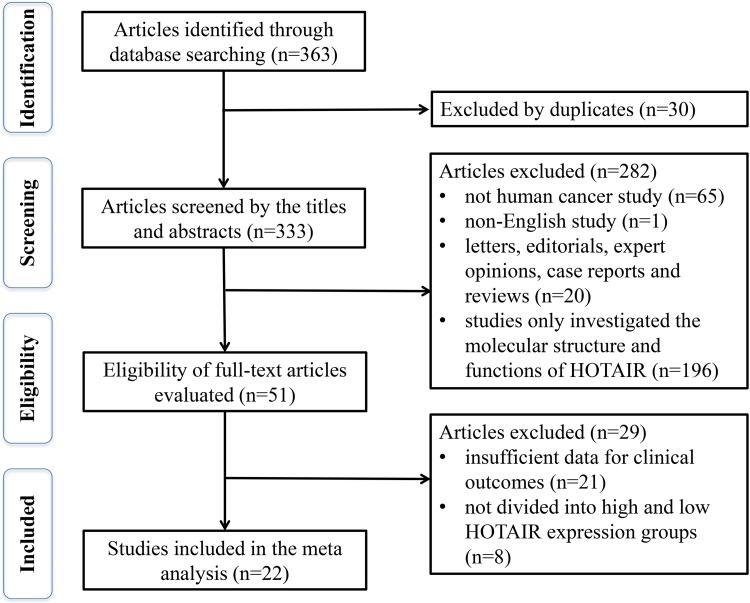
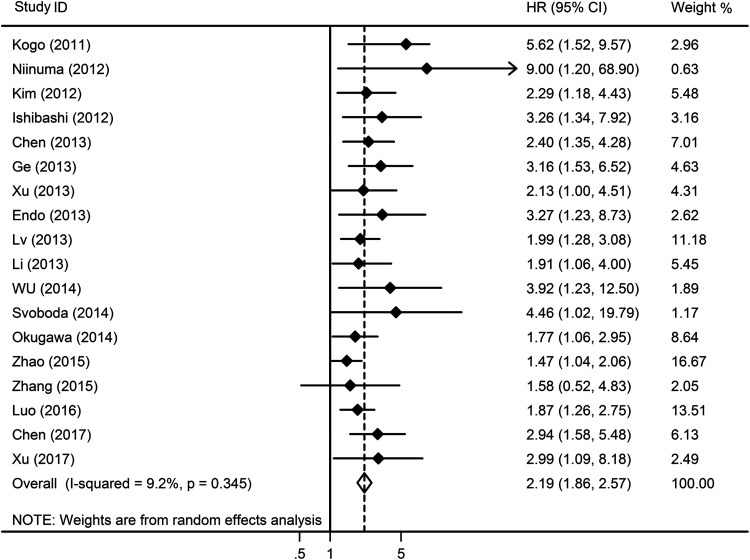
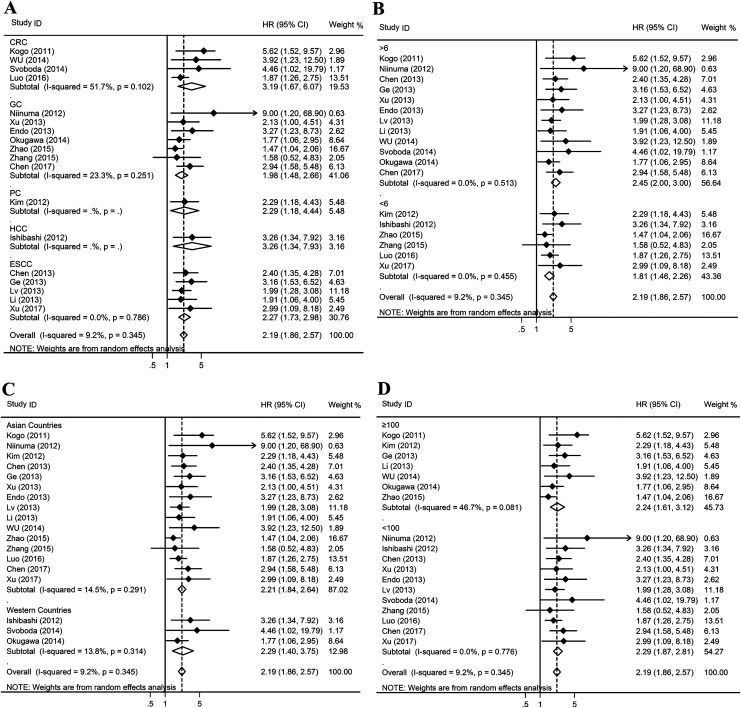
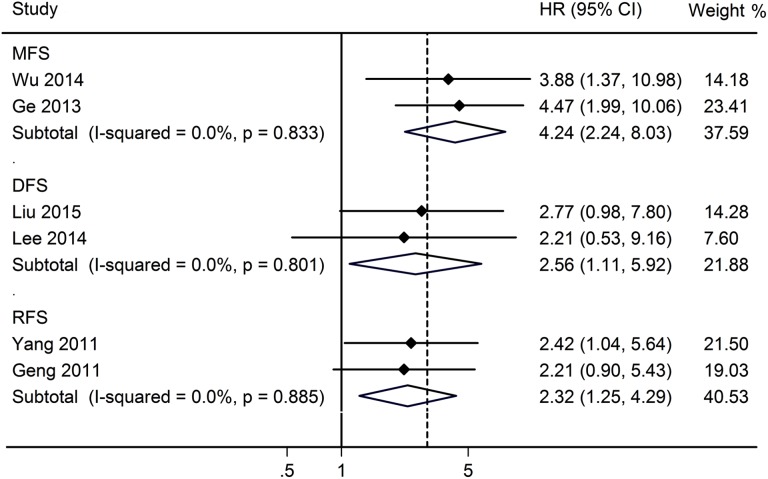
HOX transcript antisense intergenic RNA has been reported to serve as an important prognostic biomarker in several types of cancers. However, the clinical value of HOX transcript antisense intergenic RNA in digestive cancers remains unclear. Therefore, we tried to investigate the clinical role of expression of HOX transcript antisense intergenic RNA as a prognostic indicator in digestive cancers by a meta-analysis. Literature collection was performed by searching the PubMed, Embase, Web of Science, and Cochrane Library databases (up to October 7, 2017). A quantitative meta-analysis was conducted to assess the eligible articles on the prognostic value of HOX transcript antisense intergenic RNA in digestive cancers. The pooled hazard ratios or odds ratios with 95% confidence intervals were used to evaluate the association between expression of HOX transcript antisense intergenic RNA and clinical outcomes. A total of 1844 patients from 22 studies were included in this meta-analysis. The results found a significant association between expression of HOX transcript antisense intergenic RNA and poor overall survival in digestive cancers (pooled hazard ratio = 2.19, 95% confidence interval, 1.86-2.57, P < .001). Furthermore, subgroup analysis showed that tumor type, region, Newcastle-Ottawa scale, and sample size did not alter the predictive value of HOX transcript antisense intergenic RNA as an independent factor for patients' survival. In addition, we also revealed that the clinicopathological characteristics such as differentiation, lymph node metastasis, tumor node metastasis (TNM) stage, and distant metastasis were positively related to expression of HOX transcript antisense intergenic RNA digestive cancers. In conclusion, our results suggested high expression of HOX transcript antisense intergenic RNA was correlated with poor clinical outcomes and may serve as a novel prognostic biomarker for patients with digestive cancers.
据报道,HOX转录本反义基因间RNA在多种癌症中作为重要的预后生物标志物。然而,HOX转录本反义基因间RNA在消化系统癌症中的临床价值仍不清楚。因此,我们试图通过荟萃分析研究HOX转录本反义基因间RNA表达作为消化系统癌症预后指标的临床作用。通过检索PubMed、Embase、Web of Science和Cochrane图书馆数据库(截至2017年10月7日)进行文献收集。进行定量荟萃分析以评估关于HOX转录本反义基因间RNA在消化系统癌症中预后价值的合格文章。使用合并风险比或比值比及95%置信区间来评估HOX转录本反义基因间RNA表达与临床结局之间的关联。本荟萃分析共纳入了来自22项研究的1844例患者。结果发现HOX转录本反义基因间RNA表达与消化系统癌症患者总体生存率差之间存在显著关联(合并风险比=2.19,95%置信区间为1.86-2.57,P<.001)。此外,亚组分析表明肿瘤类型、区域、纽卡斯尔-渥太华量表和样本量并未改变HOX转录本反义基因间RNA作为患者生存独立因素的预测价值。此外,我们还发现分化、淋巴结转移、肿瘤-淋巴结-转移(TNM)分期和远处转移等临床病理特征与消化系统癌症中HOX转录本反义基因间RNA表达呈正相关。总之,我们的结果表明HOX转录本反义基因间RNA高表达与不良临床结局相关,可能作为消化系统癌症患者的一种新型预后生物标志物。