Division of Sleep and Circadian Disorders, Brigham and Women's Hospital and Harvard Medical School, Boston, MA, USA.
Dept of Allergy Immunology and Respiratory Medicine and Central Clinical School, The Alfred and Monash University, Melbourne, Australia.
Eur Respir J. 2018 Feb 14;51(2). doi: 10.1183/13993003.01419-2017. Print 2018 Feb.
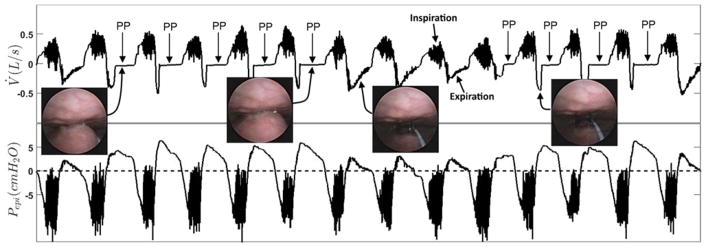
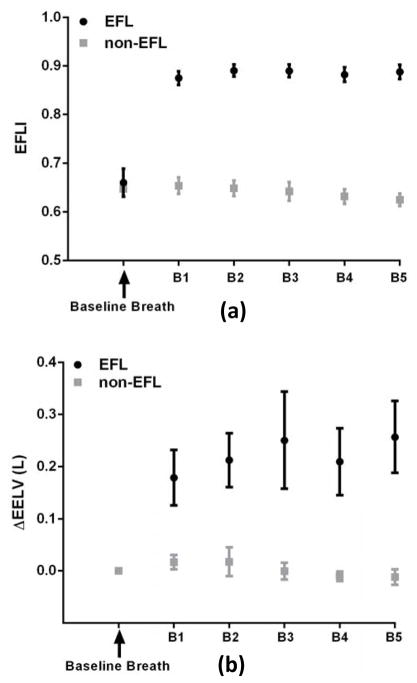
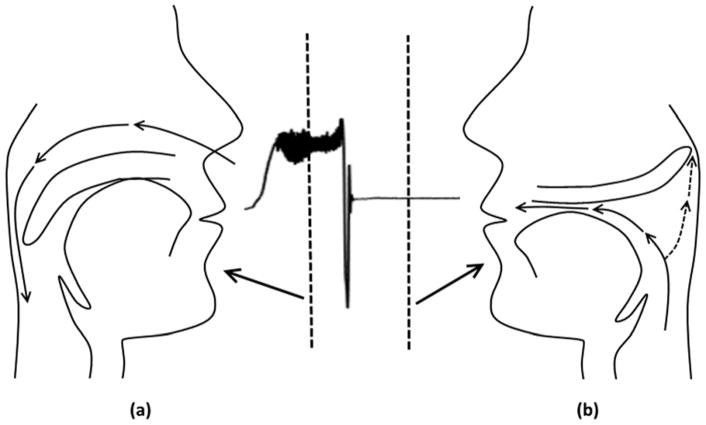
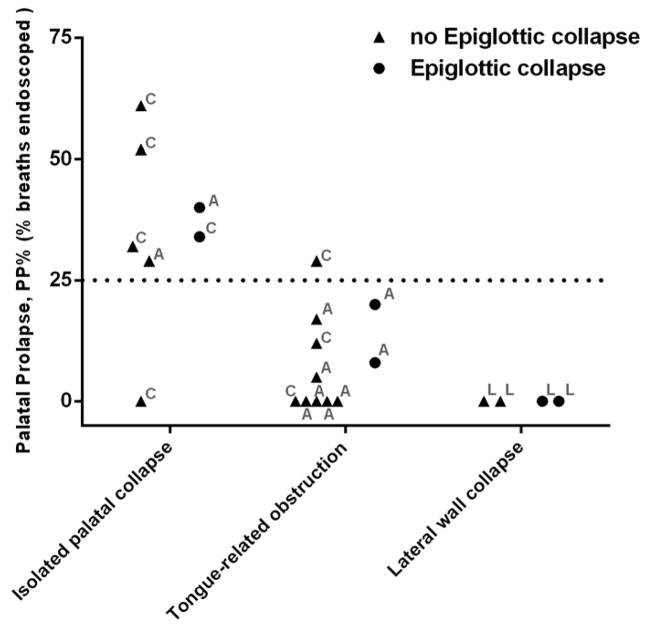
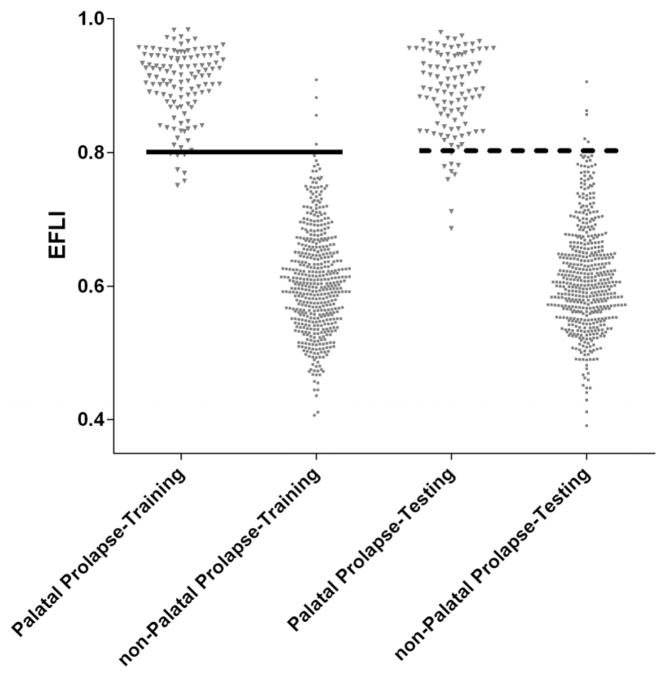
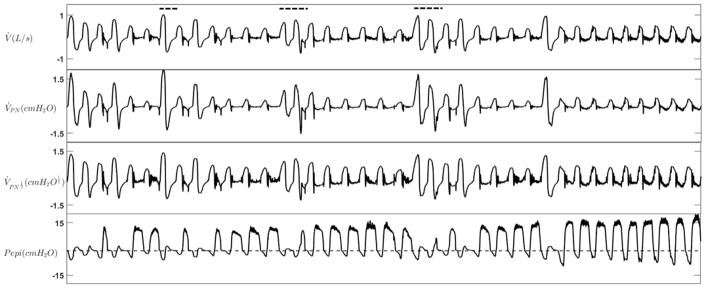
In some individuals with obstructive sleep apnoea (OSA), the palate prolapses into the velopharynx during expiration, limiting airflow through the nose or shunting it out of the mouth. We hypothesised that this phenomenon causes expiratory flow limitation (EFL) and is associated with inspiratory "isolated" palatal collapse. We also wanted to provide a robust noninvasive means to identify this mechanism of obstruction.Using natural sleep endoscopy, 1211 breaths from 22 OSA patients were scored as having or not having palatal prolapse. The patient-level site of collapse (tongue-related, isolated palate, pharyngeal lateral walls and epiglottis) was also characterised. EFL was quantified using expiratory resistance at maximal epiglottic pressure. A noninvasive EFL index (EFLI) was developed to detect the presence of palatal prolapse and EFL using the flow signal alone. In addition, the validity of using nasal pressure was assessed.A cut-off value of EFLI >0.8 detected the presence of palatal prolapse and EFL with an accuracy of >95% and 82%, respectively. The proportion of breaths with palatal prolapse predicted isolated inspiratory palatal collapse with 90% accuracy.This study demonstrates that expiratory palatal prolapse can be quantified noninvasively, is associated with EFL and predicts the presence of inspiratory isolated palatal collapse.
在一些阻塞性睡眠呼吸暂停(OSA)患者中,软腭在呼气时会向咽腔膨出,限制气流通过鼻腔或从口腔逸出。我们假设这种现象会导致呼气受限(EFL),并与吸气时“孤立”的软腭塌陷有关。我们还希望提供一种可靠的无创方法来识别这种阻塞机制。
使用自然睡眠内镜,对 22 例 OSA 患者的 1211 次呼吸进行评分,以判断是否存在软腭膨出。还对患者层面的塌陷部位(与舌相关的、孤立的软腭、咽侧壁和会厌)进行了特征描述。在最大会厌压下,通过呼气阻力来量化 EFL。开发了一种无创 EFL 指数(EFLI),仅使用流量信号来检测软腭膨出和 EFL 的存在。此外,还评估了使用鼻压的有效性。
EFLI 值>0.8 的截值可准确检测到软腭膨出和 EFL 的存在,其准确性分别>95%和 82%。软腭膨出的呼吸比例可准确预测孤立性吸气性软腭塌陷,准确率为 90%。
这项研究表明,呼气性软腭膨出可以无创地量化,与 EFL 相关,并可预测吸气性孤立性软腭塌陷的存在。