Department of Gastroenterology, Qilu Hospital, Shandong University, Jinan, 250012, China.
Laboratory of Translational Gastroenterology, Qilu Hospital, Shandong University, Jinan, 250012, China.
Sci Rep. 2018 Feb 14;8(1):2964. doi: 10.1038/s41598-018-21241-z.
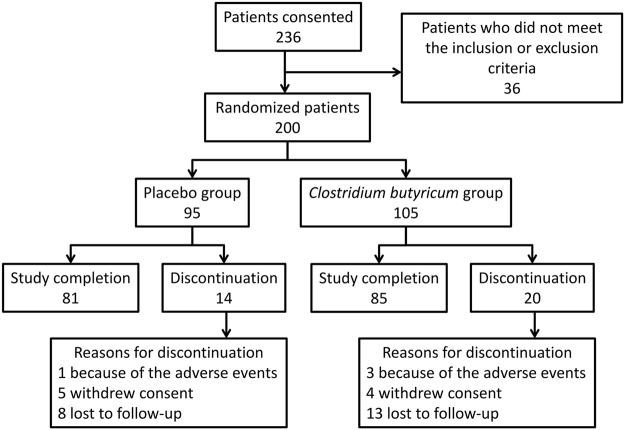
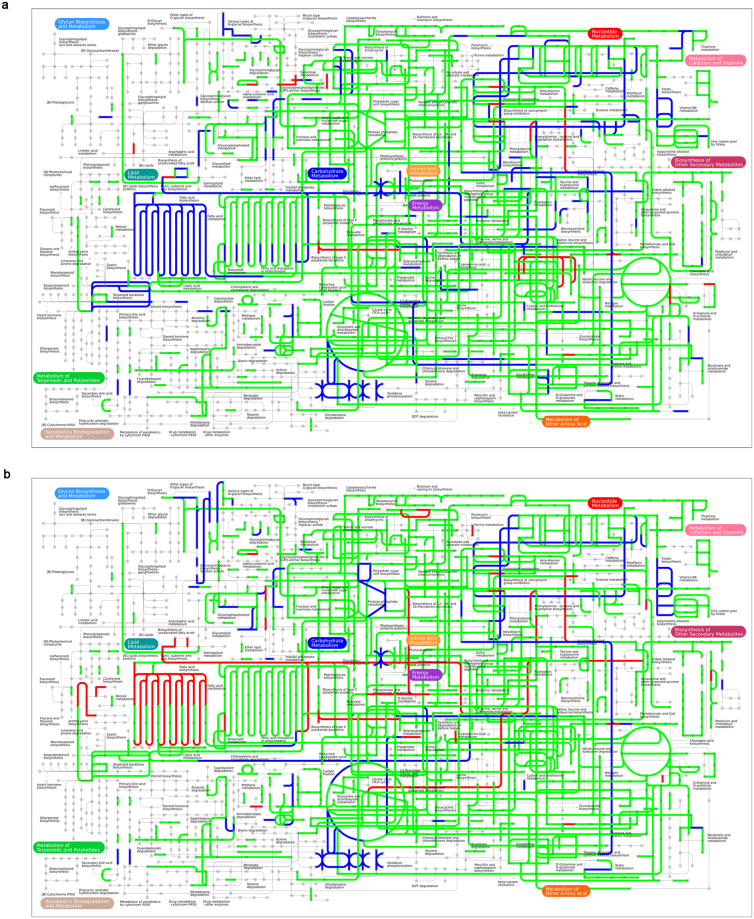
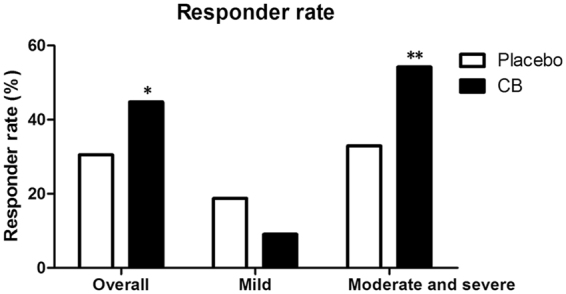
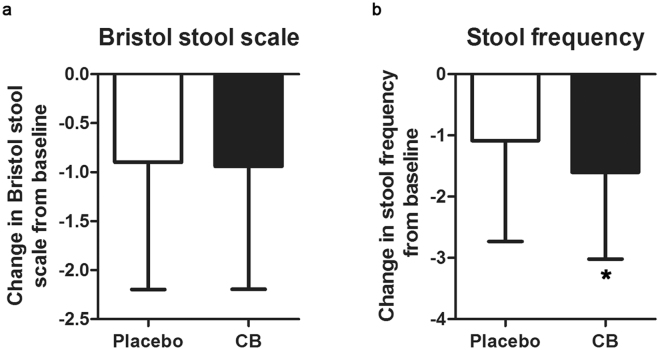
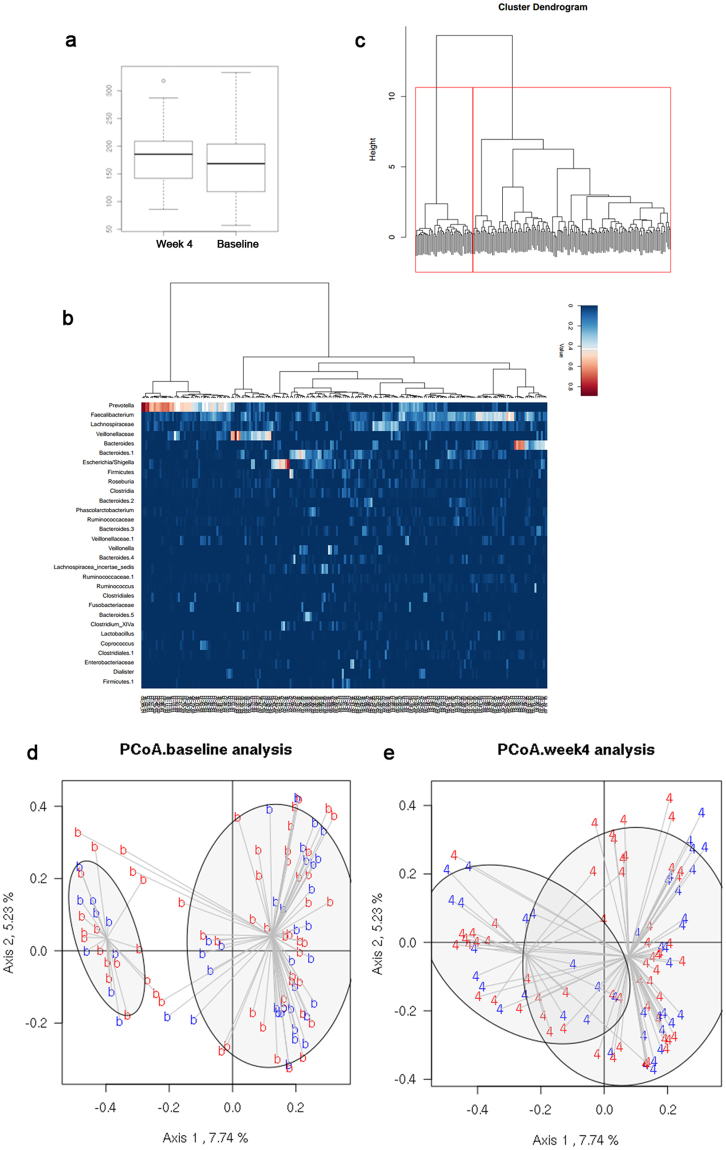
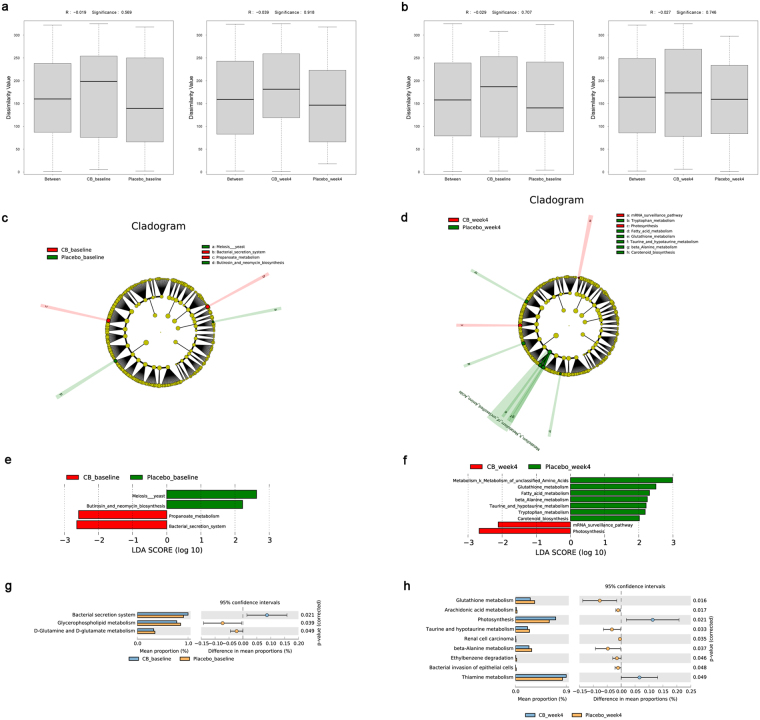
Irritable bowel syndrome (IBS) is a common disorder in gastrointestinal system and impairs the quality of life of the patients. Clostridium butyricum (CB) is a probiotics that has been used in several gastrointestinal diseases. The efficacy of CB in treating IBS is still unknown. This prospective, multi-centre, randomized, double-blind, placebo-controlled trial aimed to assess the efficacy and safety of CB in treating diarrhea-predominant IBS (IBS-D) and analyze the fecal microbiota after treatment. Two hundred patients with IBS-D were recruited and were given CB or placebo for 4 weeks. End points included change from baseline in IBS symptoms, quality of life, stool consistency and frequency. Compared with placebo, CB is effective in improving the overall IBS-D symptoms (-62.12 ± 74.00 vs. -40.74 ± 63.67, P = 0.038) as well as quality of life (7.232 ± 14.06 vs. 3.159 ± 11.73, P = 0.032) and stool frequency (-1.602 ± 1.416 vs. -1.086 ± 1.644, P = 0.035). The responder rates are found higher in CB compared with the placebo (44.76% vs. 30.53%, P = 0.042). The change in fecal microbiota was analyzed and function pathways of CB in treating IBS-D were predicted. In conclusion, CB improves overall symptoms, quality of life and stool frequency in IBS-D patients and is considered to be used as a probiotics in treating IBS-D clinically.
肠易激综合征(IBS)是一种常见的胃肠道系统疾病,会降低患者的生活质量。丁酸梭菌(CB)是一种已用于多种胃肠道疾病的益生菌。CB 治疗 IBS 的疗效尚不清楚。本前瞻性、多中心、随机、双盲、安慰剂对照试验旨在评估 CB 治疗腹泻型肠易激综合征(IBS-D)的疗效和安全性,并分析治疗后的粪便微生物群。招募了 200 名 IBS-D 患者,给予 CB 或安慰剂治疗 4 周。终点包括 IBS 症状、生活质量、粪便稠度和频率从基线的变化。与安慰剂相比,CB 有效改善了整体 IBS-D 症状(-62.12±74.00 与-40.74±63.67,P=0.038)以及生活质量(7.232±14.06 与 3.159±11.73,P=0.032)和粪便频率(-1.602±1.416 与-1.086±1.644,P=0.035)。CB 的应答率高于安慰剂(44.76%比 30.53%,P=0.042)。分析了粪便微生物群的变化,并预测了 CB 治疗 IBS-D 的功能途径。总之,CB 改善了 IBS-D 患者的整体症状、生活质量和粪便频率,被认为可在临床上用作治疗 IBS-D 的益生菌。