Ismail Faisal W, Abid Shahab, Mawani Minaz, Jafri Wasim, Hamid Saeed S
Department of Medicine, Section of Gastroenterology, The Aga Khan University, Karachi, Pakistan.
Adv Med Educ Pract. 2018 Feb 9;9:99-106. doi: 10.2147/AMEP.S149479. eCollection 2018.
Viral hepatitis B and C represent the primary health challenge confronting Asia and Pakistan. With direct-acting antiviral therapy for hepatitis C, patients will be treated by general physicians (GPs) and will need training through continuing medical education (CME). Blended learning is a combination of didactic teaching with online, self-paced learning, and it has not been evaluated as a CME tool for general physicians. We aimed to compare the change in physician's knowledge about chronic viral hepatitis following a blended learning educational program.
Participants enrolled in a 6 week blended learning program comprising three modules, each of 2 weeks duration. These were: 1) epidemiology and prevention of viral hepatitis; 2) diagnosis and assessment of hepatitis; and 3) treatment of hepatitis. Activities were primarily web based with some face-to-face interactive sessions. All study material was available on the Teach - Pak website. Discussions, questions, and comments were encouraged. An overall pre-and postintervention knowledge assessment was performed, in addition to individual module assessments.
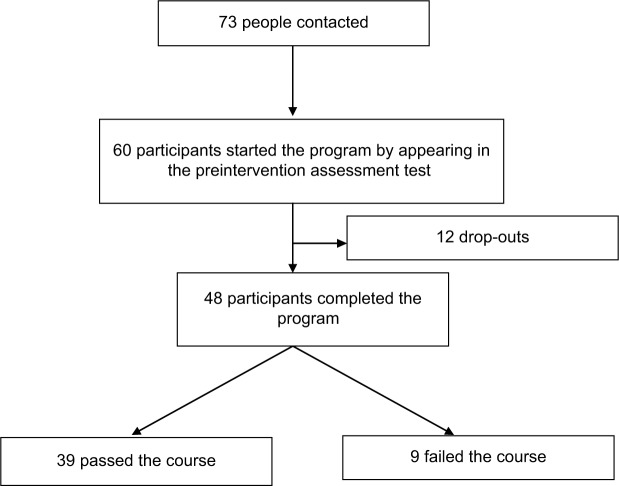
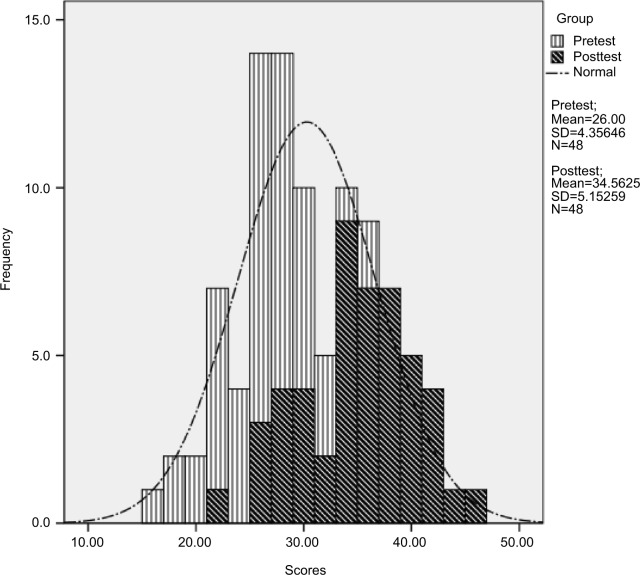
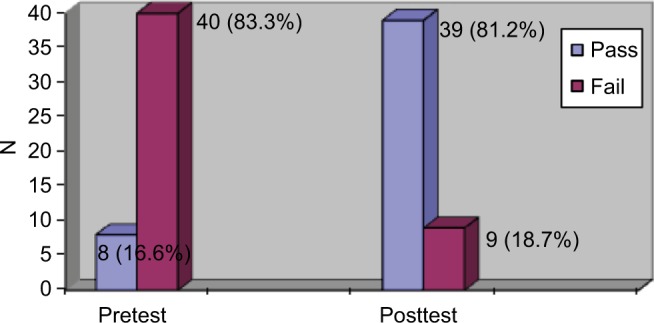
A total of 48 participants completed the program; 39 passed (81.25%). The participants were from diverse backgrounds with variable previous training. The pass rate rose from 16.1% at the start of the program to 81.2% at the conclusion. The mean pretest score was 26.0 (standard deviation =4.36), while the mean posttest score was 34.6 (standard deviation =5.15), showing an increase in the mean score of 8.56 points. Eighty four percent had completed at least one credit hour for CME as compared to those who did not pass the posttest (44.4% -value =0.02). No significant differences in results of posttest were observed in the categories of participant's age, years since graduation, or years of experience. The participants were satisfied with the blended learning mode of teaching.
Blended learning is an efficient way to impart hepatitis CME to a diverse group of postgraduate physicians.
乙型和丙型病毒性肝炎是亚洲及巴基斯坦面临的主要健康挑战。随着丙型肝炎直接抗病毒疗法的应用,普通内科医生(GPs)将负责治疗患者,他们需要通过继续医学教育(CME)接受培训。混合式学习是一种将讲授式教学与在线自主学习相结合的方式,尚未被评估为普通内科医生的继续医学教育工具。我们旨在比较混合式学习教育项目后医生对慢性病毒性肝炎知识的变化。
参与者参加为期6周的混合式学习项目,该项目包括三个模块,每个模块为期2周。分别是:1)病毒性肝炎的流行病学与预防;2)肝炎的诊断与评估;3)肝炎的治疗。活动主要基于网络,并设有一些面对面的互动环节。所有学习资料均可在Teach - Pak网站上获取。鼓励进行讨论、提问和发表评论。除了对各个模块进行评估外,还进行了总体的干预前和干预后知识评估。
共有48名参与者完成了该项目;39人通过(81.25%)。参与者背景各异,之前接受的培训也各不相同。通过率从项目开始时的16.1%升至结束时的81.2%。干预前平均测试成绩为26.0(标准差 = 4.36),干预后平均测试成绩为34.6(标准差 = 5.15),平均成绩提高了8.56分。与未通过干预后测试的人相比,84%完成了至少一个继续医学教育学分(44.4% - p值 = 0.02)。在参与者的年龄、毕业年限或工作经验类别中,未观察到干预后测试结果存在显著差异。参与者对混合式学习教学模式感到满意。
混合式学习是向不同群体的研究生医生传授丙型肝炎继续医学教育的有效方式。