García-Honduvilla Natalio, Cifuentes Alberto, Ortega Miguel A, Delgado Arancha, González Salvador, Bujan Julia, Alvarez-Mon Melchor
Department of Medicine and Medical Specialties, Faculty of Medicine and Health Sciences, University of Alcalá, Alcalá de Henares, Madrid, Spain.
Networking Biomedical Research Center on Bioengineering, Biomaterials and Nanomedicine (CIBER-BBN), Alcalá de Henares, Madrid, Spain.
Stem Cells Int. 2017;2017:9142493. doi: 10.1155/2017/9142493. Epub 2017 Dec 27.
Regeneration therapy using adipose-derived stem cells (ADSC) has been proposed in the treatment of skin aging. Myofibroblast plays a relevant role in the organization of the extracellular matrix of the damaged skin. A natural extract was derived from the eggs of the mollusk (e-CAF) that seems to play a role on skin repair. We have investigated the potential effects of e-CAF in the differentiation of ADSC.
ADSC were cultured in the absence or presence of e-CAF (50 and 200 g/mL) for 24 hours and 7 days. Real-time cell assay, morphological, immunofluorescence, and RT-PCR techniques were used to evaluate the cell culture and expression of SMA, collagen I, and tropoelastin.
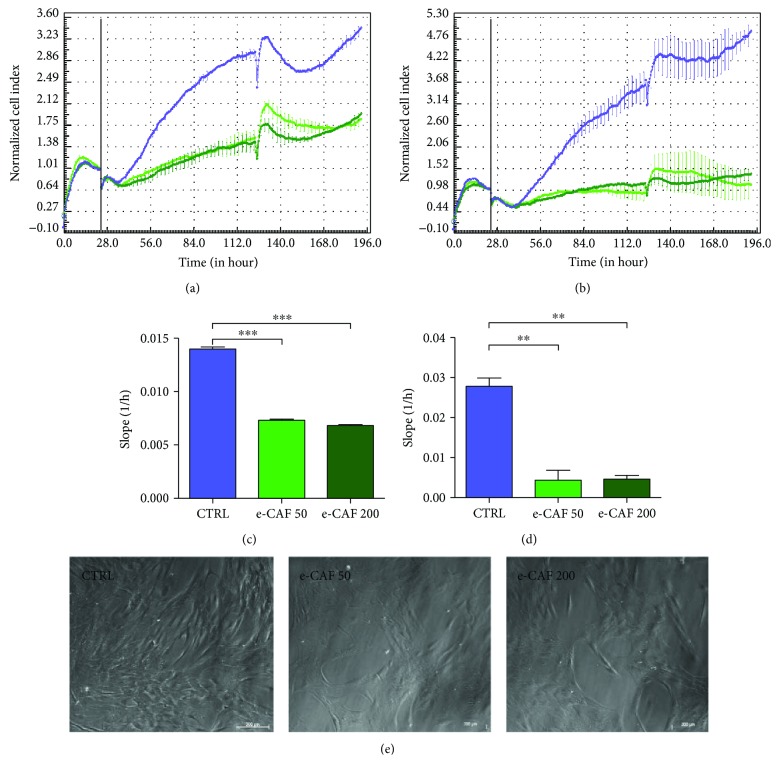
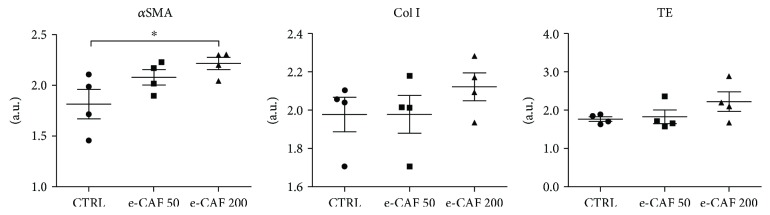
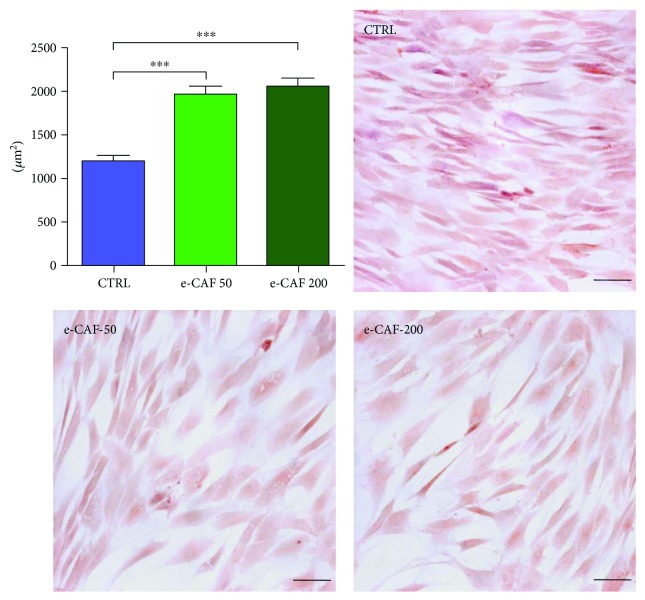
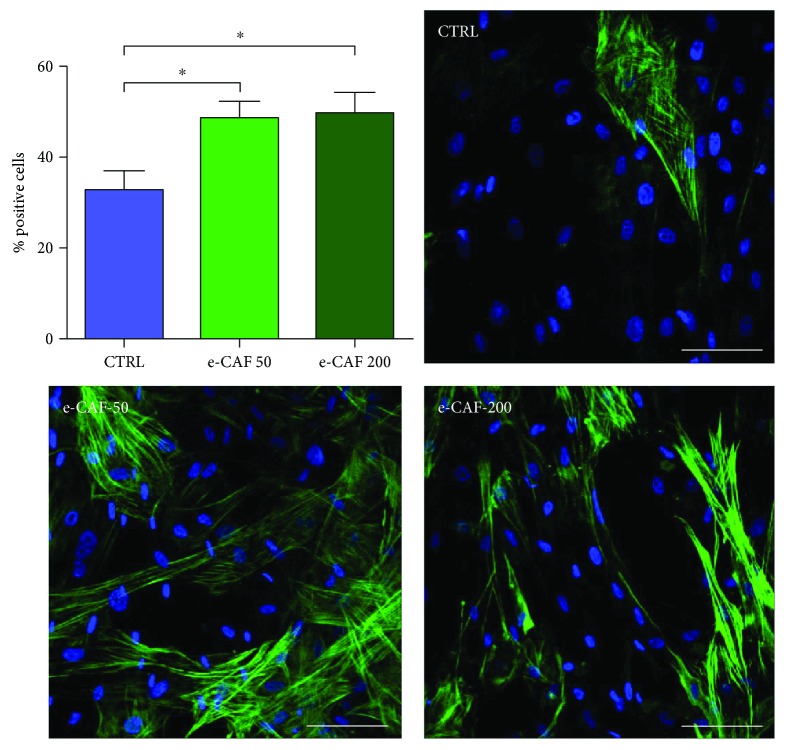
e-CAF induced significant reduction in the rate of growth of ADSC from 24 hours to 7 days of culture. e-CAF also induced bigger sizes, higher levels of cytoplasmic refringence and complexity, and a more polyhedral morphological changes in the cultured ADSC. The protein and mRNA expression of SMA was significantly increased in e-CAF-cultured ADSC.
e-CAF promotes ADSC differentiation to myofibroblasts and should be considered as a potential agent for the prevention and treatment of skin aging.
脂肪来源干细胞(ADSC)再生疗法已被用于治疗皮肤衰老。肌成纤维细胞在受损皮肤的细胞外基质组织中发挥相关作用。一种从软体动物卵中提取的天然提取物(e-CAF)似乎在皮肤修复中起作用。我们研究了e-CAF对ADSC分化的潜在影响。
将ADSC在不存在或存在e-CAF(50和200μg/mL)的情况下培养24小时和7天。使用实时细胞检测、形态学、免疫荧光和RT-PCR技术评估细胞培养以及平滑肌肌动蛋白(SMA)、I型胶原蛋白和原弹性蛋白的表达。
从培养24小时到7天,e-CAF导致ADSC的生长速率显著降低。e-CAF还使培养的ADSC尺寸变大、细胞质折光率和复杂度更高,并且形态变化更呈多面体状。在e-CAF培养的ADSC中,SMA的蛋白质和mRNA表达显著增加。
e-CAF促进ADSC向肌成纤维细胞分化,应被视为预防和治疗皮肤衰老的潜在药物。