Riede Felix, Johannsen Niels N, Högberg Anders, Nowell April, Lombard Marlize
Department of Archaeology and Heritage Studies, Aarhus University Moesgård, Denmark.
Interacting Minds Centre, Aarhus University, Denmark.
Evol Anthropol. 2018 Jan;27(1):46-59. doi: 10.1002/evan.21555.
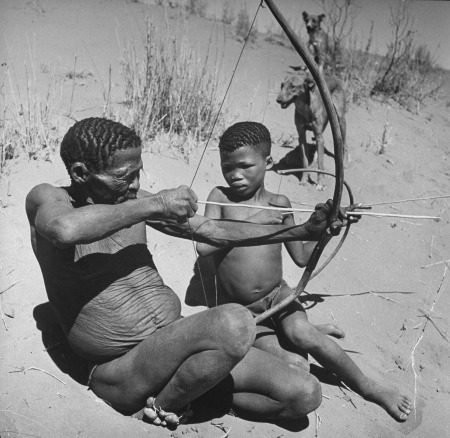
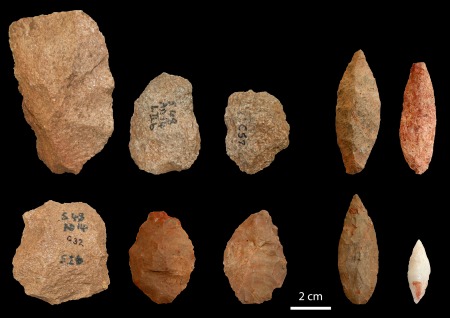
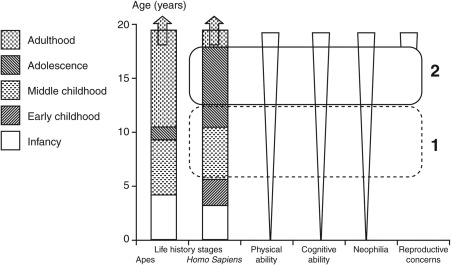
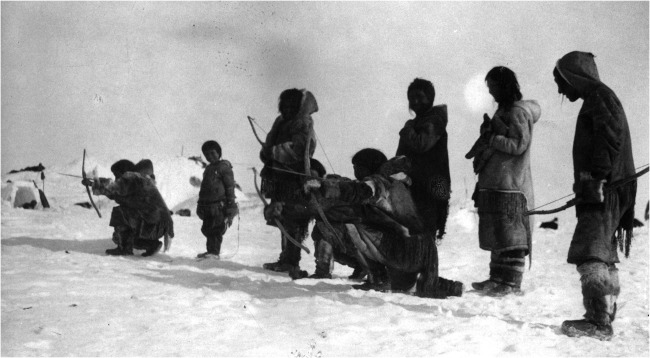
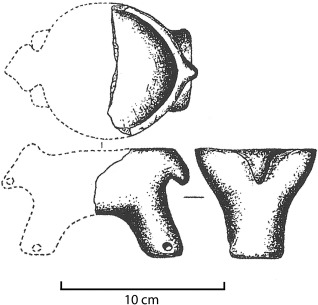
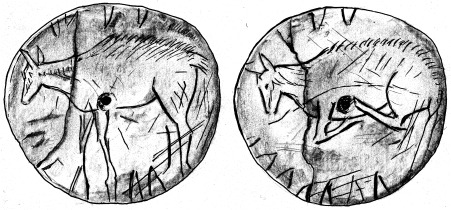
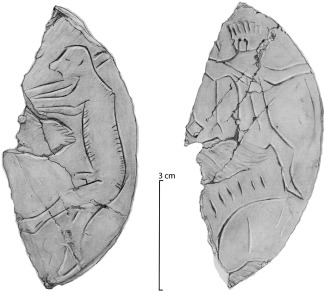
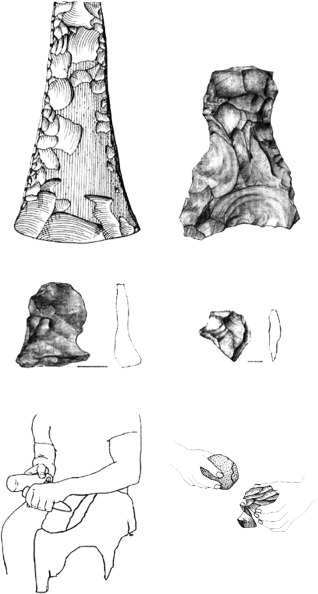
In this contribution, we address a major puzzle in the evolution of human material culture: If maturing individuals just learn their parental generation's material culture, then what is the origin of key innovations as documented in the archeological record? We approach this question by coupling a life-history model of the costs and benefits of experimentation with a niche-construction perspective. Niche-construction theory suggests that the behavior of organisms and their modification of the world around them have important evolutionary ramifications by altering developmental settings and selection pressures. Part of Homo sapiens' niche is the active provisioning of children with play objects - sometimes functional miniatures of adult tools - and the encouragement of object play, such as playful knapping with stones. Our model suggests that salient material culture innovation may occur or be primed in a late childhood or adolescence sweet spot when cognitive and physical abilities are sufficiently mature but before the full onset of the concerns and costs associated with reproduction. We evaluate the model against a series of archeological cases and make suggestions for future research.
在本论文中,我们探讨了人类物质文化进化中的一个主要谜题:如果成熟个体只是学习其父母一代的物质文化,那么考古记录中所记载的关键创新的起源是什么?我们通过将一个关于实验成本与收益的生命史模型与生态位构建视角相结合来探讨这个问题。生态位构建理论表明,生物体的行为及其对周围世界的改造通过改变发育环境和选择压力而具有重要的进化影响。智人生态位的一部分是积极为儿童提供玩具——有时是成人工具的功能性微缩模型——并鼓励进行物体游戏,比如用石头进行玩耍式敲击。我们的模型表明,显著的物质文化创新可能会在童年晚期或青春期的一个最佳时期出现或被引发,此时认知和身体能力已足够成熟,但在与繁殖相关的担忧和成本全面出现之前。我们根据一系列考古案例对该模型进行评估,并为未来研究提出建议。