Ministry of Education Key Laboratory for Bio-Resource and Eco-Environment, College of Life Science, State Key Laboratory of Hydraulics and Mountain River Engineering, Sichuan University, Chengdu, 610000, China.
Department of Economic Plants and Biotechnology, Yunnan Key Laboratory for Wild Plant Resources, Kunming Institute of Botany, Chinese Academy of Sciences, Kunming, 650201, China.
BMC Plant Biol. 2018 Feb 15;18(1):35. doi: 10.1186/s12870-018-1250-4.
Soil salinity is an important factor affecting growth, development, and productivity of almost all land plants, including the forage crop alfalfa (Medicago sativa). However, little is known about how alfalfa responds and adapts to salt stress, particularly among different salt-tolerant cultivars.
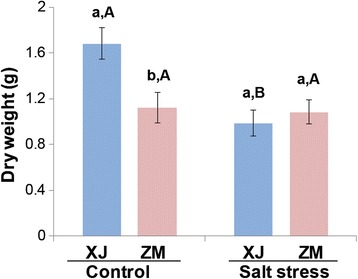
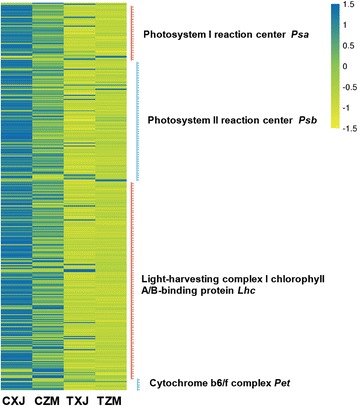
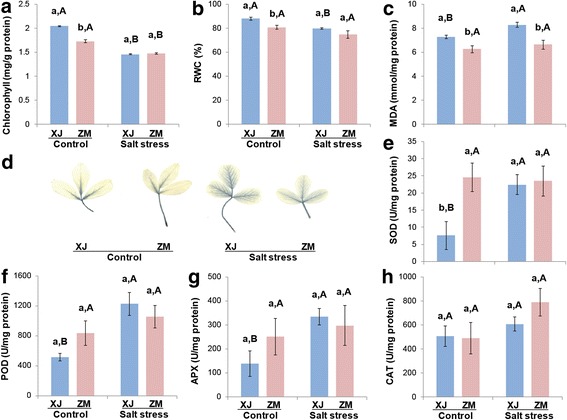
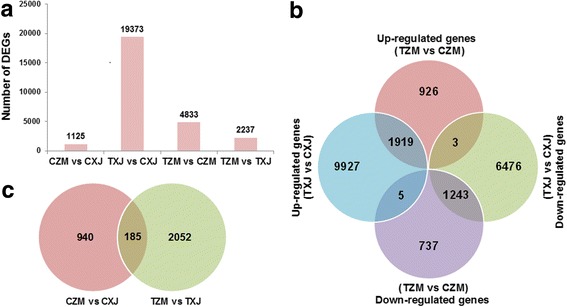
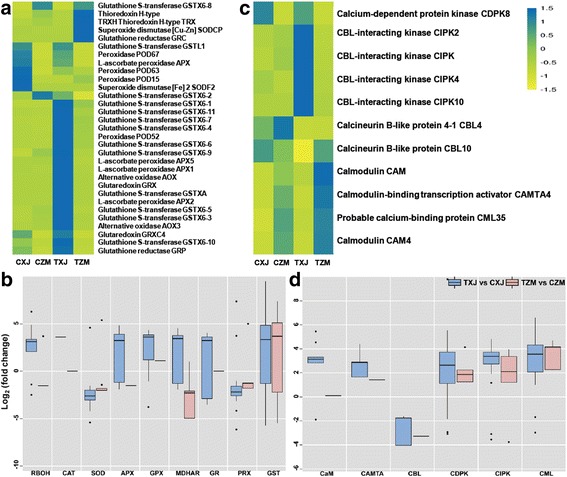
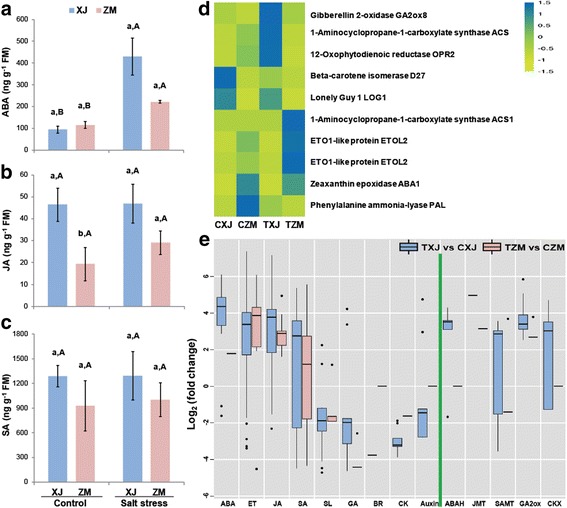
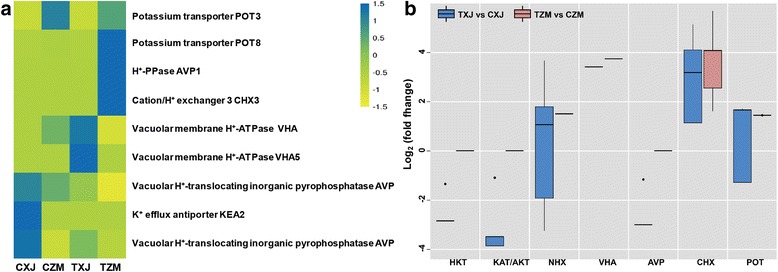
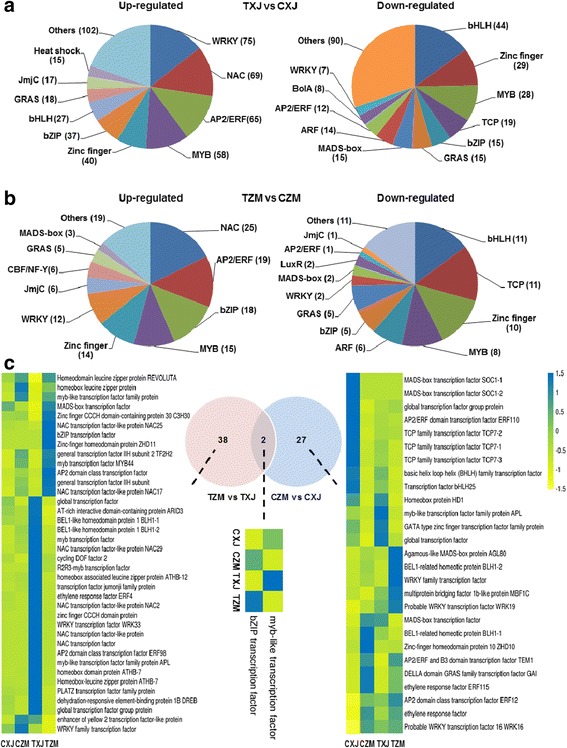
Among seven alfalfa cultivars, we found that Zhongmu-1 (ZM) is relatively salt-tolerant and Xingjiang Daye (XJ) is salt-sensitive. Compared to XJ, ZM showed slower growth under low-salt conditions, but exhibited stronger tolerance to salt stress. RNA-seq analysis revealed 2237 and 1125 differentially expressed genes (DEGs) between ZM and XJ in the presence and absence of salt stress, among which many genes are involved in stress-related pathways. After salt treatment, compared with the controls, the number of DEGs in XJ (19373) was about four times of that in ZM (4833). We also detected specific differential gene expression patterns: In response to salt stress, compared with XJ, ZM maintained relatively more stable expression levels of genes related to the ROS and Ca pathways, phytohormone biosynthesis, and Na/K transport. Notably, several salt resistance-associated genes always showed greater levels of expression in ZM than in XJ, including a transcription factor. Consistent with the suppression of plant growth resulting from salt stress, the expression of numerous photosynthesis- and growth hormone-related genes decreased more dramatically in XJ than in ZM. By contrast, the expression levels of photosynthetic genes were lower in ZM under low-salt conditions.
Compared with XJ, ZM is a salt-tolerant alfalfa cultivar possessing specific regulatory mechanisms conferring exceptional salt tolerance, likely by maintaining high transcript levels of abiotic and biotic stress resistance-related genes. Our results suggest that maintaining this specific physiological status and/or plant adaptation to salt stress most likely arises by inhibition of plant growth in ZM through plant hormone interactions. This study identifies new candidate genes that may regulate alfalfa tolerance to salt stress and increases the understanding of the genetic basis for salt tolerance.
土壤盐度是影响几乎所有陆生植物(包括饲料作物紫花苜蓿(Medicago sativa))生长、发育和生产力的重要因素。然而,对于紫花苜蓿如何应对和适应盐胁迫,特别是在不同耐盐品种之间,人们知之甚少。
在七个紫花苜蓿品种中,我们发现中苜 1 号(ZM)相对耐盐,而新疆大叶(XJ)则对盐敏感。与 XJ 相比,ZM 在低盐条件下生长缓慢,但对盐胁迫表现出更强的耐受性。RNA-seq 分析显示,ZM 和 XJ 在有盐和无盐胁迫下的差异表达基因(DEGs)分别有 2237 和 1125 个,其中许多基因参与了胁迫相关途径。盐处理后,与对照相比,XJ 的 DEGs 数量(19373)约为 ZM 的四倍(4833)。我们还检测到特定的差异基因表达模式:与 XJ 相比,ZM 在盐胁迫下,与 ROS 和 Ca 途径、植物激素生物合成和 Na/K 转运相关的基因保持相对更稳定的表达水平。值得注意的是,与 XJ 相比,ZM 中一些与盐胁迫相关的基因总是表现出更高的表达水平,包括一个转录因子。与盐胁迫导致植物生长受抑制一致,XJ 中许多与光合作用和生长激素相关的基因的表达下降幅度明显大于 ZM。相比之下,ZM 在低盐条件下的光合作用相关基因表达水平较低。
与 XJ 相比,ZM 是一种耐盐紫花苜蓿品种,具有特定的调节机制,赋予其卓越的耐盐性,可能是通过维持非生物和生物胁迫抗性相关基因的高转录水平。我们的研究结果表明,通过植物激素相互作用抑制 ZM 的植物生长,很可能维持了这种特定的生理状态和/或植物对盐胁迫的适应。本研究鉴定了可能调节紫花苜蓿耐盐性的新候选基因,并增加了对盐胁迫耐盐性遗传基础的理解。