Musculoskeletal Diseases Area, Novartis Institutes for BioMedical Research, 4002, Basel, Switzerland.
Neuroscience, Novartis Institutes for BioMedical Research, 4002, Basel, Switzerland.
Acta Neuropathol Commun. 2018 Feb 15;6(1):9. doi: 10.1186/s40478-018-0510-8.
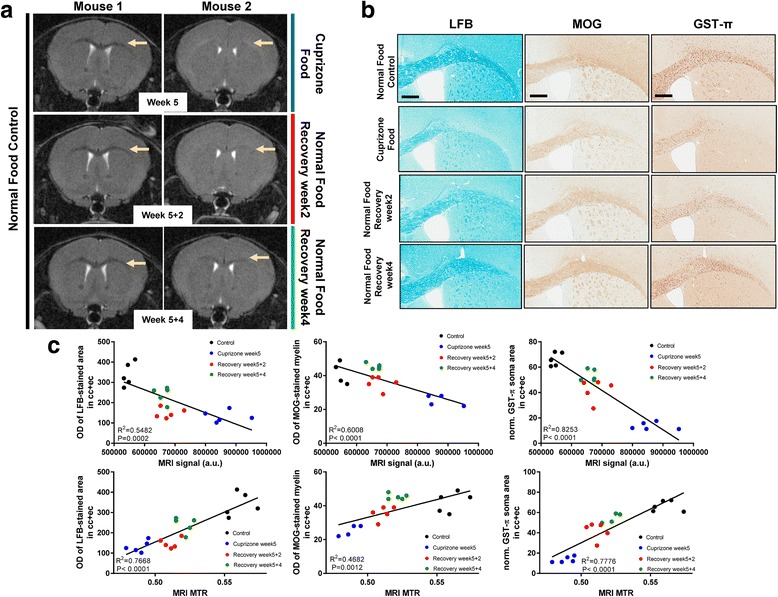
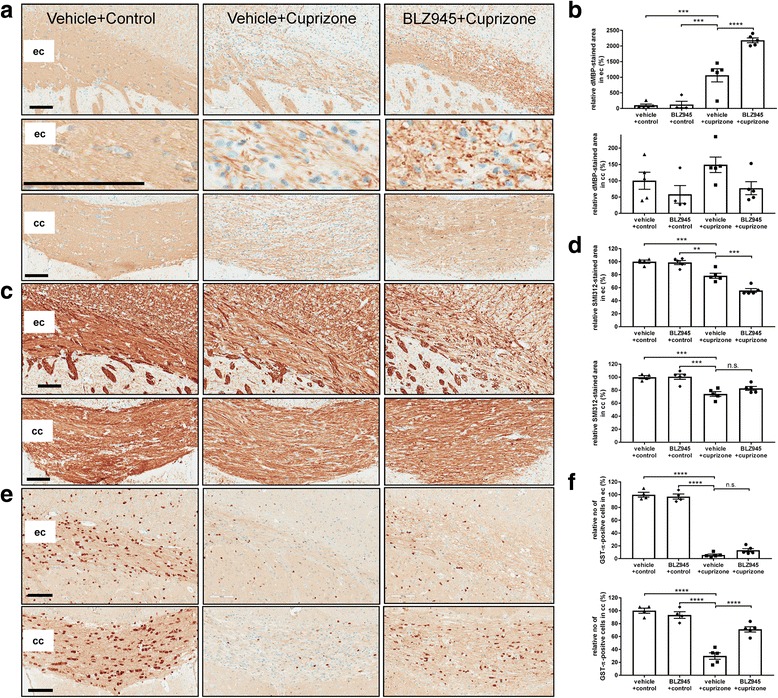
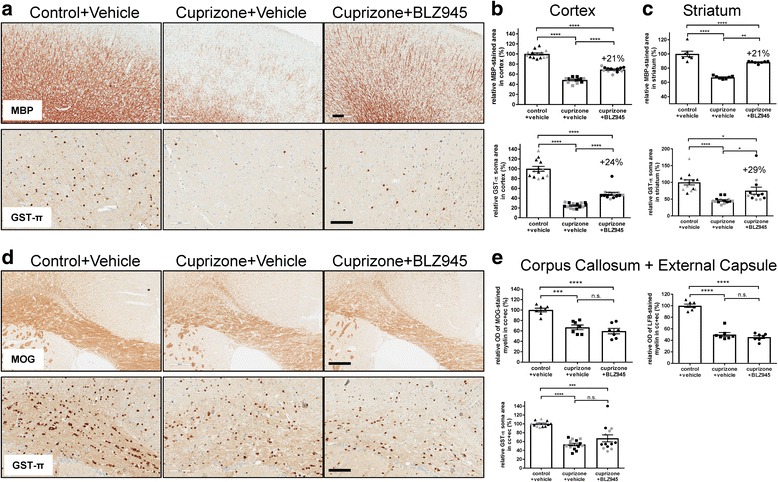
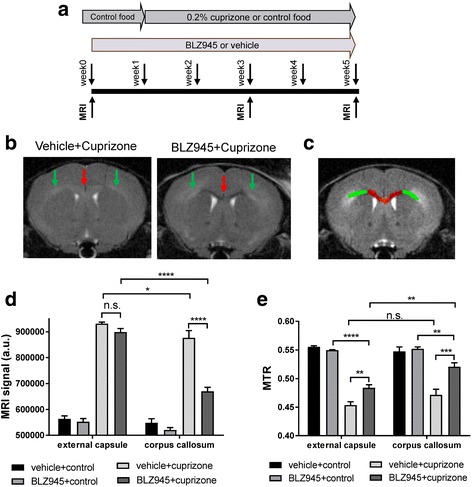
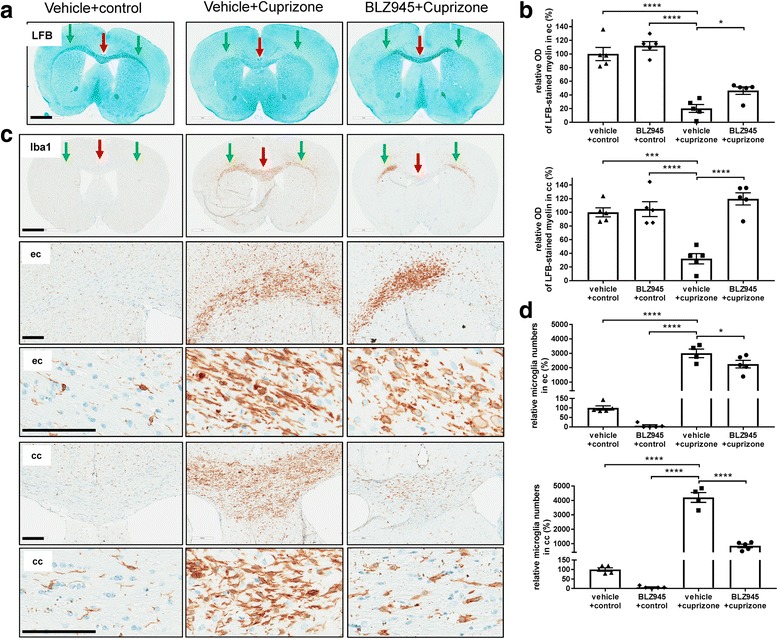
Multiple sclerosis (MS) is a chronic inflammatory disease affecting the central nervous system (CNS). While multiple effective immunomodulatory therapies for MS exist today, they lack the scope of promoting CNS repair, in particular remyelination. Microglia play a pivotal role in regulating myelination processes, and the colony-stimulating factor 1 (CSF-1) pathway is a key regulator for microglia differentiation and survival. Here, we investigated the effects of the CSF-1 receptor kinase inhibitor, BLZ945, on central myelination processes in the 5-week murine cuprizone model by non-invasive and longitudinal magnetic resonance imaging (MRI) and histology. Therapeutic 2-week BLZ945 treatment caused a brain region-specific enhancement of remyelination in the striatum/cortex, which was absent in the corpus callosum/external capsule. This beneficial effect correlated positively with microglia reduction, increased oligodendrocytes and astrogliosis. Prophylactic BLZ945 treatment prevented excessive demyelination in the corpus callosum by reducing microglia and increasing oligondendrocytes. In the external capsule oligodendrocytes were depleted but not microglia and a buildup of myelin debris and axonal damage was observed. A similar microglial dysfunction in the external capsule with an increase of myelin debris was obvious in triggering receptor expressed on myeloid cells 2 (TREM2) knock-out mice treated with cuprizone. Finally, therapeutic BLZ945 treatment did not change the disease course in experimental autoimmune encephalomyelitis mice, a peripherally driven neuroinflammation model. Taken together, our data suggest that a short-term therapeutic inhibition of the CSF-1 receptor pathway by BLZ945 in the murine cuprizone model enhances central remyelination by modulating neuroinflammation. Thus, microglia-modulating therapies could be considered clinically for promoting myelination in combination with standard-of-care treatments in MS patients.
多发性硬化症 (MS) 是一种影响中枢神经系统 (CNS) 的慢性炎症性疾病。尽管目前有多种有效的免疫调节疗法可用于治疗 MS,但这些疗法缺乏促进 CNS 修复的能力,特别是髓鞘再生。小胶质细胞在调节髓鞘形成过程中起着关键作用,集落刺激因子 1 (CSF-1) 途径是小胶质细胞分化和存活的关键调节剂。在这里,我们通过非侵入性和纵向磁共振成像 (MRI) 和组织学研究了 CSF-1 受体激酶抑制剂 BLZ945 对 5 周龄杯状铜诱导的小鼠模型中心髓鞘形成过程的影响。治疗性的 2 周 BLZ945 治疗导致纹状体/皮层的髓鞘再生增强,而胼胝体/外囊则没有。这种有益的效果与小胶质细胞减少、少突胶质细胞增加和星形胶质细胞增生呈正相关。预防性 BLZ945 治疗通过减少小胶质细胞和增加少突胶质细胞来预防胼胝体的过度脱髓鞘。在外囊中,少突胶质细胞耗尽,但小胶质细胞和髓鞘碎片的堆积以及轴突损伤增加。在外囊中观察到类似的小胶质细胞功能障碍,髓鞘碎片增加,触发表达在髓样细胞上的 2 型受体 (TREM2) 敲除小鼠用杯状铜处理后也很明显。最后,治疗性 BLZ945 治疗并没有改变实验性自身免疫性脑脊髓炎 (EAE) 小鼠的疾病进程,EAE 是一种外周驱动的神经炎症模型。总之,我们的数据表明,在杯状铜诱导的小鼠模型中,通过 BLZ945 短期治疗性抑制 CSF-1 受体途径可通过调节神经炎症来增强中枢髓鞘再生。因此,小胶质细胞调节疗法可以与 MS 患者的标准治疗相结合,在临床上考虑用于促进髓鞘形成。