Geological Museum, Korea Institute of Geoscience and Mineral Resources, Daejeon, 34123, South Korea.
School of Earth and Environmental Sciences, Seoul National University, Seoul, 08826, South Korea.
Sci Rep. 2018 Feb 15;8(1):2617. doi: 10.1038/s41598-018-20809-z.
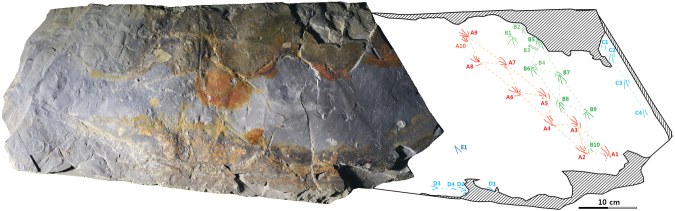
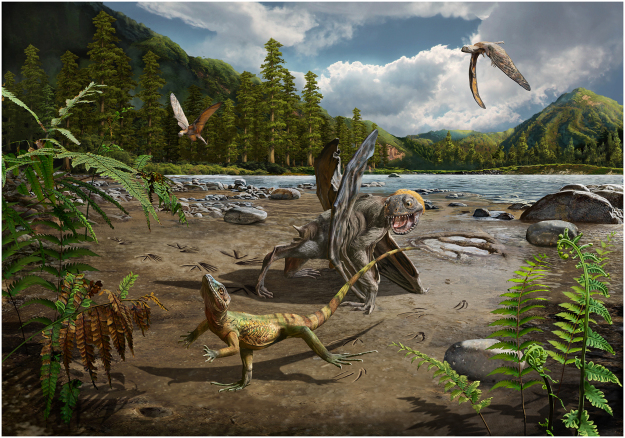
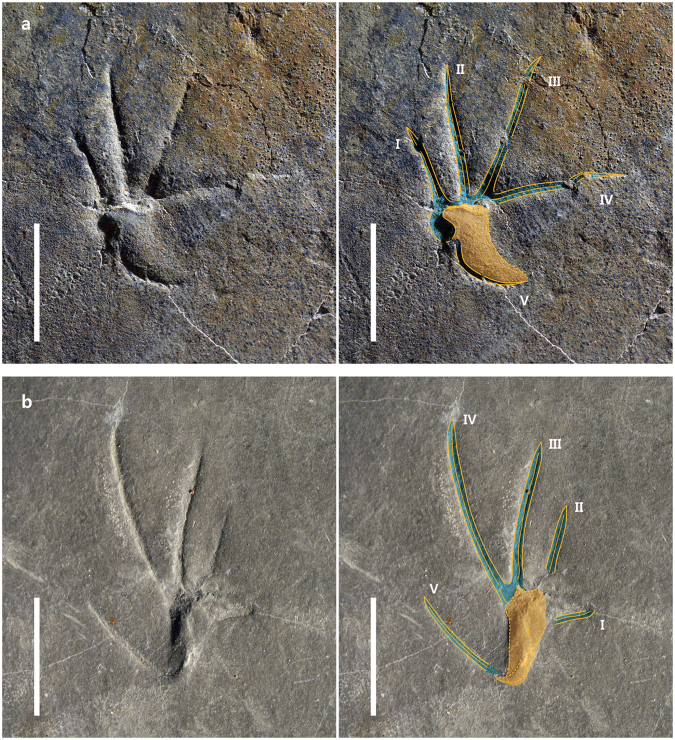
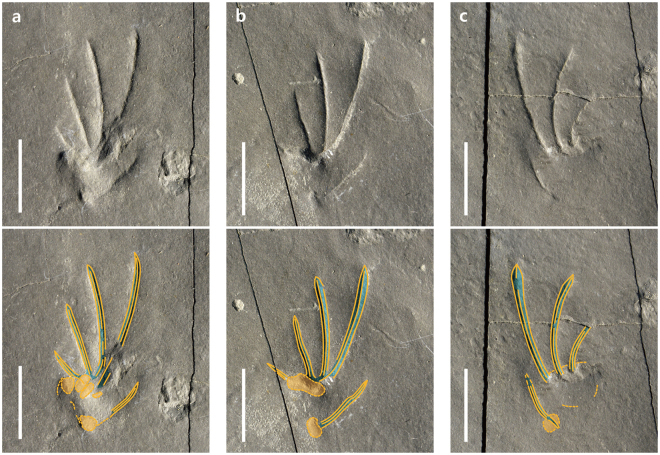
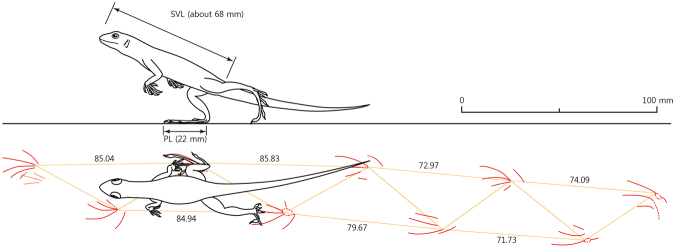
Four heteropod lizard trackways discovered in the Hasandong Formation (Aptian-early Albian), South Korea assigned to Sauripes hadongensis, n. ichnogen., n. ichnosp., which represents the oldest lizard tracks in the world. Most tracks are pes tracks (N = 25) that are very small, average 22.29 mm long and 12.46 mm wide. The pes tracks show "typical" lizard morphology as having curved digit imprints that progressively increase in length from digits I to IV, a smaller digit V that is separated from the other digits by a large interdigital angle. The manus track is 19.18 mm long and 19.23 mm wide, and shows a different morphology from the pes. The predominant pes tracks, the long stride length of pes, narrow trackway width, digitigrade manus and pes prints, and anteriorly oriented long axis of the fourth pedal digit indicate that these trackways were made by lizards running bipedally, suggesting that bipedality was possible early in lizard evolution.
在韩国的哈松东组(阿普第期-早阿尔比期)中发现了四条异足蜥蜴足迹,被归为哈松东萨氏足迹,这是世界上最古老的蜥蜴足迹。大多数足迹是跖行足迹(N=25),非常小,平均长 22.29 毫米,宽 12.46 毫米。跖行足迹具有“典型”的蜥蜴形态,具有从第一到第四趾逐渐变长的弯曲趾印,第五趾较小,与其他趾由较大的趾间角分开。手行足迹长 19.18 毫米,宽 19.23 毫米,与跖行足迹的形态不同。主要的跖行足迹、长的跖行步幅、狭窄的足迹宽度、趾行的手和跖行足迹以及第四趾的前向长轴表明,这些足迹是由两足奔跑的蜥蜴留下的,这表明两足行走在蜥蜴进化的早期是可能的。