
用药物干预修复源自 ASD 患者 iPSC 并带有 TSC2 突变的神经网络连接缺陷。
Pharmacological intervention to restore connectivity deficits of neuronal networks derived from ASD patient iPSC with a TSC2 mutation.
机构信息
Neuroscience and Mental Health Research Institute, Hadyn Ellis Building, Cathays, Cardiff, CF24 4HQ, UK.
Division of Psychological Medicine and Clinical Neurosciences (DPMCN), School of Medicine, Cardiff University, Cardiff, UK.
出版信息
Mol Autism. 2020 Oct 19;11(1):80. doi: 10.1186/s13229-020-00391-w.
BACKGROUND
Tuberous sclerosis complex (TSC) is a rare genetic multisystemic disorder resulting from autosomal dominant mutations in the TSC1 or TSC2 genes. It is characterised by hyperactivation of the mechanistic target of rapamycin complex 1 (mTORC1) pathway and has severe neurodevelopmental and neurological components including autism, intellectual disability and epilepsy. In human and rodent models, loss of the TSC proteins causes neuronal hyperexcitability and synaptic dysfunction, although the consequences of these changes for the developing central nervous system are currently unclear.
METHODS
Here we apply multi-electrode array-based assays to study the effects of TSC2 loss on neuronal network activity using autism spectrum disorder (ASD) patient-derived iPSCs. We examine both temporal synchronisation of neuronal bursting and spatial connectivity between electrodes across the network.
RESULTS
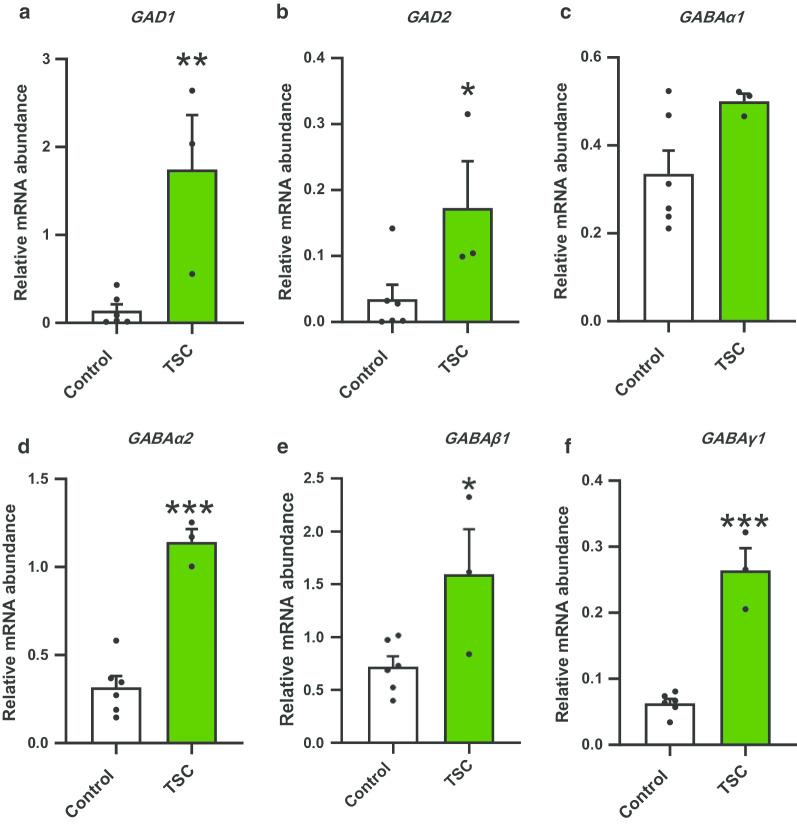
We find that ASD patient-derived neurons with a functional loss of TSC2, in addition to possessing neuronal hyperactivity, develop a dysfunctional neuronal network with reduced synchronisation of neuronal bursting and lower spatial connectivity. These deficits of network function are associated with elevated expression of genes for inhibitory GABA signalling and glutamate signalling, indicating a potential abnormality of synaptic inhibitory-excitatory signalling. mTORC1 activity functions within a homeostatic triad of protein kinases, mTOR, AMP-dependent protein Kinase 1 (AMPK) and Unc-51 like Autophagy Activating Kinase 1 (ULK1) that orchestrate the interplay of anabolic cell growth and catabolic autophagy while balancing energy and nutrient homeostasis. The mTOR inhibitor rapamycin suppresses neuronal hyperactivity, but does not increase synchronised network activity, whereas activation of AMPK restores some aspects of network activity. In contrast, the ULK1 activator, LYN-1604, increases the network behaviour, shortens the network burst lengths and reduces the number of uncorrelated spikes.
LIMITATIONS
Although a robust and consistent phenotype is observed across multiple independent iPSC cultures, the results are based on one patient. There may be more subtle differences between patients with different TSC2 mutations or differences of polygenic background within their genomes. This may affect the severity of the network deficit or the pharmacological response between TSC2 patients.
CONCLUSIONS
Our observations suggest that there is a reduction in the network connectivity of the in vitro neuronal network associated with ASD patients with TSC2 mutation, which may arise via an excitatory/inhibitory imbalance due to increased GABA-signalling at inhibitory synapses. This abnormality can be effectively suppressed via activation of ULK1.
背景
结节性硬化症(TSC)是一种罕见的遗传性多系统疾病,由 TSC1 或 TSC2 基因突变引起常染色体显性遗传。它的特点是雷帕霉素靶蛋白复合物 1(mTORC1)通路的过度激活,并且具有严重的神经发育和神经成分,包括自闭症、智力残疾和癫痫。在人类和啮齿动物模型中,TSC 蛋白的缺失会导致神经元过度兴奋和突触功能障碍,尽管目前尚不清楚这些变化对发育中的中枢神经系统的影响。
方法
我们应用基于多电极阵列的测定方法,使用自闭症谱系障碍(ASD)患者来源的 iPSC 研究 TSC2 缺失对神经元网络活动的影响。我们同时检查了神经元爆发的时间同步性和网络中电极之间的空间连接。
结果
我们发现,除了神经元过度兴奋外,具有功能性 TSC2 缺失的 ASD 患者来源神经元会形成功能失调的神经元网络,神经元爆发的同步性降低,空间连接性降低。这些网络功能缺陷与抑制性 GABA 信号和谷氨酸信号的基因表达升高有关,表明突触抑制-兴奋信号传递可能存在异常。mTORC1 活性在蛋白激酶、mTOR、AMP 依赖性蛋白激酶 1(AMPK)和非典型卷曲相关激酶 1(ULK1)的稳态三联体中发挥作用,协调合成代谢细胞生长和分解代谢自噬之间的相互作用,同时平衡能量和营养稳态。mTOR 抑制剂雷帕霉素抑制神经元过度兴奋,但不能增加同步网络活动,而 AMPK 的激活则恢复了网络活动的某些方面。相比之下,ULK1 激活剂 LYN-1604 增加了网络行为,缩短了网络爆发长度,并减少了不相关的尖峰数量。
局限性
尽管在多个独立的 iPSC 培养物中观察到了一致且稳健的表型,但结果仅基于一位患者。具有不同 TSC2 突变的患者之间可能存在更细微的差异,或者他们基因组中的多基因背景存在差异。这可能会影响网络缺陷的严重程度或 TSC2 患者的药物反应。
结论
我们的观察结果表明,与 TSC2 突变的 ASD 患者相关的体外神经元网络的连接性降低,这可能是由于抑制性突触 GABA 信号增加导致兴奋/抑制失衡所致。这种异常可以通过激活 ULK1 有效抑制。



 Zotero 插件