Mehta Sameer, Granger Christopher, Grines Cindy Lee, Jacobs Alice, Henry Timothy D, Rokos Ivan, Lansky Alexandra, Baumbach Andreas, Botelho Roberto, Ferre Alexandra, Yepes Isaac, Salwan Roopa, Dalal Jamshed, Makkar Jitendra, Bhalla Neeraj, Mishra Sundeep, Vijan Vinod, Hiremath Shirish
Lumen Foundation, Miami, FL, USA.
Duke University Medical Center, Durham, NC, USA.
Indian Heart J. 2018 Jan-Feb;70(1):185-190. doi: 10.1016/j.ihj.2017.06.020. Epub 2017 Jul 6.
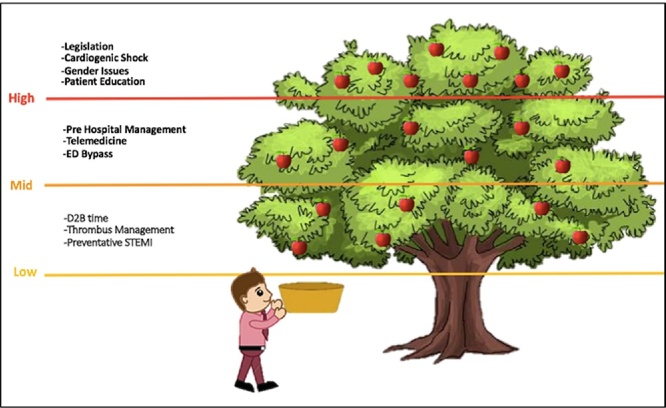
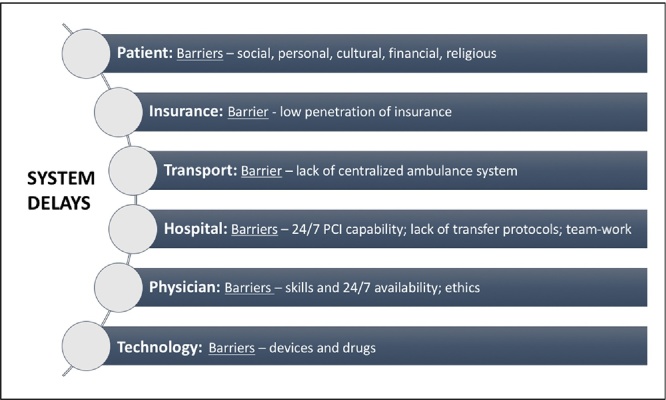
Our previous research found seven specific factors that cause system delays in ST-elevation Myocardial infarction management in developing countries. These delays, in conjunction with a lack of organized STEMI systems of care, result in inefficient processes to treat AMI in developing countries. In our present opinion paper, we have specifically explored the three most pertinent causes that afflict the seven specific factors responsible for system delays. In doing so, we incorporated a unique strategy of global STEMI expertise. With this methodology, the recommendations were provided by expert Indian cardiologist and final guidelines were drafted after comprehensive discussions by the entire group of submitting authors. We expect these recommendations to be utilitarian in improving STEMI care in developing countries.
我们之前的研究发现了七个导致发展中国家ST段抬高型心肌梗死管理出现系统延误的特定因素。这些延误,再加上缺乏有组织的ST段抬高型心肌梗死护理系统,导致发展中国家治疗急性心肌梗死的流程效率低下。在我们目前的观点论文中,我们专门探讨了困扰导致系统延误的七个特定因素的三个最相关原因。在此过程中,我们采用了一种独特的全球ST段抬高型心肌梗死专业知识策略。通过这种方法,由印度心脏病专家提供建议,并在提交作者全体进行全面讨论后起草最终指南。我们期望这些建议在改善发展中国家的ST段抬高型心肌梗死护理方面具有实用性。