Shan Dan, Shang Yumin, Hu Tongxiu
Department of Gynaecology and Obstetrics, Tianjin Hospital, Tianjin 300211, P.R. China.
Oncol Lett. 2018 Mar;15(3):3490-3495. doi: 10.3892/ol.2018.7773. Epub 2018 Jan 11.
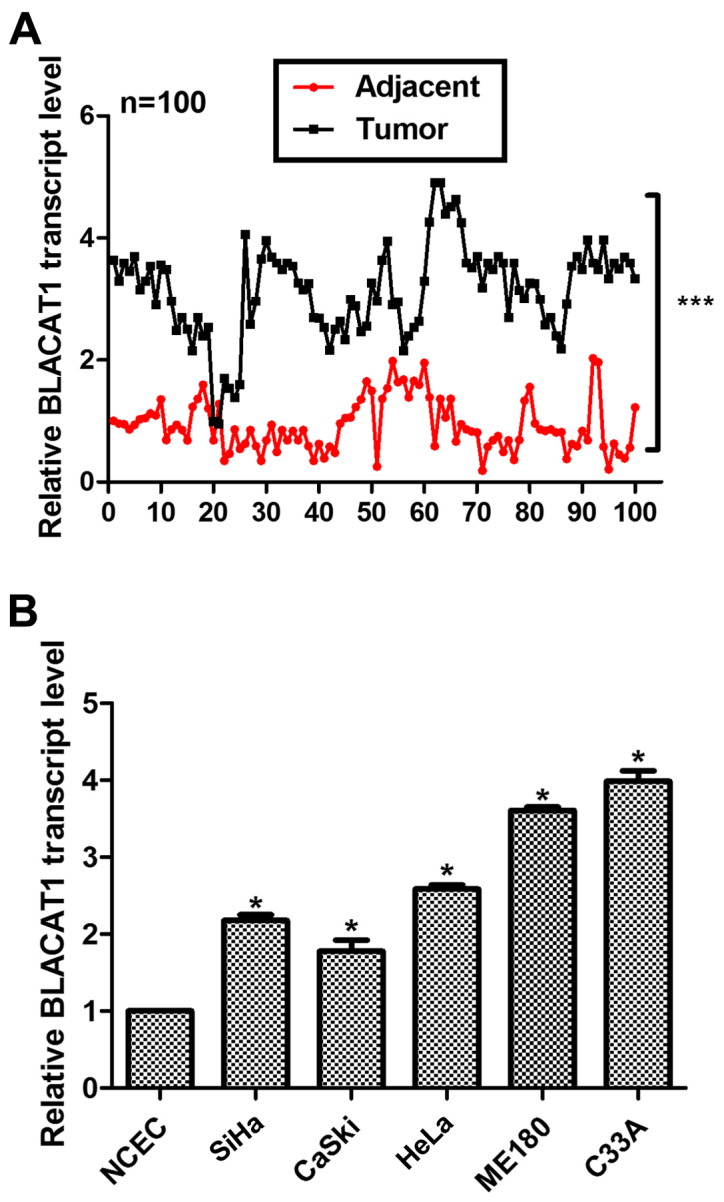
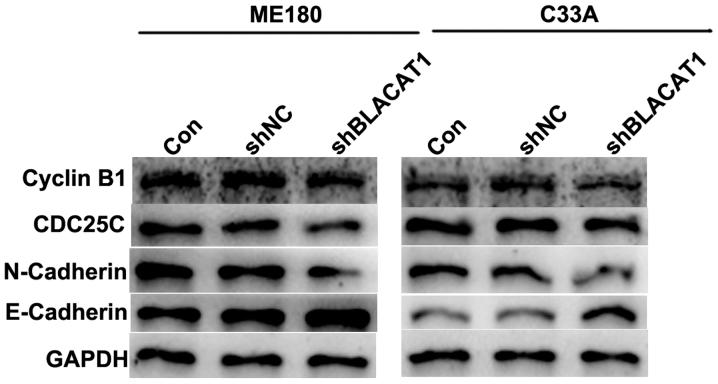
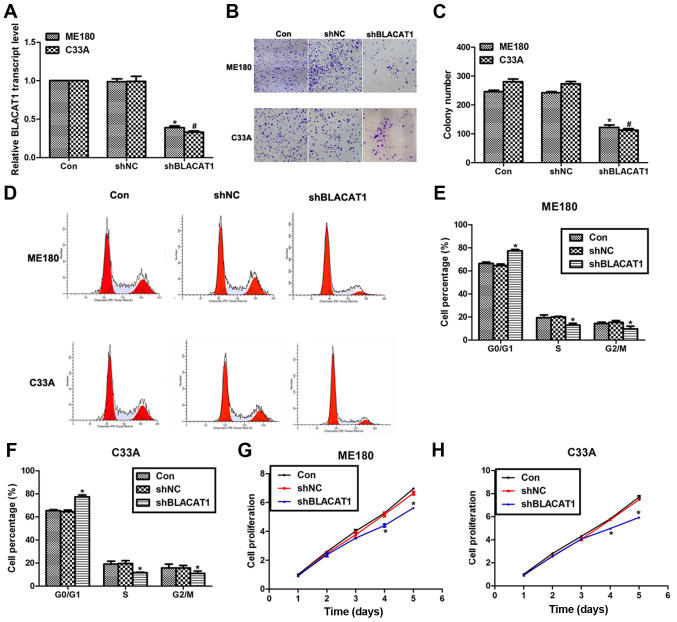
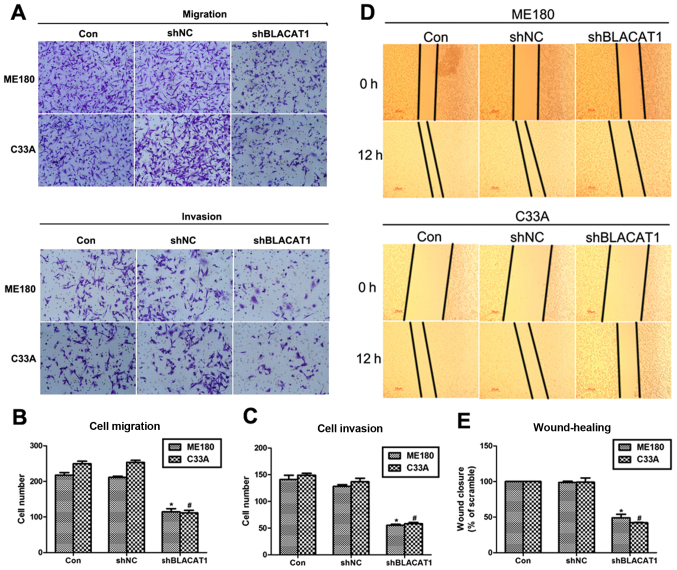
Cervical cancer is one of the leading causes of mortality in females worldwide. Predisposition to distant metastasis has reduced the prognosis of this malignancy, thus the identification of a novel agent for metastatic cervical cancer is required. Long noncoding RNAs (LncRNAs) have been reported to serve significant roles in human tumorigenesis. The present study aimed to investigate the effects of a newly discovered LncRNA bladder cancer associated transcript 1 (non-protein coding) (BLACAT1) on cell proliferation and metastasis in cervical cancer. A total of 100 patients with cervical cancer were included, and tumor tissues as well as the adjacent non-cancerous counterparts were collected for reverse transcription-quantitative polymerase chain reaction analysis. It was demonstrated that BLACAT1 was highly expressed in human cervical cancer tissues and cell lines. The knockdown of BLACAT1 with specific short hairpin RNA reduced colony formation rates in ME180 and C33A cells. Cell cycle and cell proliferation assays revealed that depletion of BLACAT1 in ME180, and C33A cells arrested the cell cycle at the G0/G1 phase and inhibited cell proliferation. Transwell assays demonstrated that the knockdown of BLACAT1 inhibited cell migration and invasion in ME180, and C33A cells. Moreover, wound-healing assays supported the aformentioned observations. Western blot analysis showed that the knockdown of BLACAT1 in ME180 and C33A cells decreased the protein levels of cyclin B1, cell division cycle 25C, and N-cadherin, while increasing the protein level of E-cadherin. These findings indicated the oncogenic potential of BLACAT1 in cervical cancer, which may provide novel insights for the clinical diagnosis and treatment of cervical cancer.
宫颈癌是全球女性死亡的主要原因之一。远处转移的易感性降低了这种恶性肿瘤的预后,因此需要鉴定一种用于转移性宫颈癌的新型药物。据报道,长链非编码RNA(lncRNAs)在人类肿瘤发生中发挥重要作用。本研究旨在探讨新发现的长链非编码RNA膀胱癌相关转录本1(非蛋白质编码)(BLACAT1)对宫颈癌细胞增殖和转移的影响。共纳入100例宫颈癌患者,收集肿瘤组织及其相邻的非癌组织进行逆转录-定量聚合酶链反应分析。结果表明,BLACAT1在人宫颈癌组织和细胞系中高表达。用特异性短发夹RNA敲低BLACAT1可降低ME180和C33A细胞的集落形成率。细胞周期和细胞增殖分析显示,ME180和C33A细胞中BLACAT1的缺失使细胞周期停滞在G0/G1期并抑制细胞增殖。Transwell分析表明,敲低BLACAT1可抑制ME180和C33A细胞的迁移和侵袭。此外,伤口愈合分析支持上述观察结果。蛋白质印迹分析表明,ME180和C33A细胞中BLACAT1的敲低降低了细胞周期蛋白B1、细胞分裂周期25C和N-钙黏蛋白的蛋白水平,同时增加了E-钙黏蛋白的蛋白水平。这些发现表明BLACAT1在宫颈癌中具有致癌潜力,这可能为宫颈癌的临床诊断和治疗提供新的见解。