Deary Vincent, McColl Elaine, Carding Paul, Miller Tracy, Wilson Janet
1Department of Psychology, Faculty of Health and Life Sciences, Northumbria University, Newcastle, NE1 8ST UK.
2Institute of Health and Society, Newcastle University, Richardson Road, Newcastle, NE2 4AX UK.
Pilot Feasibility Stud. 2018 Feb 8;4:46. doi: 10.1186/s40814-018-0240-5. eCollection 2018.
Medically unexplained loss or alteration of voice-functional dysphonia-is the commonest presentation to speech and language therapists (SLTs). Besides the impact on personal and work life, functional dysphonia is also associated with increased levels of anxiety and depression and poor general health. Voice therapy delivered by SLTs improves voice but not these associated symptoms. The aims of this research were the systematic development of a complex intervention to improve the treatment of functional dysphonia, and the trialling of this intervention for feasibility and acceptability to SLTs and patients in a randomised pilot study.
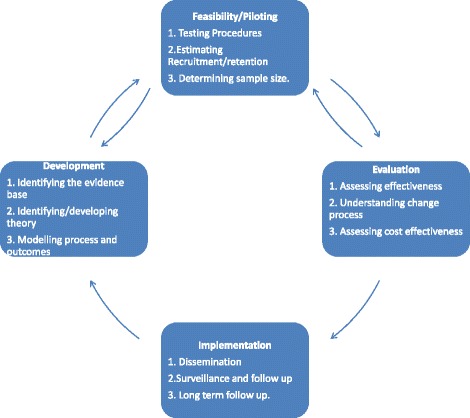
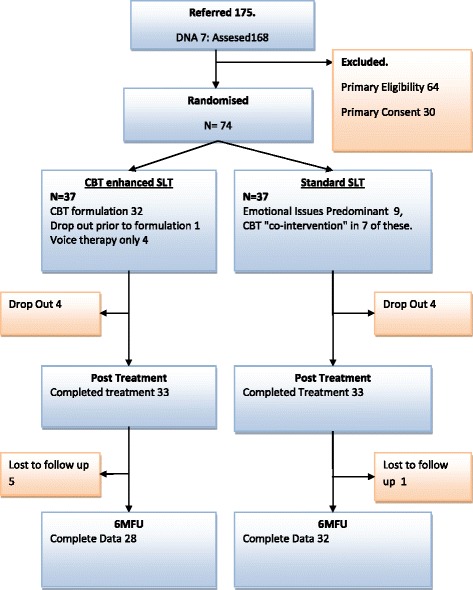
A theoretical model of medically unexplained symptoms (MUS) was elaborated through literature review and synthesis. This was initially applied as an assessment format in a series of patient interviews. Data from this stage and a small consecutive cohort study were used to design and refine a brief cognitive behavioural therapy (CBT) training intervention for a SLT. This was then implemented in an external pilot patient randomised trial where one SLT delivered standard voice therapy or voice therapy plus CBT to 74 patients. The primary outcomes were of the acceptability of the intervention to patients and the SLT, and the feasibility of changing the SLT's clinical practice through a brief training. This was measured through monitoring treatment flow and through structured analysis of the content of intervention for treatment fidelity and inter-treatment contamination.
As measured by treatment flow, the intervention was as acceptable as standard voice therapy to patients. Analysis of treatment content showed that the SLT was able to conduct a complex CBT formulation and deliver novel treatment strategies for fatigue, sleep, anxiety and depression in the majority of patients. On pre-post measures of voice and quality of life, patients in both treatment arms improved.
These interventions were acceptable to patients. Emotional and psychosocial issues presented routinely in the study patient group and CBT techniques were used, deliberately and inadvertently, in both treatment arms. This CBT "contamination" of the voice therapy only arm reflects the chief limitation of the study: one therapist delivered both treatments.
Registered with the ISRCTN under the title: .Trial Identifier: ISRCTN20582523 Registered 19/05/2010; retrospectively registered. http://www.isrctn.com/ISRCTN20582523.
医学上无法解释的声音丧失或改变——功能性发声障碍——是言语和语言治疗师(SLT)最常见的诊治病例。除了对个人和工作生活产生影响外,功能性发声障碍还与焦虑和抑郁水平升高以及总体健康状况不佳有关。SLT提供的嗓音治疗虽能改善嗓音,但无法缓解这些相关症状。本研究的目的是系统开发一种复杂干预措施,以改善功能性发声障碍的治疗,并在一项随机试点研究中对该干预措施在SLT和患者中的可行性及可接受性进行试验。
通过文献综述和综合阐述了医学上无法解释的症状(MUS)的理论模型。该模型最初作为一种评估形式应用于一系列患者访谈中。此阶段的数据以及一项小型连续队列研究的数据被用于设计和完善针对SLT的简短认知行为疗法(CBT)培训干预措施。随后,该干预措施在一项外部试点患者随机试验中实施,一名SLT为74名患者提供标准嗓音治疗或嗓音治疗加CBT。主要结局指标为患者和SLT对干预措施的可接受性,以及通过简短培训改变SLT临床实践的可行性。这通过监测治疗流程以及对干预内容进行结构化分析以确保治疗保真度和治疗间无交叉污染来衡量。
根据治疗流程衡量,该干预措施对患者而言与标准嗓音治疗一样可接受。对治疗内容的分析表明,SLT能够为大多数患者进行复杂的CBT制定,并提供针对疲劳、睡眠、焦虑和抑郁的新颖治疗策略。在嗓音和生活质量的前后测量中,两个治疗组的患者均有改善。
这些干预措施为患者所接受。研究患者群体中经常出现情绪和心理社会问题,且在两个治疗组中均有意或无意地使用了CBT技术。嗓音治疗单一组的这种CBT“交叉污染”反映了该研究的主要局限性:由一名治疗师提供两种治疗。
在ISRCTN注册,标题为:.试验标识符:ISRCTN20582523,于2010年5月19日注册;追溯注册。http://www.isrctn.com/ISRCTN20582523 。