Instituto de Investigaciones en Microbiología y Parasitología Médica, University of Buenos Aires - CONICET, Buenos Aires, Argentina.
Department of Microbiology and Immunology, University of Mississippi Medical Center, Jackson, MS, United States.
Front Cell Infect Microbiol. 2018 Feb 2;8:18. doi: 10.3389/fcimb.2018.00018. eCollection 2018.
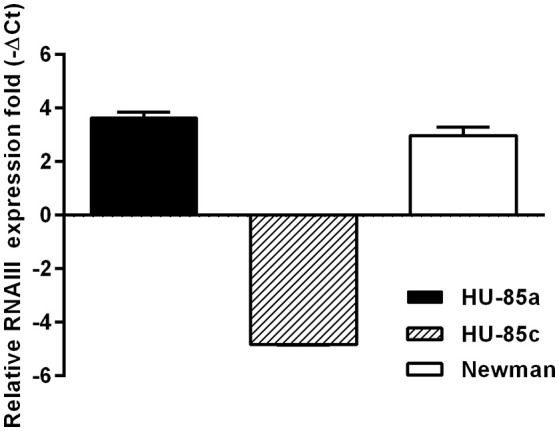
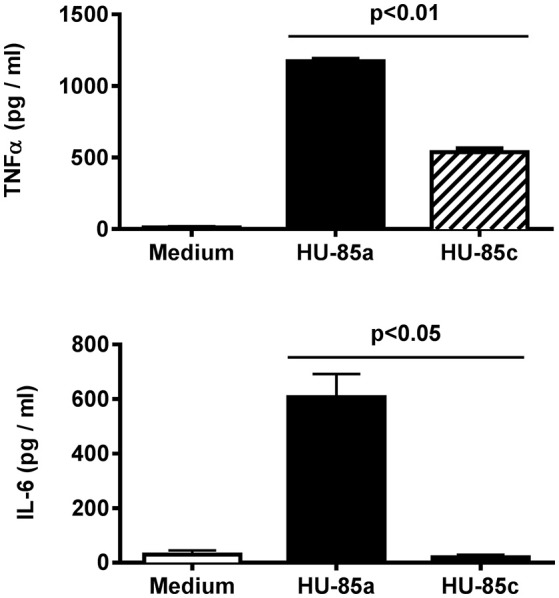
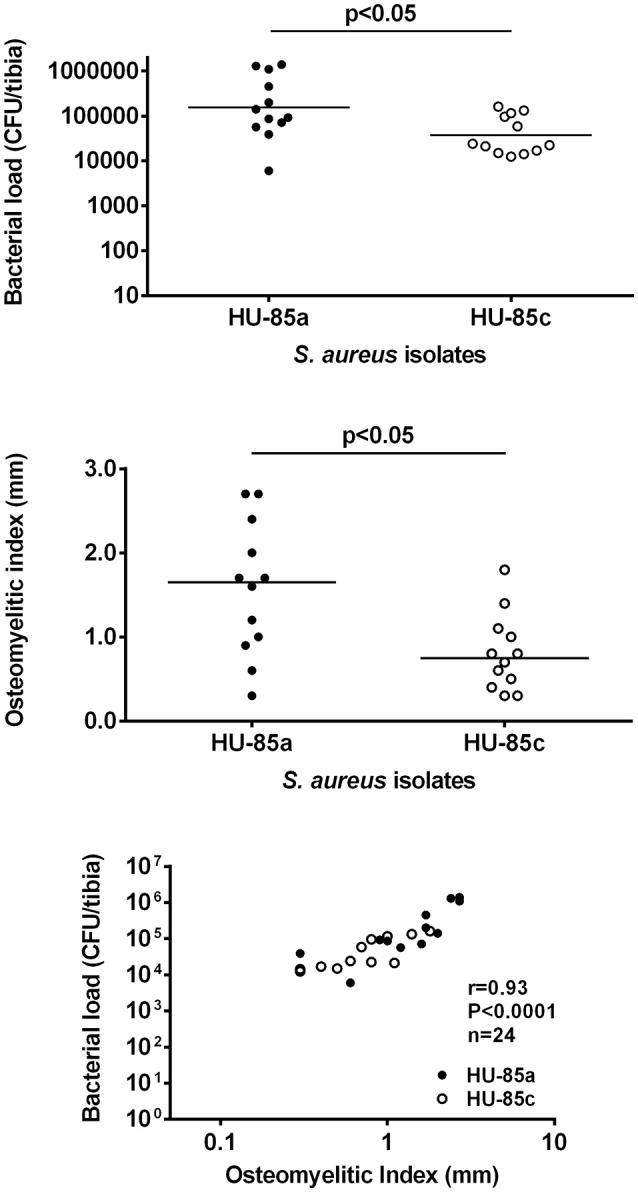
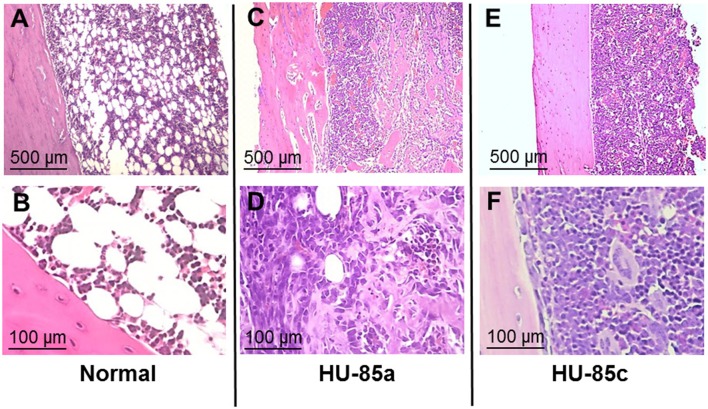
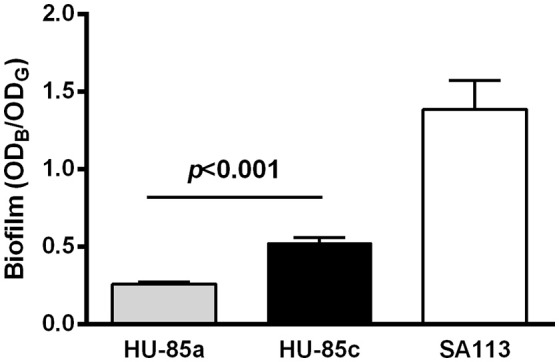
Selection pressures exerted on by host factors may lead to the emergence of mutants better adapted to the evolving conditions at the infection site. This study was aimed at identifying the changes that occur in exposed to the host defense mechanisms during chronic osteomyelitis and evaluating whether these changes affect the virulence of the organism. Genome assessment of two isolates collected 13 months apart (HU-85a and HU-85c) from a host with chronic osteomyelitis was made by whole genome sequencing. Agr functionality was assessed by qRT-PCR. Isolates were tested in a rat model of osteomyelitis and the bacterial load (CFU/tibia) and the morphometric osteomyelitic index (OI) were determined. The ability of the isolates to trigger the release of proinflammatory cytokines was determined on macrophages in culture. Persistence of within the host resulted in an frameshift mutation that likely led to the observed phenotype. The capacity to cause bone tissue damage and trigger proinflammatory cytokines by macrophages of the deficient, unencapsulated derivative (HU-85c) was decreased when compared with those of the isogenic CP8-capsulated parental strain (HU-85a). By comparison, no significant differences were found in the bacterial load or the OI from rats challenged with isogenic Reynolds strains [CP5, CP8, and non-typeable (NT)], indicating that lack of CP expression alone was not likely responsible for the reduced capacity to cause tissue damage in HU-85c compared with HU-85a. The production of biofilm was significantly increased in the isogenic derivative HU-85c. Lack of -dependent factors makes less virulent during chronic osteomyelitis and alteration of the functionality seems to permit better adaptation of to the chronically infected host.
宿主因素对 施加的选择压力可能导致突变体的出现,这些突变体更适应感染部位不断变化的条件。本研究旨在确定在慢性骨髓炎中暴露于宿主防御机制的 发生的变化,并评估这些变化是否影响生物体的毒力。通过全基因组测序对从慢性骨髓炎宿主中相隔 13 个月采集的两株 (HU-85a 和 HU-85c) 分离株进行基因组评估。通过 qRT-PCR 评估 Agr 功能。在骨髓炎大鼠模型中测试分离株,并确定细菌负荷(CFU/胫骨)和形态计量学骨髓炎指数(OI)。在培养的巨噬细胞上测定分离株引发促炎细胞因子释放的能力。 在宿主内的持续存在导致观察到的表型的 框移突变。与同基因 CP8 包裹亲本菌株(HU-85a)相比,缺乏功能、无包膜衍生物(HU-85c)引起骨组织损伤和触发巨噬细胞中促炎细胞因子的能力降低。相比之下,用同基因 Reynolds 菌株 [CP5、CP8 和非分型(NT)] 攻毒的大鼠的细菌负荷或 OI 没有发现显著差异,表明缺乏 CP 表达本身不太可能导致与 HU-85a 相比,HU-85c 引起组织损伤的能力降低。同源衍生菌株 HU-85c 的生物膜产生显著增加。-依赖性因子的缺乏使 在慢性骨髓炎期间毒力降低,并且 功能的改变似乎允许 更好地适应慢性感染宿主。