Liu Dezhao, Li Jiawei, Li Changwei, Deng Yale, Zhang Zeqing, Ye Zhangying, Zhu Songming
Institute of Agricultural Bio-Environmental Engineering, College of Biosystems Engineering and Food Science, Zhejiang University, Hangzhou, 310058, China.
Aquaculture and Fisheries Group, Department of Animal Sciences, Wageningen University, 6708 WD, Wageningen, The Netherlands.
Sci Rep. 2018 Feb 19;8(1):3289. doi: 10.1038/s41598-018-21702-5.
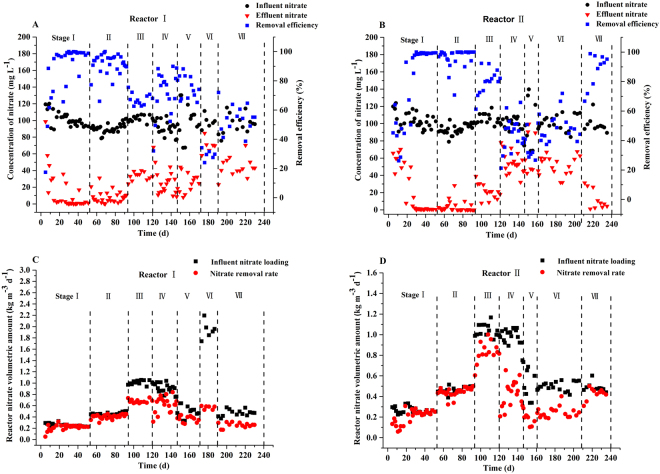
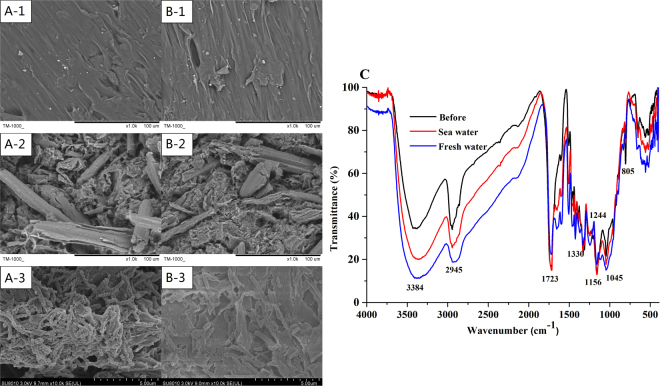
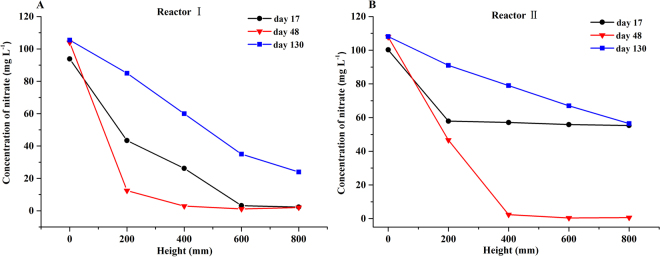
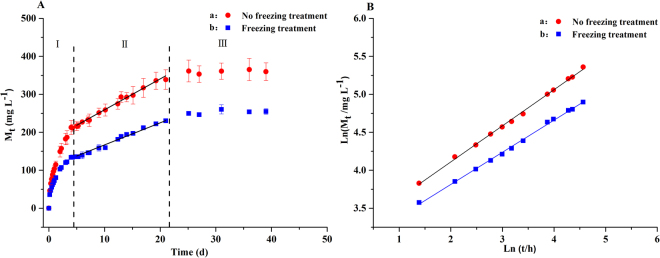
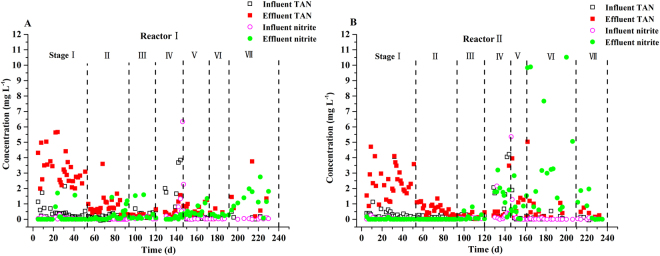
In this study, Poly(butylene succinate)/bamboo powder (PBS/BP) was newly applied and tested for 8 months as the carbon source in two moving bed reactors for nitrate removal in real RAS wastewater (fresh/sea water), with the purposes of simultaneous reducing the cost of PBS packing and effluent DOC. Fast start-ups were obtained in both reactors, in which high denitrification rates were observed (0.68 ± 0.03 and 0.83 ± 0.11 kg [Formula: see text]-N m d for fresh and sea water, respectively) with no nitrite and low ammonia accumulation. Reduced DOC concentrations in the effluents were also observed compared to pure PBS. The freezing of PBS/BP showed a further slower release of DOC, which might be beneficial to the life of the PBS/BP for the denitrification process, however, microbial activity, especially in high salinity wastewater, was observed to have declined. Illumina sequencing revealed that the autotrophic genus arcobacter was discovered first time in solid-phase denitrification system with salinity. Redundancy analysis (RDA) was used to reveal the relationships between environmental factors and the microbial community. In overall, PBS/BP blends were proven to be an economically attractive carbon source for nitrate removal in RAS.
在本研究中,聚丁二酸丁二醇酯/竹粉(PBS/BP)首次被应用于两个移动床反应器中,作为实际循环水养殖系统(RAS)废水(淡水/海水)脱氮的碳源进行了8个月的测试,目的是同时降低PBS填料成本和出水溶解性有机碳(DOC)。两个反应器均实现了快速启动,观察到较高的反硝化速率(淡水和海水的反硝化速率分别为0.68±0.03和0.83±0.11 kg [公式:见原文]-N m⁻² d⁻¹),且无亚硝酸盐积累和低氨积累。与纯PBS相比,出水的DOC浓度也有所降低。PBS/BP的冻结显示DOC释放进一步减缓,这可能有利于PBS/BP在反硝化过程中的使用寿命,然而,观察到微生物活性有所下降,尤其是在高盐度废水中。Illumina测序显示,自养菌属弓形杆菌首次在含盐的固相反硝化系统中被发现。冗余分析(RDA)用于揭示环境因素与微生物群落之间的关系。总体而言,PBS/BP混合物被证明是RAS中用于脱氮的具有经济吸引力的碳源。