Mochane Mokgaotsa J, Magagula Sifiso I, Sefadi Jeremia S, Mokhena Teboho C
Department of Life Sciences, Central University of Technology, Private Bag X20539, Bloemfontein 9300, South Africa.
Department of Physical and Earth Sciences, Sol Plaatje University, Kimberley 8301, South Africa.
Polymers (Basel). 2021 Apr 8;13(8):1200. doi: 10.3390/polym13081200.
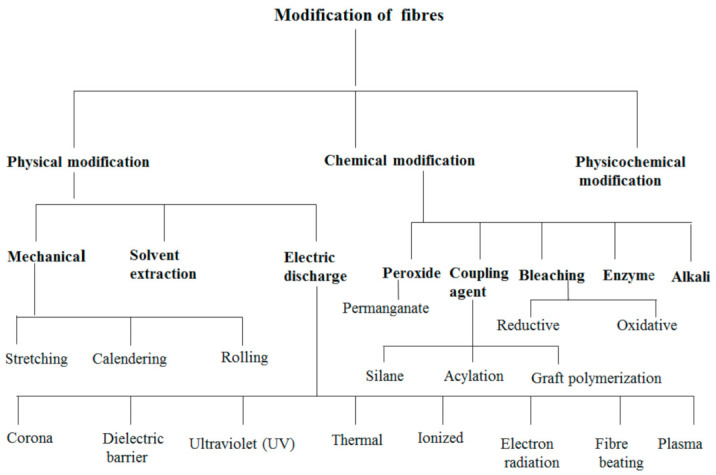
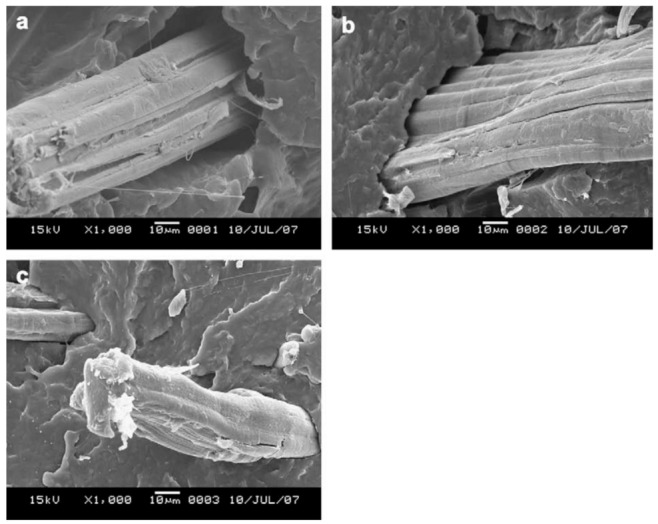
The need for utilization of environmentally friendly materials has emerged due to environmental pollution that is caused by non-biodegradable materials. The usage of non-biodegradable plastics has increased in the past decades in many industries, and, as a result, the generation of non-biodegradable plastic wastes has also increased. To solve the problem of non-biodegradable plastic wastes, there is need for fabrication of bio-based polymers to replace petroleum-based polymers and provide strategic plans to reduce the production cost of bioplastics. One of the emerging bioplastics in the market is poly (butylene succinate) (PBS) and it has been the biopolymer of choice due to its biodegradability and environmental friendliness. However, there are some disadvantages associated with PBS such as high cost, low gas barrier properties, and softness. To lower the cost of PBS and enhance its properties, natural lignocellulosic fibers are incorporated into the PBS matrix, to form environmentally friendly composites. Natural fiber-based biocomposites have emerged as materials of interest in important industries such as packaging, automobile, and construction. The bonding between the PBS and natural fibers is weak, which is a major problem for advanced applications of this system. As a result, this review paper discusses various methods that are employed for surface modification of the Fibers The paper provides an in-depth discussion on the preparation, modification, and morphology of the natural fiber-reinforced polybutylene succinate biocomposites. Furthermore, because the preparation as well as the modification of the fiber-reinforced biocomposites have an influence on the mechanical properties of the biocomposites, mechanical properties of the biocomposites are also discussed. The applications of the natural fiber/PBS biocomposites for different systems are also reported.
由于不可生物降解材料造成的环境污染,使用环保材料的需求应运而生。在过去几十年中,许多行业对不可生物降解塑料的使用有所增加,因此,不可生物降解塑料废物的产生也随之增加。为了解决不可生物降解塑料废物的问题,需要制造生物基聚合物来替代石油基聚合物,并提供降低生物塑料生产成本的战略计划。市场上新兴的生物塑料之一是聚丁二酸丁二醇酯(PBS),由于其生物可降解性和环境友好性,它一直是首选的生物聚合物。然而,PBS也存在一些缺点,如成本高、气体阻隔性能低和质地柔软。为了降低PBS的成本并提高其性能,将天然木质纤维素纤维加入到PBS基体中,以形成环境友好型复合材料。天然纤维基生物复合材料已成为包装、汽车和建筑等重要行业中备受关注的材料。PBS与天然纤维之间的结合力较弱,这是该体系在高级应用中的一个主要问题。因此,本文综述了用于纤维表面改性的各种方法。本文对天然纤维增强聚丁二酸丁二醇酯生物复合材料的制备、改性和形态进行了深入讨论。此外,由于纤维增强生物复合材料的制备和改性都会影响生物复合材料的力学性能,因此也讨论了生物复合材料的力学性能。还报道了天然纤维/PBS生物复合材料在不同体系中的应用。