Department of Medical Microbiology, University of Groningen, University Medical Center Groningen, Hanzeplein 1, P.O. Box 30001, 9700 RB, Groningen, The Netherlands.
Department of Dermatology, University of Groningen, University Medical Center Groningen, Hanzeplein 1, P.O. Box 30001, 9700 RB, Groningen, The Netherlands.
Sci Rep. 2018 Feb 19;8(1):3234. doi: 10.1038/s41598-018-21724-z.
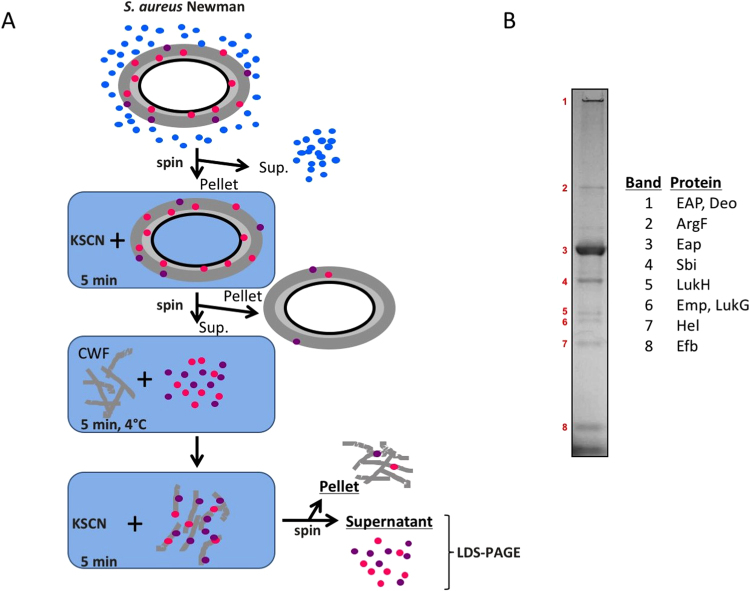
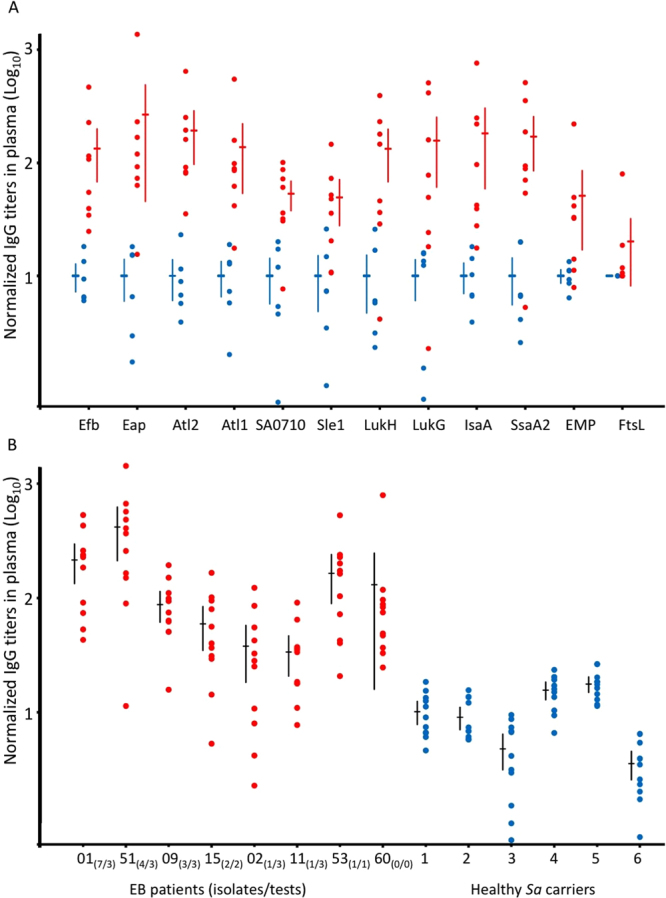
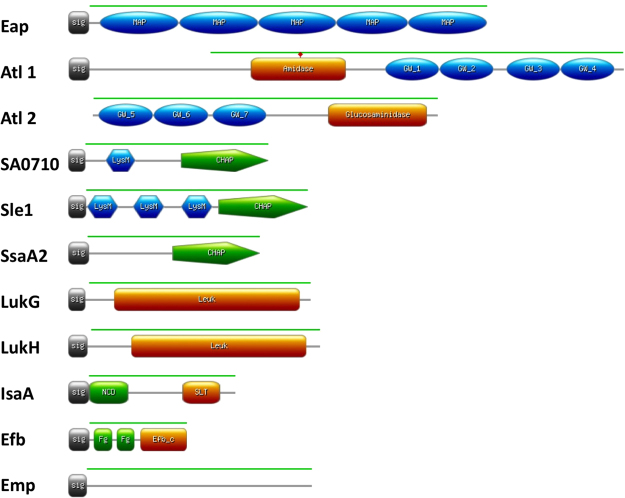
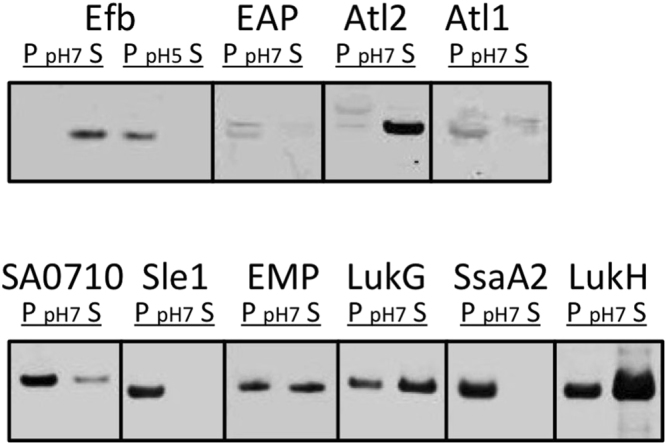
Human antibody responses to pathogens, like Staphylococcus aureus, are important indicators for in vivo expression and immunogenicity of particular bacterial components. Accordingly, comparing the antibody responses to S. aureus components may serve to predict their potential applicability as antigens for vaccination. The present study was aimed at assessing immunoglobulin G (IgG) responses elicited by non-covalently cell surface-bound proteins of S. aureus, which thus far received relatively little attention. To this end, we applied plasma samples from patients with the genetic blistering disease epidermolysis bullosa (EB) and healthy S. aureus carriers. Of note, wounds of EB patients are highly colonized with S. aureus and accordingly these patients are more seriously exposed to staphylococcal antigens than healthy individuals. Ten non-covalently cell surface-bound proteins of S. aureus, namely Atl, Eap, Efb, EMP, IsaA, LukG, LukH, SA0710, Sle1 and SsaA2, were selected by bioinformatics and biochemical approaches. These antigens were recombinantly expressed, purified and tested for specific IgG responses using human plasma. We show that high exposure of EB patients to S. aureus is mirrored by elevated IgG levels against all tested non-covalently cell wall-bound staphylococcal antigens. This implies that these S. aureus cell surface proteins are prime targets for the human immune system.
人类对病原体(如金黄色葡萄球菌)的抗体反应是体内特定细菌成分表达和免疫原性的重要指标。因此,比较金黄色葡萄球菌成分的抗体反应可以预测它们作为疫苗抗原的潜在适用性。本研究旨在评估金黄色葡萄球菌非共价结合在细胞表面的蛋白引起的免疫球蛋白 G(IgG)反应,迄今为止,这方面的研究相对较少。为此,我们应用了来自遗传性水疱性疾病大疱性表皮松解症(EB)患者和健康金黄色葡萄球菌携带者的血浆样本。值得注意的是,EB 患者的伤口高度定植金黄色葡萄球菌,因此这些患者比健康个体更容易接触到葡萄球菌抗原。通过生物信息学和生化方法选择了 10 种非共价结合在金黄色葡萄球菌细胞表面的蛋白,即 Atl、Eap、Efb、EMP、IsaA、LukG、LukH、SA0710、Sle1 和 SsaA2。这些抗原通过重组表达、纯化,并用人血浆进行特异性 IgG 反应测试。我们发现,EB 患者与金黄色葡萄球菌的高度接触反映在针对所有测试的非共价结合细胞壁金黄色葡萄球菌抗原的 IgG 水平升高。这意味着这些金黄色葡萄球菌细胞表面蛋白是人体免疫系统的主要靶标。