Virginia Tech.
University of Georgia.
J Res Adolesc. 2018 Mar;28(1):40-55. doi: 10.1111/jora.12339.
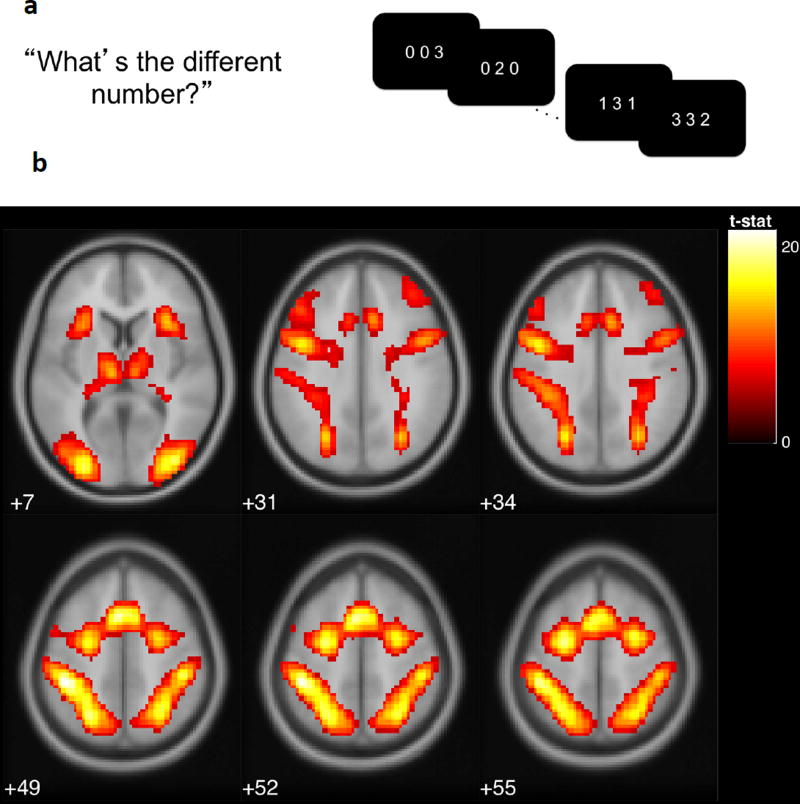
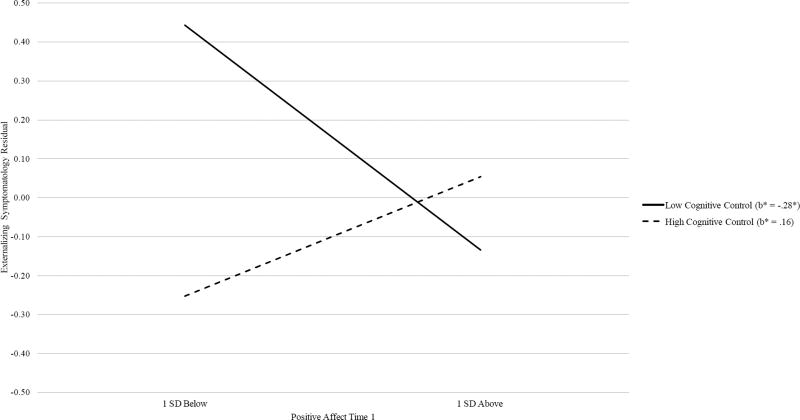
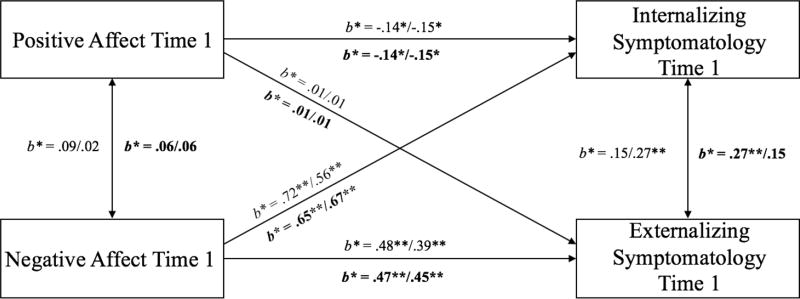
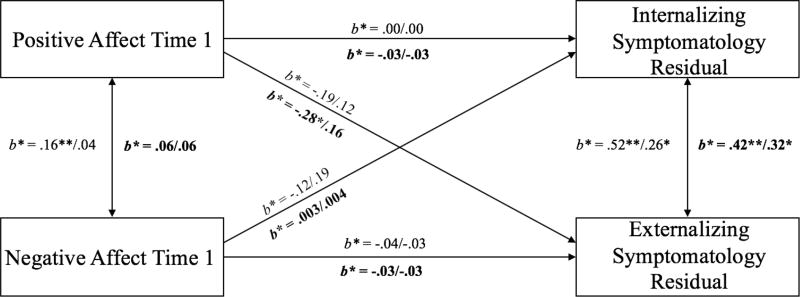
We examined whether cognitive control moderates the effects of emotion on adolescent internalizing and externalizing symptomatology in a longitudinal study of 138 adolescents. Self-reported positive affect (PA) and negative affect and behavioral and neural indicators of cognitive control, indexed by performance and prefrontal hemodynamic response during a cognitive interference task, were collected at Time 1. Self-reported internalizing and externalizing symptomatology were collected at Time 1 and Time 2 (1 year later). Results indicated that higher PA predicted decreases in externalizing symptomatology, but only for adolescents with poor neural cognitive control. No moderation effects were found for behavioral cognitive control. Findings imply the beneficial effects of PA on the development of externalizing problems among adolescents with poor prefrontal functioning.
我们在一项对 138 名青少年的纵向研究中,考察了认知控制是否调节了情绪对青少年内化和外化症状的影响。在第一次测试中,收集了自我报告的积极情绪(PA)和消极情绪,以及认知干扰任务期间行为和前额叶血液动力学反应的认知控制的神经指标,以表现和前额叶血液动力学反应为指标。在第一次和第二次(1 年后)测试中收集了自我报告的内化和外化症状。结果表明,较高的 PA 预示着外化症状的减少,但仅适用于前额叶功能较差的青少年。行为认知控制没有发现调节作用。研究结果表明,在具有较差前额叶功能的青少年中,PA 对外部问题发展有有益的影响。