Yoshida Sumito, Shime Hiroaki, Takeda Yohei, Nam Jin-Min, Takashima Ken, Matsumoto Misako, Shirato Hiroki, Kasahara Masanori, Seya Tsukasa
Department of Vaccine Immunology, Graduate School of Medicine, Hokkaido University, Sapporo, Japan.
Department of Pathology I, Graduate School of Medicine, Hokkaido University, Sapporo, Japan.
Cancer Sci. 2018 Apr;109(4):956-965. doi: 10.1111/cas.13543. Epub 2018 Mar 25.
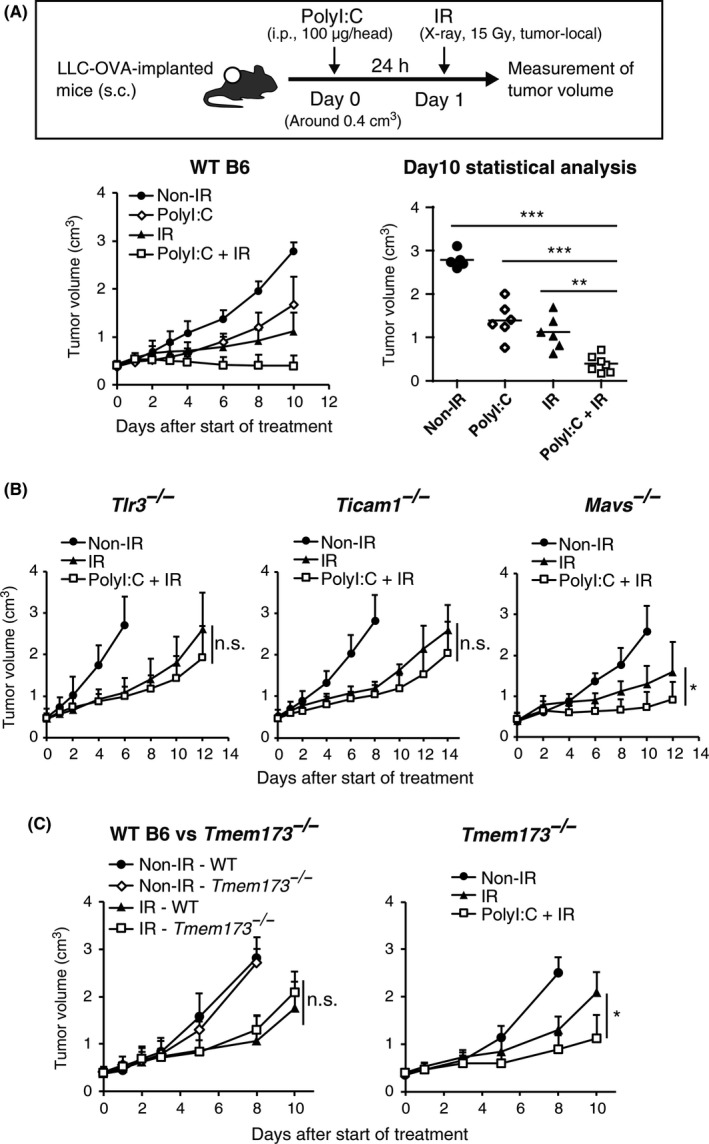
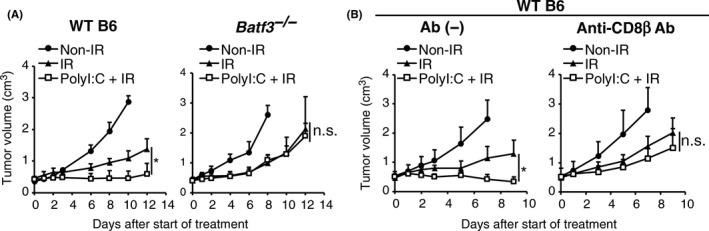
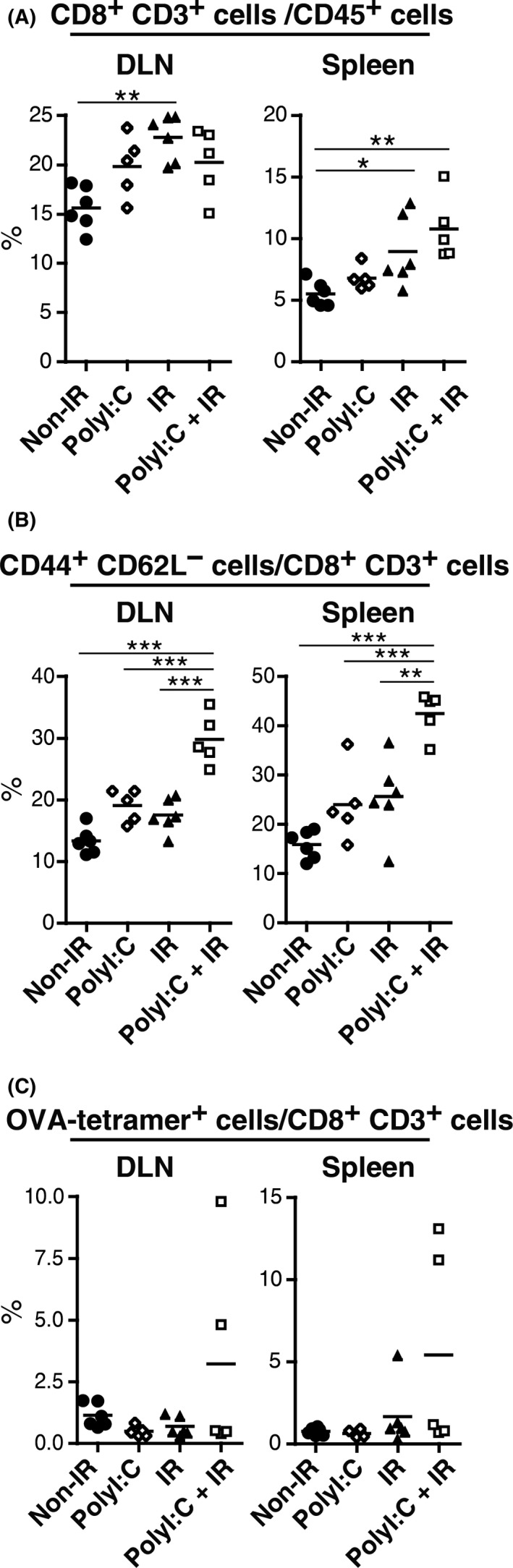
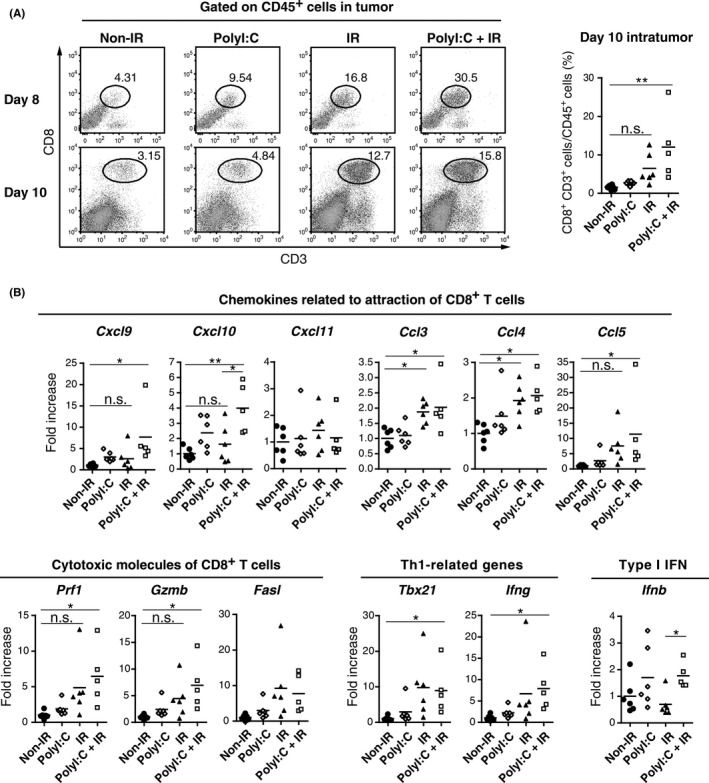
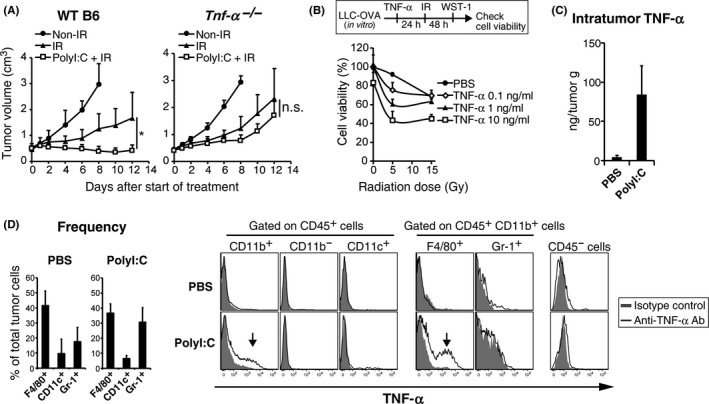
Radiotherapy induces anti-tumor immunity by induction of tumor antigens and damage-associated molecular patterns (DAMP). DNA, a representative DAMP in radiotherapy, activates the stimulator of interferon genes (STING) pathway which enhances the immune response. However, the immune response does not always parallel the inflammation associated with radiotherapy. This lack of correspondence may, in part, explain the radiation-resistance of tumors. Additive immunotherapy is expected to revive tumor-specific CTL facilitating radiation-resistant tumor shrinkage. Herein pre-administration of the double-stranded RNA, polyinosinic-polycytidylic acid (polyI:C), in conjunction with radiotherapy, was shown to foster tumor suppression in mice bearing radioresistant, ovalbumin-expressing Lewis lung carcinoma (LLC). Extrinsic injection of tumor antigen was not required for tumor suppression. No STING- and CTL-response was induced by radiation in the implant tumor. PolyI:C was more effective for induction of tumor growth retardation at 1 day before radiation than at post-treatment. PolyI:C targeted Toll-like receptor 3 with minimal effect on the mitochondrial antiviral-signaling protein pathway. Likewise, the STING pathway barely contributed to LLC tumor suppression. PolyI:C primed antigen-presenting dendritic cells in draining lymph nodes to induce proliferation of antigen-specific CTL. By combination therapy, CTL efficiently infiltrated into tumors with upregulation of relevant chemokine transcripts. Batf3-positive DC and CD8 T cells were essential for therapeutic efficacy. Furthermore, polyI:C was shown to stimulate tumor-associated macrophages and release tumor necrosis factor alpha, which acted on tumor cells and increased sensitivity to radiation. Hence, polyI:C treatment prior to radiotherapy potentially induces tumor suppression by boosting CTL-dependent and macrophage-mediated anti-tumor responses. Eventually, polyI:C and radiotherapy in combination would be a promising therapeutic strategy for radiation-resistant tumors.
放射治疗通过诱导肿瘤抗原和损伤相关分子模式(DAMP)来诱导抗肿瘤免疫。DNA是放射治疗中一种具有代表性的DAMP,它激活干扰素基因刺激物(STING)通路,从而增强免疫反应。然而,免疫反应并不总是与放射治疗相关的炎症平行。这种缺乏对应关系可能部分解释了肿瘤的放射抗性。联合免疫疗法有望恢复肿瘤特异性CTL,促进抗辐射肿瘤缩小。在此,双链RNA聚肌苷酸-聚胞苷酸(polyI:C)与放射治疗联合预先给药,已显示可在携带抗辐射、表达卵清蛋白的Lewis肺癌(LLC)的小鼠中促进肿瘤抑制。肿瘤抑制不需要外在注射肿瘤抗原。植入肿瘤中的辐射未诱导STING和CTL反应。PolyI:C在放疗前1天诱导肿瘤生长迟缓比治疗后更有效。PolyI:C靶向Toll样受体3,对线粒体抗病毒信号蛋白通路影响最小。同样,STING通路对LLC肿瘤抑制作用甚微。PolyI:C使引流淋巴结中的抗原呈递树突状细胞致敏,以诱导抗原特异性CTL增殖。通过联合治疗,CTL有效浸润肿瘤,相关趋化因子转录本上调。Batf3阳性DC和CD8 T细胞对治疗效果至关重要。此外,已显示polyI:C可刺激肿瘤相关巨噬细胞并释放肿瘤坏死因子α,其作用于肿瘤细胞并增加对辐射的敏感性。因此,放疗前的polyI:C治疗可能通过增强CTL依赖性和巨噬细胞介导的抗肿瘤反应来诱导肿瘤抑制。最终,polyI:C与放疗联合将是抗辐射肿瘤的一种有前景的治疗策略。