Mayer Veronika E, Nepel Maximilian, Blatrix Rumsais, Oberhauser Felix B, Fiedler Konrad, Schönenberger Jürg, Voglmayr Hermann
Department of Botany and Biodiversity Research, University of Vienna, Rennweg 14, Vienna, Austria.
Department of Microbiology and Ecosystem Science, University of Vienna, Althanstraße 14, Vienna, Austria.
PLoS One. 2018 Feb 21;13(2):e0192207. doi: 10.1371/journal.pone.0192207. eCollection 2018.
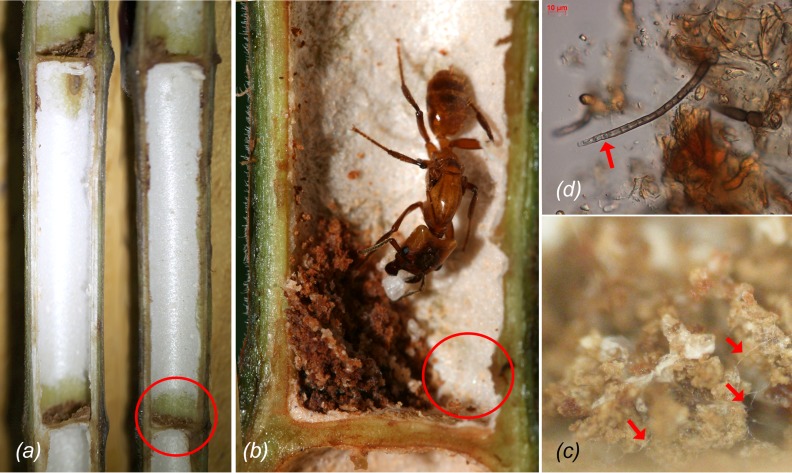
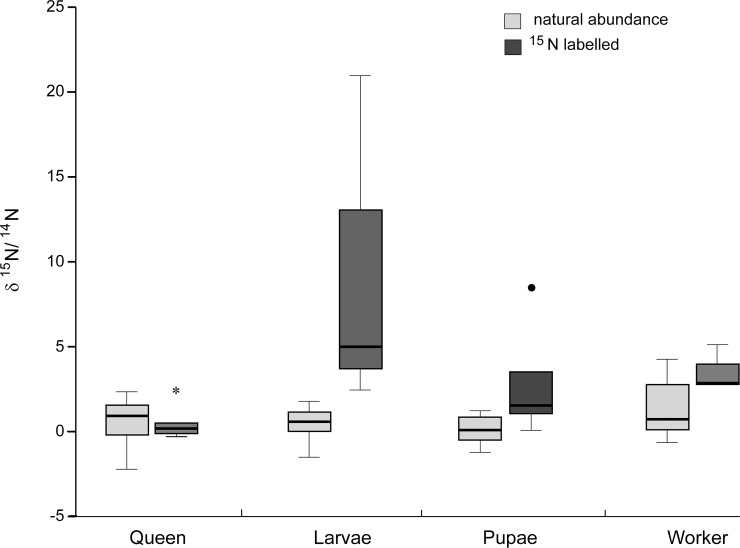
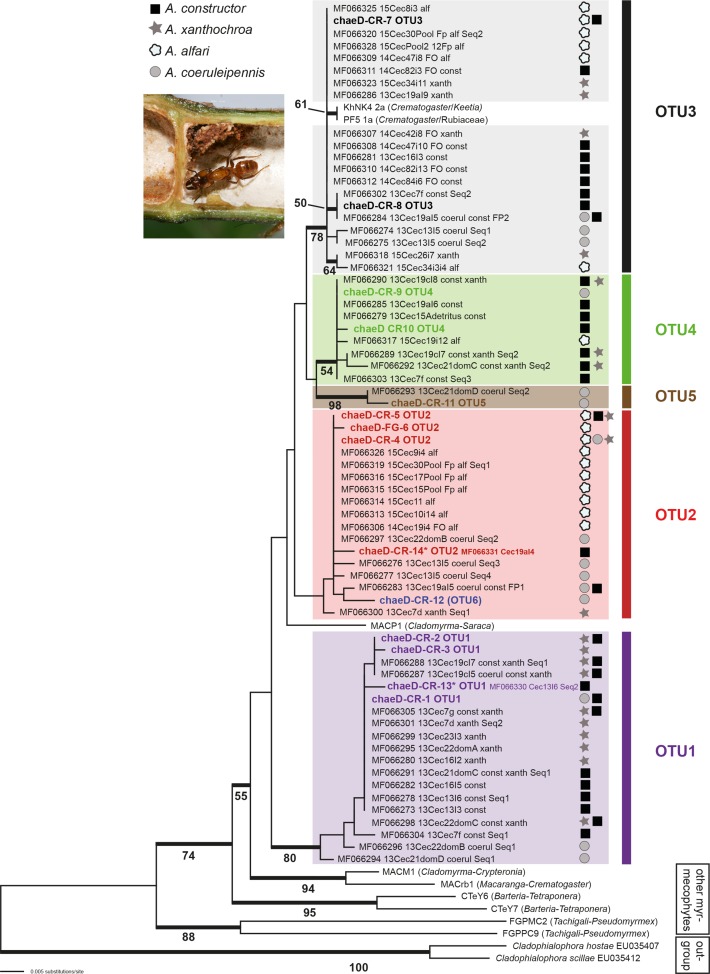
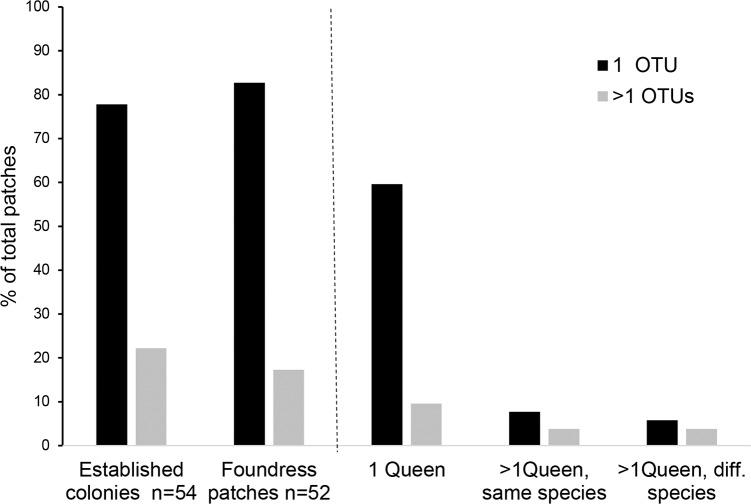
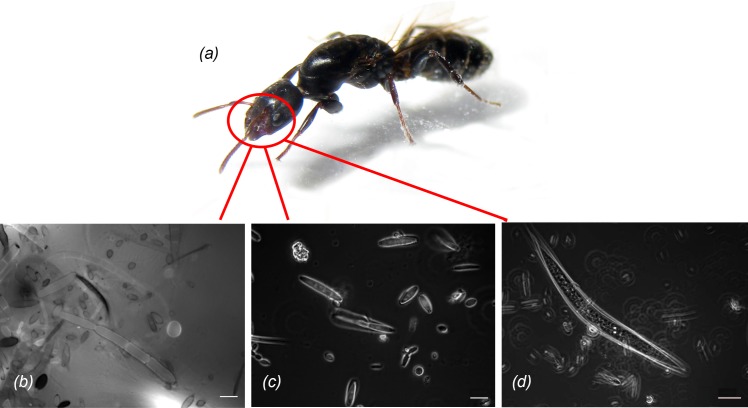
Ascomycete fungi in the nests of ants inhabiting plants (= myrmecophytes) are very often cultivated by the ants in small patches and used as food source. Where these fungi come from is not known yet. Two scenarios of fungus recruitment are possible: (1) random infection through spores or hyphal fragments from the environment, or (2) transmission from mother to daughter colonies by the foundress queen. It is also not known at which stage of the colony life cycle fungiculture is initiated, and whether the- symbiont fungi serve as food for the ant queen. To clarify these questions, we investigated four Azteca ant species inhabiting three different Cecropia species (C. insignis, C. obtusifolia, and C. peltata). We analysed an rRNA gene fragment from 52 fungal patches produced by founding queens and compared them with those from established Azteca colonies (n = 54). The infrabuccal pockets of winged queens were dissected to investigate whether young queens carry fungi from their mother colony. Additionally, 15N labelling experiments were done to verify whether the queen feeds on the patches until she is nourished by her first worker offspring. We infer from the results that the fungi cultivated in hollow plant structures are transferred from the parental colony of the young queen. First, fungal genotypes/OTU diversity was not significantly different between foundress queen patches and established colonies, and second, hyphal parts were discovered in the infrabuccal pockets of female alates. We could show that fungiculture already starts before queens lay their eggs, and that the queens do not feed on fungal patch material but feed it to the larvae. Our findings suggest that fungiculture may be crucial for successful colony founding of arboreal ants in the tropics.
栖息在植物(即蚁栖植物)上的蚂蚁巢穴中的子囊菌通常由蚂蚁在小块区域内培育,并用作食物来源。这些真菌的来源尚不清楚。真菌招募可能有两种情况:(1)通过环境中的孢子或菌丝片段随机感染,或(2)由蚁后从母巢传递给子巢。目前也不清楚菌圃培育在蚁群生命周期的哪个阶段开始,以及共生真菌是否作为蚁后的食物。为了阐明这些问题,我们调查了栖息在三种不同的塞克罗皮亚属植物(C. insignis、C. obtusifolia和C. peltata)上的四种阿兹特克蚁。我们分析了由蚁后建立的52个真菌小块中的rRNA基因片段,并将它们与已建立的阿兹特克蚁群(n = 54)的片段进行比较。解剖有翅蚁后的颊下囊,以研究年轻蚁后是否从其母巢携带真菌。此外,进行了15N标记实验,以验证蚁后是否以这些小块为食,直到她得到第一批工蚁后代的喂养。我们从结果中推断,在空心植物结构中培育的真菌是从年轻蚁后的亲代蚁群转移而来的。首先,蚁后建立的小块和已建立的蚁群之间的真菌基因型/OTU多样性没有显著差异,其次,在雌性有翅蚁的颊下囊中发现了菌丝部分。我们可以证明,菌圃培育在蚁后产卵之前就已经开始,并且蚁后不以真菌小块材料为食,而是将其喂给幼虫。我们的研究结果表明,菌圃培育对于热带地区树栖蚂蚁成功建立蚁群可能至关重要。