Réblová Martina, Hubka Vit, Thureborn Olle, Lundberg Johannes, Sallstedt Therese, Wedin Mats, Ivarsson Magnus
Department of Taxonomy, Institute of Botany of the Czech Academy of Sciences, 252 43, Průhonice, Czech Republic.
Department of Botany, Faculty of Science, Charles University in Prague, 128 01, Prague, 2, Czech Republic.
PLoS One. 2016 Oct 12;11(10):e0163396. doi: 10.1371/journal.pone.0163396. eCollection 2016.
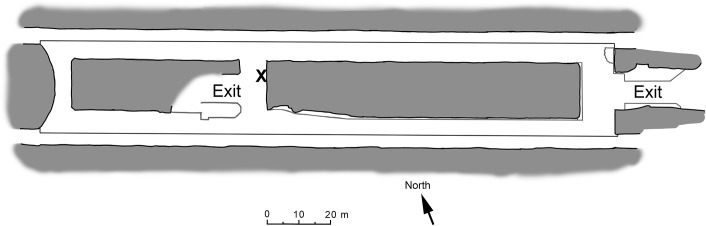
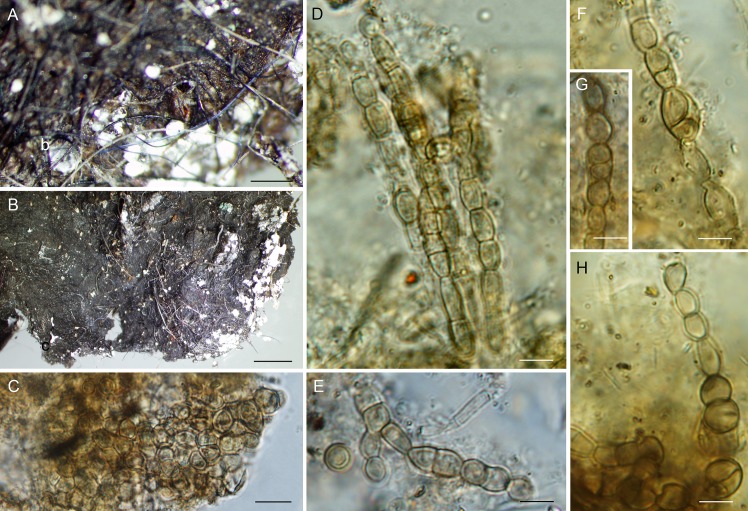
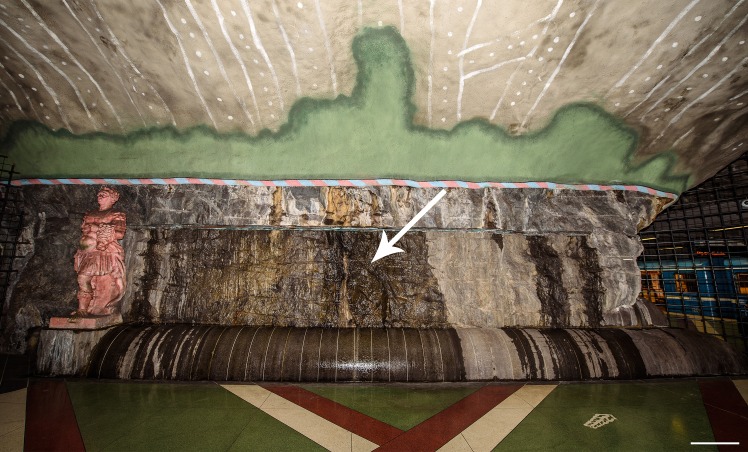
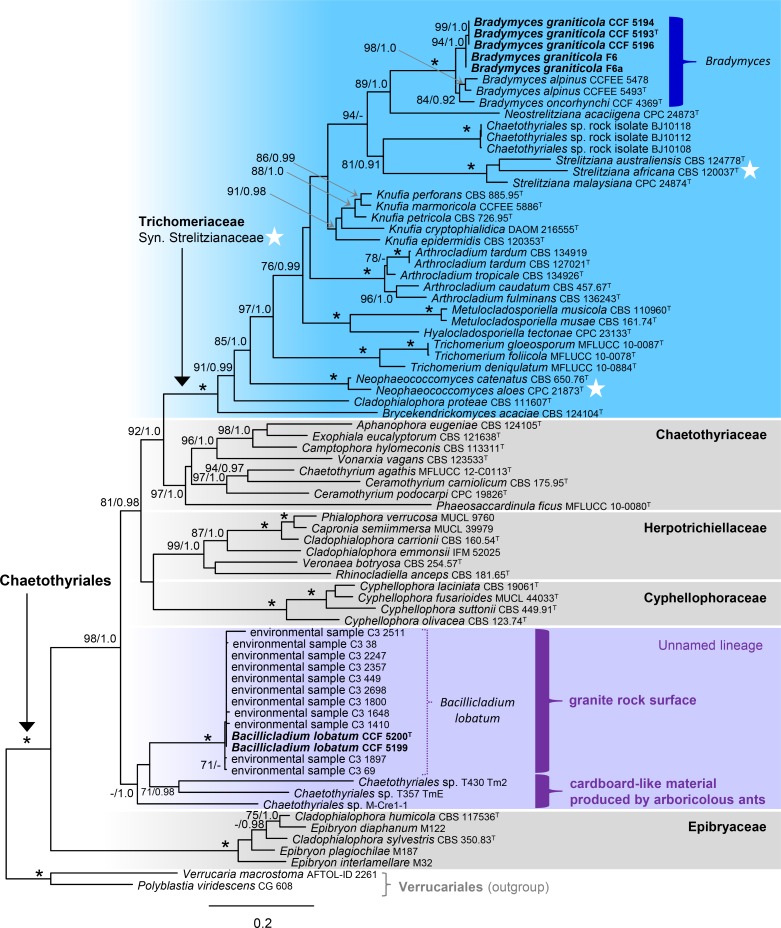
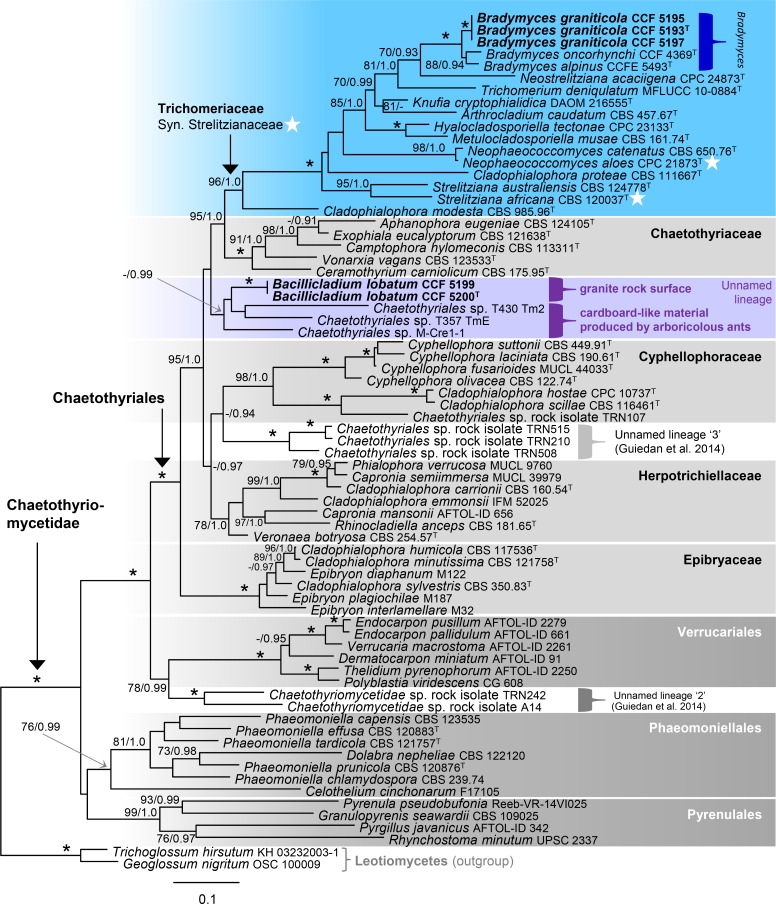
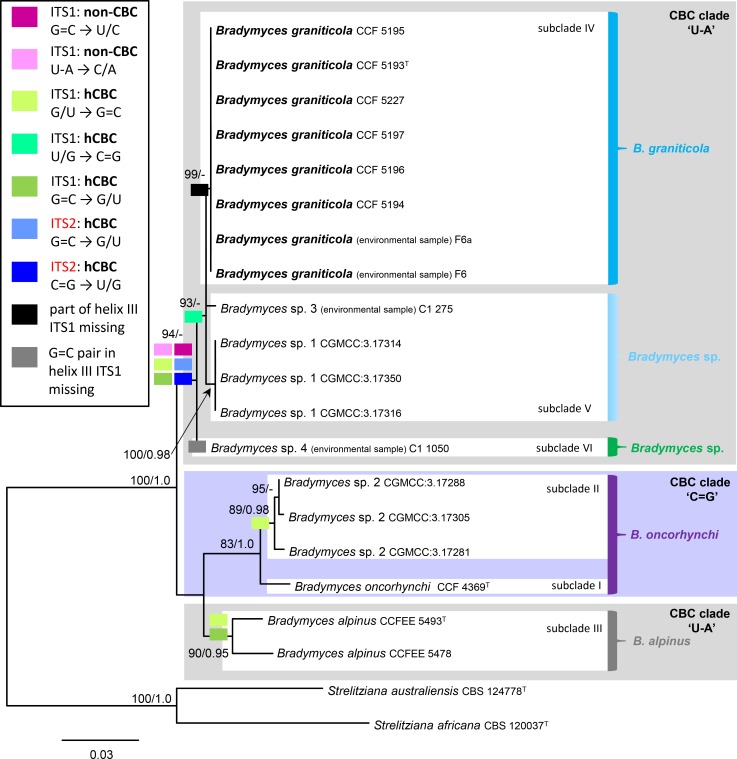
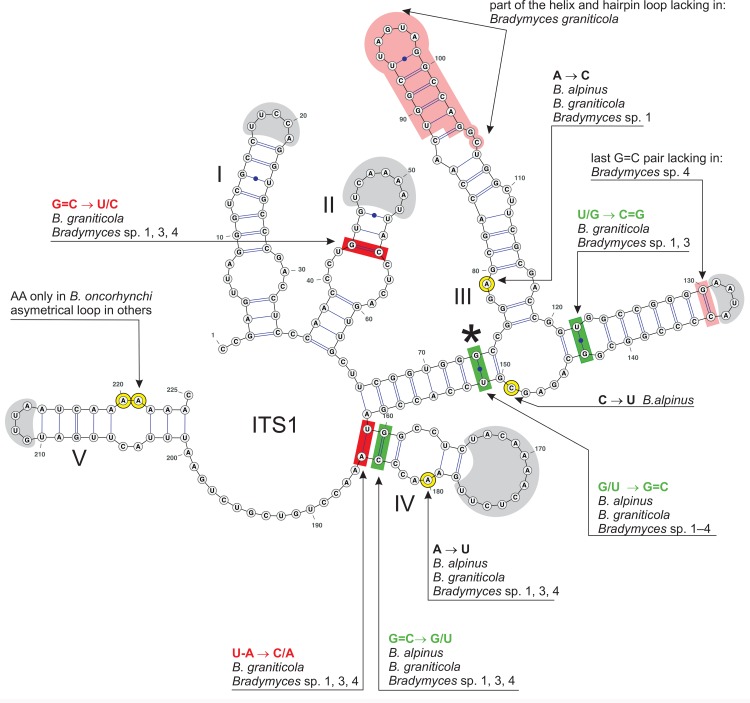
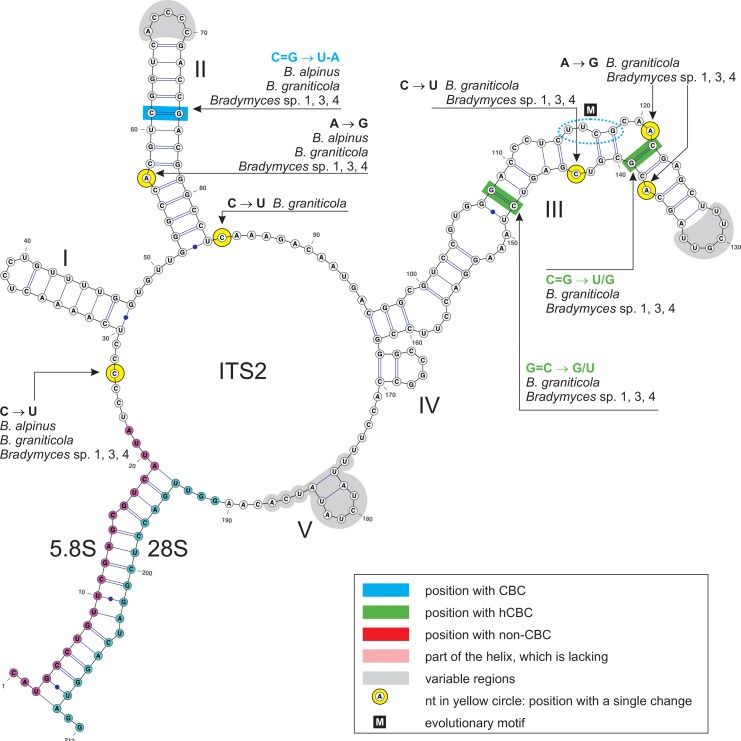
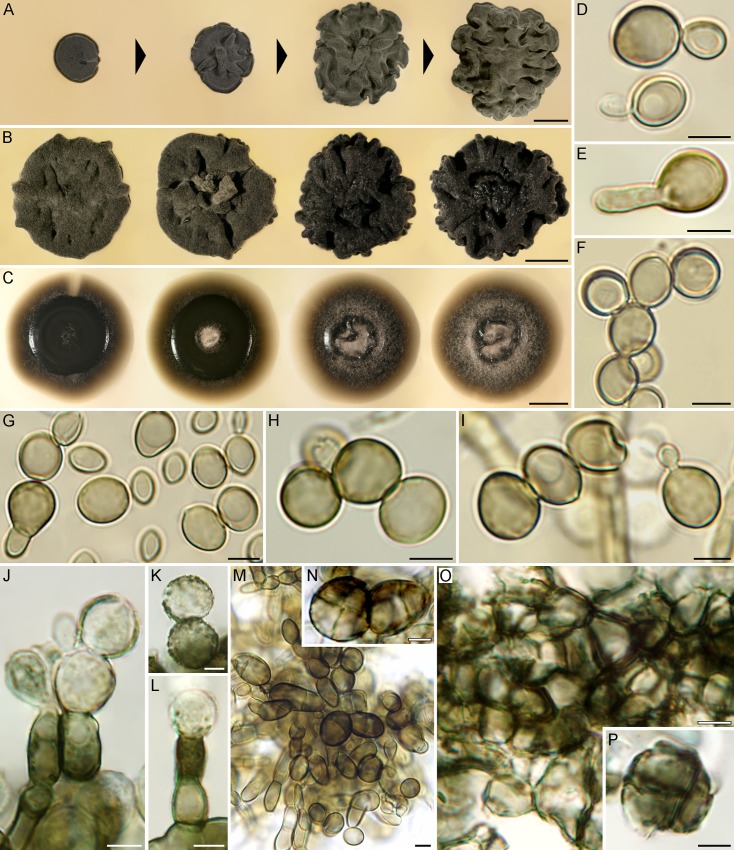
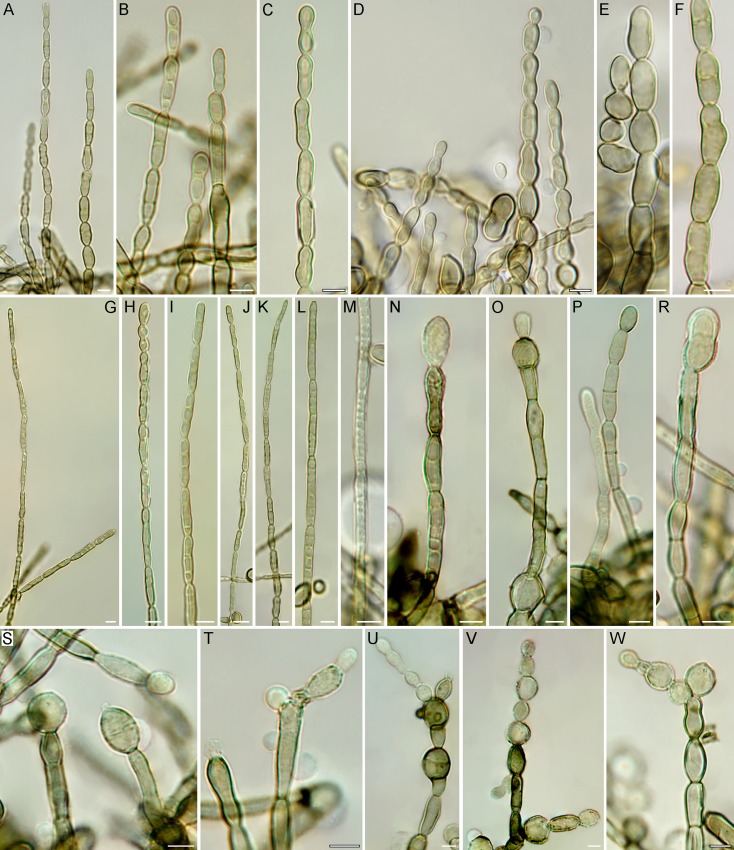
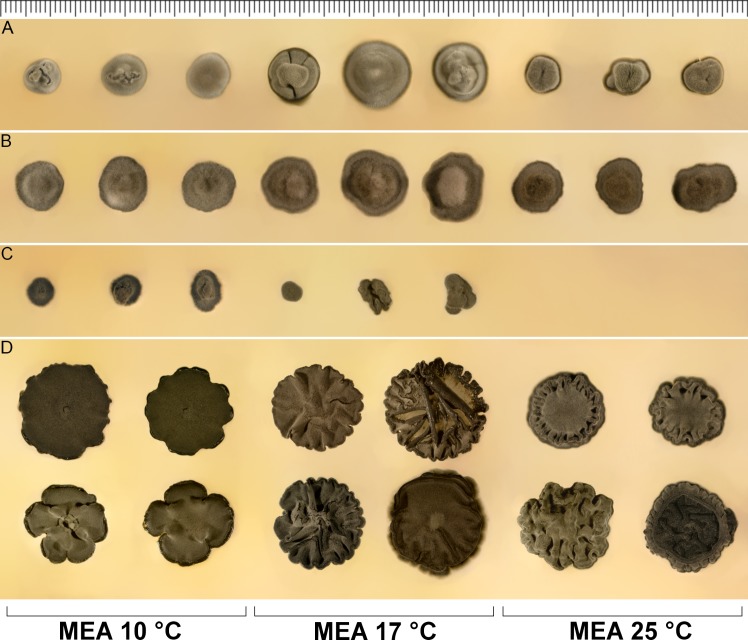
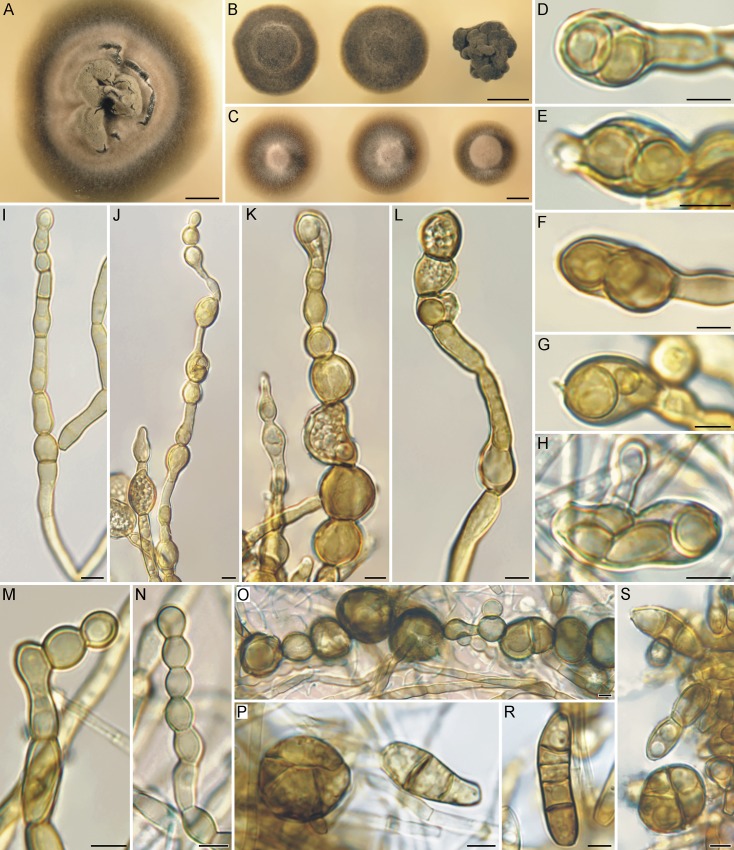
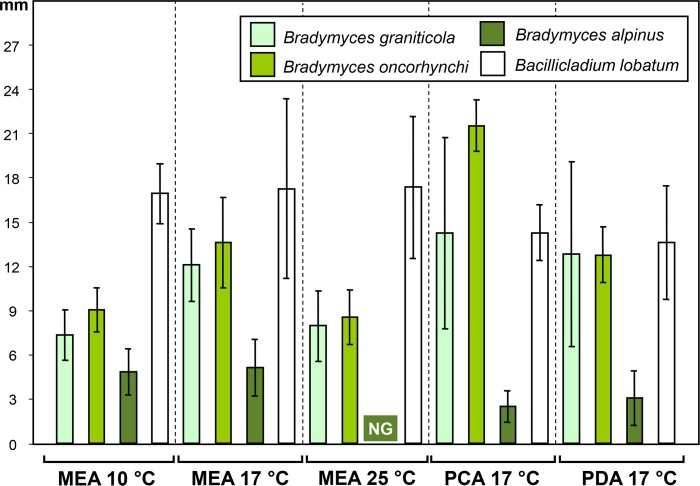
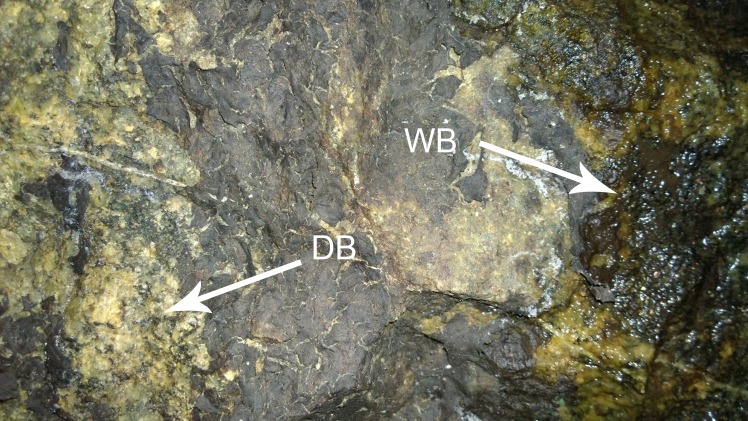
Rock-inhabiting fungi harbour species-rich, poorly differentiated, extremophilic taxa of polyphyletic origin. Their closest relatives are often well-known species from various biotopes with significant pathogenic potential. Speleothems represent a unique rock-dwelling habitat, whose mycobiota are largely unexplored. Isolation of fungi from speleothem biofilm covering bare granite walls in the Kungsträdgården metro station in Stockholm yielded axenic cultures of two distinct black yeast morphotypes. Phylogenetic analyses of DNA sequences from six nuclear loci, ITS, nuc18S and nuc28S rDNA, rpb1, rpb2 and β-tubulin, support their placement in the Chaetothyriales (Ascomycota). They are described as a new genus Bacillicladium with the type species B. lobatum, and a new species Bradymyces graniticola. Bacillicladium is distantly related to the known five chaetothyrialean families and is unique in the Chaetothyriales by variable morphology showing hyphal, meristematic and yeast-like growth in vitro. The nearest relatives of Bacillicladium are recruited among fungi isolated from cardboard-like construction material produced by arboricolous non-attine ants. Their sister relationship is weakly supported by the Maximum likelihood analysis, but strongly supported by Bayesian inference. The genus Bradymyces is placed amidst members of the Trichomeriaceae and is ecologically undefined; it includes an opportunistic animal pathogen while two other species inhabit rock surfaces. ITS rDNA sequences of three species accepted in Bradymyces and other undescribed species and environmental samples were subjected to phylogenetic analysis and in-depth comparative analysis of ITS1 and ITS2 secondary structures in order to study their intraspecific variability. Compensatory base change criterion in the ITS2 secondary structure supported delimitation of species in Bradymyces, which manifest a limited number of phenotypic features useful for species recognition. The role of fungi in the speleothem biofilm and relationships of Bacillicladium and Bradymyces with other members of the Chaetothyriales are discussed.
栖息于岩石的真菌包含种类丰富、分化程度低、起源多系的极端嗜热类群。它们的近亲往往是来自各种生物群落且具有显著致病潜力的知名物种。洞穴沉积物代表了一种独特的岩石栖息生境,其真菌群落很大程度上未被探索。从斯德哥尔摩国王花园地铁站裸露花岗岩壁上覆盖的洞穴沉积物生物膜中分离出的真菌,产生了两种不同黑色酵母形态型的无菌培养物。对来自六个核基因座(ITS、nuc18S和nuc28S rDNA、rpb1、rpb2和β-微管蛋白)的DNA序列进行系统发育分析,支持它们归入散囊菌目(子囊菌门)。它们被描述为一个新属芽孢枝孢属,模式种为叶状芽孢枝孢,以及一个新物种花岗岩缓生菌。芽孢枝孢属与已知的五个散囊菌目科关系较远,在散囊菌目中独一无二,其形态可变,在体外表现出菌丝、分生组织和酵母样生长。芽孢枝孢属最亲近的亲属是从树栖非切叶蚁产生的类似硬纸板的建筑材料中分离出的真菌。它们的姐妹关系在最大似然分析中得到的支持较弱,但在贝叶斯推断中得到有力支持。缓生菌属位于三丝孢科成员之中,生态特性尚不明确;它包括一种机会性动物病原体,而另外两个物种栖息于岩石表面。对缓生菌属中三个已接受物种以及其他未描述物种和环境样本的ITS rDNA序列进行了系统发育分析,并对ITS1和ITS2二级结构进行了深入比较分析,以研究它们的种内变异性。ITS2二级结构中的补偿性碱基变化标准支持了缓生菌属中物种的界定,该属表现出有限数量的有助于物种识别的表型特征。本文讨论了真菌在洞穴沉积物生物膜中的作用以及芽孢枝孢属和缓生菌属与散囊菌目其他成员的关系。