Fitzgerald Elizabeth, Mlotha-Mitole Rachel, Ciccone Emily J, Tilly Alyssa E, Montijo Jennie M, Lang Hans-Joerg, Eckerle Michelle
Assistant Professor of Pediatrics, University of North Carolina at Chapel Hill, Chapel Hill, USA.
University of Malawi College of Medicine, Blantyre, Malawi.
BMC Pediatr. 2018 Feb 21;18(1):75. doi: 10.1186/s12887-018-1051-9.
Death audits have been used to describe pediatric mortality in under-resourced settings, where record keeping is often a challenge. This information provides the cornerstone for the foundation of quality improvement initiatives. Malawi, located in sub-Saharan Africa, currently has an Under-5 mortality rate of 64/1000. Kamuzu Central Hospital, in the capital city Lilongwe, is a busy government referral hospital, which admits up to 3000 children per month. A study published in 2013 reported mortality rates as high as 9%. This is the first known audit of pediatric death files conducted at this hospital.
A retrospective chart review on all pediatric deaths that occurred at Kamuzu Central Hospital (excluding deaths in the neonatal nursery) during a 13-month period was done using a standardized death audit form. A descriptive analysis was completed, including patient demographics, HIV and nutritional status, and cause of death. Modifiable factors were identified that may have contributed to mortality, including a lack of vital sign collection, poor documentation, and delays in the procurement or results of tests, studies, and specialist review.
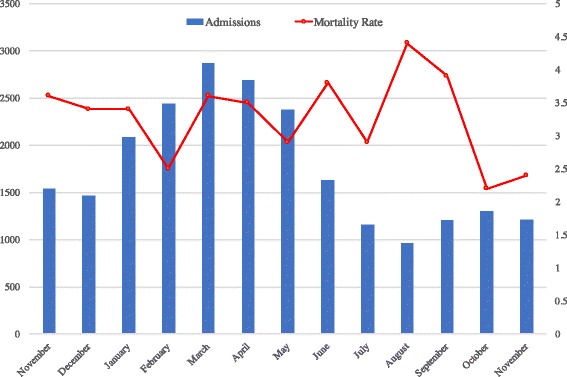
Seven hundred forty three total pediatric deaths were recorded and 700 deceased patient files were reviewed. The mortality rate by month ranged from a low of 2.2% to a high of 4.4%. Forty-four percent of deaths occurred within the first 24 h of admission, and 59% occurred within the first 48 h. The most common causes of death were malaria, malnutrition, HIV-related illnesses, and sepsis.
The mortality rate for this pediatric referral center has dramatically decreased in the 6 years since the last published mortality data, but remains high. Areas identified for continued development include improved record keeping, improved patient assessment and monitoring, and more timely and reliable provision of testing and treatment. This study demonstrates that in low-resource settings, where reliable record keeping is often difficult, death audits are useful tools to describe the sickest patient population and determine factors possibly contributing to mortality that may be amenable to quality improvement interventions.
死亡病例审核已被用于描述资源匮乏地区的儿童死亡率情况,在这些地区,记录保存往往是一项挑战。这些信息为质量改进举措奠定了基础。位于撒哈拉以南非洲的马拉维,目前五岁以下儿童死亡率为每1000人中有64人。位于首都利隆圭的卡穆祖中央医院是一家繁忙的政府转诊医院,每月收治多达3000名儿童。2013年发表的一项研究报告称死亡率高达9%。这是该医院首次对儿科死亡病例档案进行审核。
使用标准化死亡病例审核表,对卡穆祖中央医院(不包括新生儿重症监护室的死亡病例)在13个月期间发生的所有儿科死亡病例进行回顾性病历审查。完成了描述性分析,包括患者人口统计学特征、艾滋病毒和营养状况以及死因。确定了可能导致死亡的可改变因素,包括生命体征采集缺失、记录不佳以及检查、检验和专家会诊的采购或结果延迟。
共记录了743例儿科死亡病例,并审查了700份已故患者档案。每月死亡率从低至2.2%到高至4.4%不等。44%的死亡发生在入院后的头24小时内,59%发生在头48小时内。最常见的死因是疟疾、营养不良、艾滋病毒相关疾病和败血症。
自上次公布死亡率数据以来的6年里,这个儿科转诊中心的死亡率大幅下降,但仍然很高。确定需要持续改进的领域包括改善记录保存、改进患者评估和监测,以及更及时、可靠地提供检查和治疗。这项研究表明,在资源匮乏的环境中,可靠的记录保存往往很困难,死亡病例审核是描述病情最严重患者群体以及确定可能导致死亡且可能适合质量改进干预措施的因素的有用工具。