Baig Mohammad H, Ahmad Khurshid, Rabbani Gulam, Choi Inho
Department of Medical Biotechnology, Yeungnam University, Gyeongsan, South Korea.
Front Aging Neurosci. 2018 Feb 7;10:21. doi: 10.3389/fnagi.2018.00021. eCollection 2018.
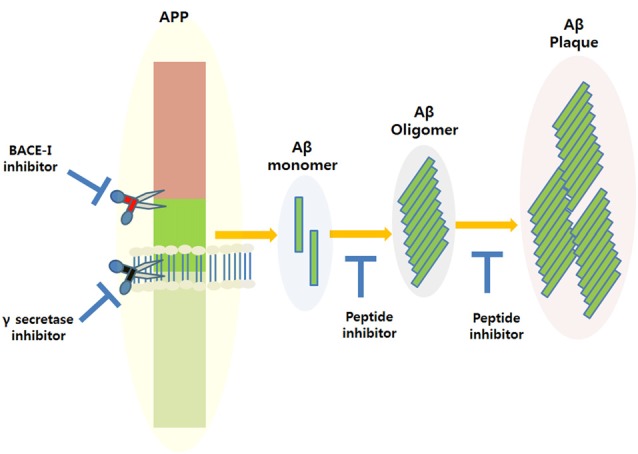
Alzheimer's disease (AD) is a form of dementia and the most common progressive neurodegenerative disease (ND). The targeting of amyloid-beta (Aβ) aggregation is one of the most widely used strategies to manage AD, and efforts are being made globally to develop peptide-based compounds for the early diagnosis and treatment of AD. Here, we briefly discuss the use of peptide-based compounds for the early diagnosis and treatment of AD and the use of peptide-based inhibitors targeting various Aβ aggregation checkpoints. In addition, we briefly discuss recent applications of peptide-based inhibitors against various AD targets including amyloid beta, β-site amyloid precursor protein cleaving enzyme 1 (BACE1), Glyceraldehyde-3-phosphate dehydrogenase (GAPDH), tyrosine phosphatase (TP) and potassium channel KV1.3.
阿尔茨海默病(AD)是痴呆症的一种形式,也是最常见的进行性神经退行性疾病(ND)。靶向淀粉样β蛋白(Aβ)聚集是治疗AD最广泛使用的策略之一,全球正在努力开发基于肽的化合物用于AD的早期诊断和治疗。在此,我们简要讨论基于肽的化合物在AD早期诊断和治疗中的应用,以及靶向各种Aβ聚集检查点的基于肽的抑制剂的应用。此外,我们简要讨论了基于肽的抑制剂针对包括淀粉样β蛋白、β位点淀粉样前体蛋白裂解酶1(BACE1)、甘油醛-3-磷酸脱氢酶(GAPDH)、酪氨酸磷酸酶(TP)和钾通道KV1.3在内的各种AD靶点的最新应用。