Department of Immunology, University of Toronto, Toronto, ON, Canada.
Front Immunol. 2018 Feb 7;9:191. doi: 10.3389/fimmu.2018.00191. eCollection 2018.
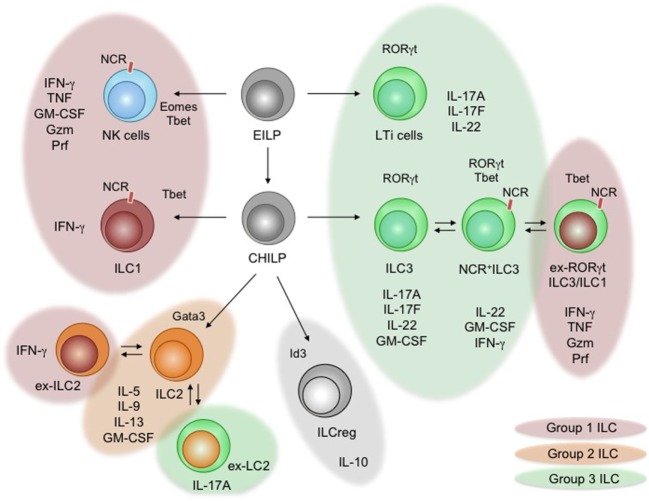
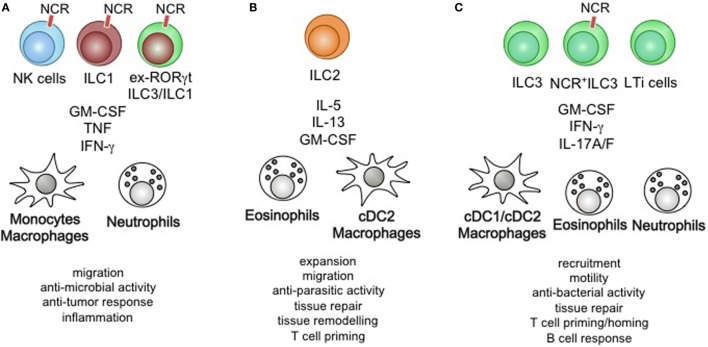
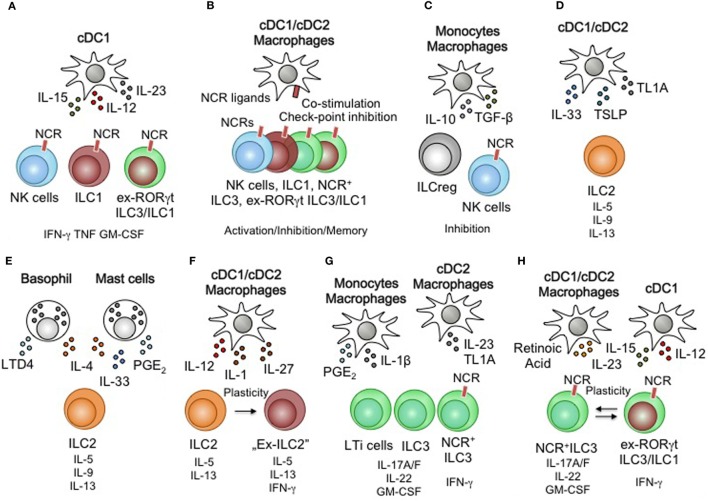
Innate lymphoid cells (ILCs) are an essential component of the innate immune system in vertebrates. They are developmentally rooted in the lymphoid lineage and can diverge into at least three transcriptionally distinct lineages. ILCs seed both lymphoid and non-lymphoid tissues and are locally self-maintained in tissue-resident pools. Tissue-resident ILCs execute important effector functions making them key regulator in tissue homeostasis, repair, remodeling, microbial defense, and anti-tumor immunity. Similar to T lymphocytes, ILCs possess only few sensory elements for the recognition of non-self and thus depend on extrinsic cellular sensory elements residing within the tissue. Myeloid cells, including mononuclear phagocytes (MNPs), are key sentinels of the tissue and are able to translate environmental cues into an effector profile that instructs lymphocyte responses. The adaptation of myeloid cells to the tissue state thus influences the effector program of ILCs and serves as an example of how environmental signals are integrated into the function of ILCs via a tissue-resident immune cell cross talks. This review summarizes our current knowledge on the role of myeloid cells in regulating ILC functions and discusses how feedback communication between ILCs and myeloid cells contribute to stabilize immune homeostasis in order to maintain the healthy state of an organ.
先天淋巴细胞(ILC)是脊椎动物先天免疫系统的重要组成部分。它们在发育上起源于淋巴样谱系,并可分化为至少三个转录上不同的谱系。ILC 定殖于淋巴样和非淋巴样组织,并在组织驻留池内局部自我维持。组织驻留的 ILC 执行重要的效应功能,使其成为组织稳态、修复、重塑、微生物防御和抗肿瘤免疫的关键调节剂。与 T 淋巴细胞类似,ILC 仅具有用于识别非自身的少数感觉元件,因此依赖于驻留在组织内的外在细胞感觉元件。髓样细胞,包括单核吞噬细胞(MNPs),是组织的关键哨兵,能够将环境线索转化为指导淋巴细胞反应的效应谱。因此,髓样细胞对组织状态的适应会影响 ILC 的效应程序,并举例说明了环境信号如何通过组织驻留免疫细胞的相互作用整合到 ILC 的功能中。这篇综述总结了我们目前对髓样细胞在调节 ILC 功能中的作用的认识,并讨论了 ILC 和髓样细胞之间的反馈通讯如何有助于稳定免疫稳态,以维持器官的健康状态。